Yume (夢) Shows Up in Almost Every J-Pop Song You Love. The Kanji Itself Is an Eye Covered Up in the Evening.
夢 (yume) is the kanji every J-pop chorus reaches for. The breakdown is eye plus cover plus evening. Here is what that quietly does to two songs you have already played a hundred times.
Yume (夢) Shows Up in Almost Every J-Pop Song You Love. The Kanji Itself Is an Eye Covered Up in the Evening.
If you have spent any time inside Japanese music, you have already sung 夢 (yume) more times than you have noticed. It is the first word in Lemon. It is the title word of one of YOASOBI's earliest hits. It is in every anime ending where the singer is reaching for something they cannot quite touch.
I had heard it for years before I actually looked at the kanji.
And the kanji is doing something quiet.
This post takes about 5 minutes and you will walk away with:
- What 夢 actually decomposes into when you look inside it
- Why a J-pop chorus reaches for 夢 instead of 希望 or 願い
- Two songs you already love where this kanji is doing more than it looks like
- A small habit you can try on the next Japanese song you play
You have sung past this kanji a thousand times
Try this. Open whatever Japanese song has been on a loop with you this month. Pull up the lyrics. Scroll until you see 夢.
Most of the time, it will be there.
Anime endings. Vocaloid ballads. The first second of Lemon. Mr. Children songs from the 90s. YOASOBI ballads that get covered on every Japanese drama. The word floats up out of the chorus like it is the most natural thing in the world, because in J-pop convention, it kind of is. Songs about wanting reach for 夢. Songs about losing reach for 夢. Songs about trying to hold onto someone who is gone reach for 夢.
I had it sitting in my brain for years as just "the word that means dream." Like the way a beginner Spanish learner files away "sueño" and stops thinking about it.
The thing I was missing was inside the kanji.
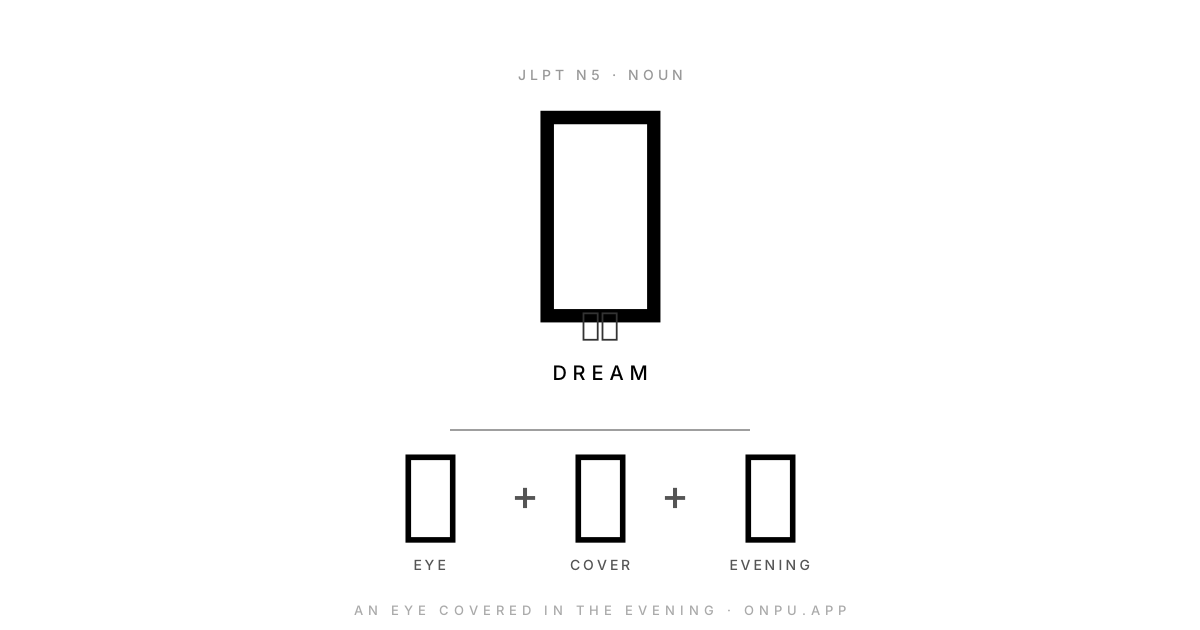
夢 is an eye, covered up, in the evening
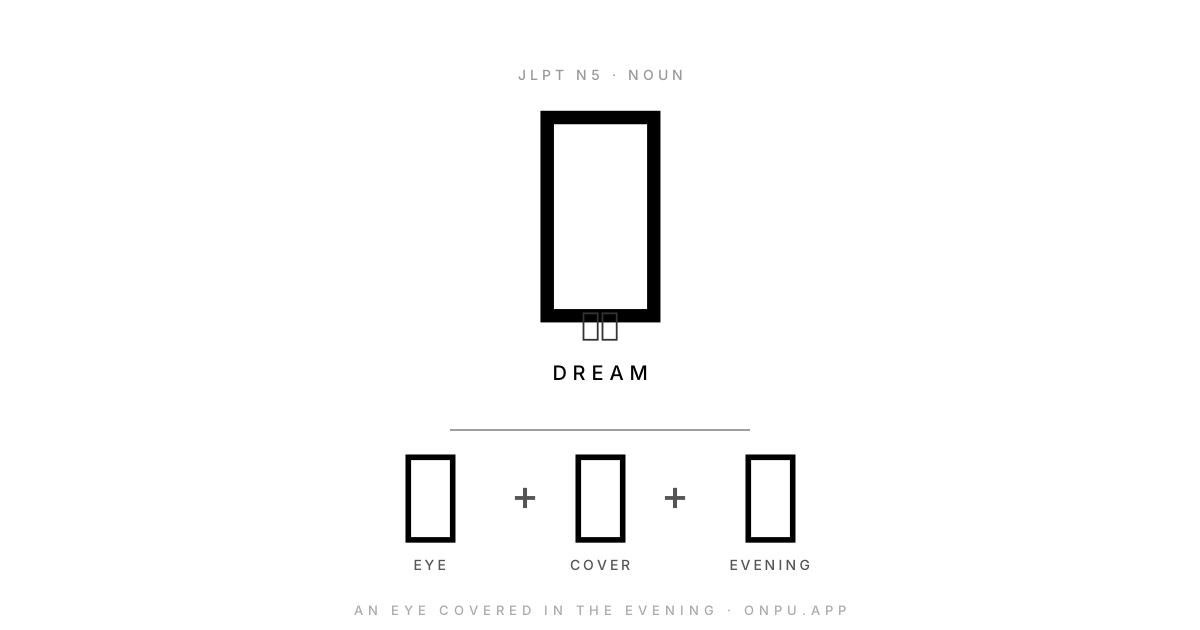
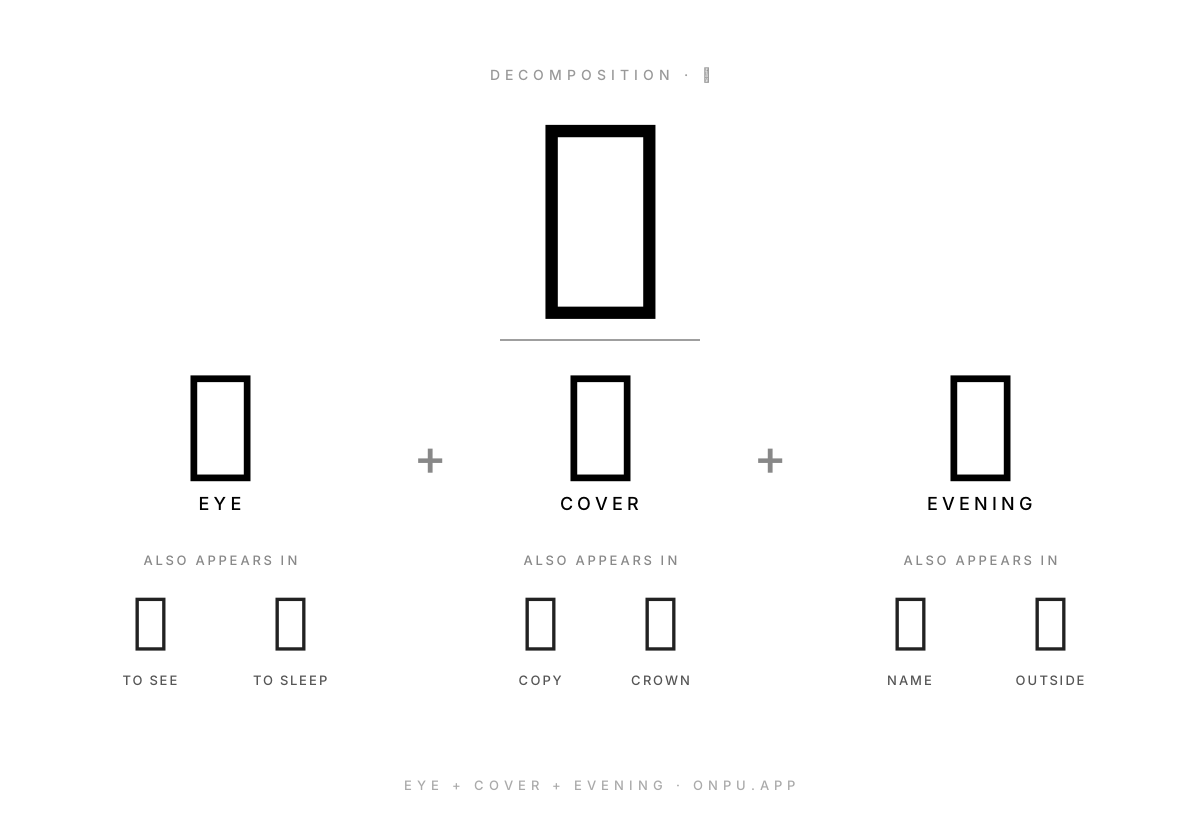
If you long-press 夢 in Onpu, the breakdown is three pieces.
The first piece is 目, the eye radical. You see it in 見 (to see), 眠 (to sleep), 涙 (tears, which we wrote about in this post on the kanji 涙). Anytime a kanji is about something the eye does, that little box of horizontal lines is sitting somewhere inside it.
The second piece is 冖. It is a tiny lid. A roof, a cover, a cloth thrown over something. On its own you almost never see 冖, but inside other kanji it does the work of "this thing is covered now."
The third piece is 夕, evening. The same evening you see in 夕方 (yuugata, dusk) or 夕日 (yuuhi, the setting sun).
Stack them and you get an eye, with a cover thrown over it, in the evening.
That is the breakdown the app shows you when you tap the character.
I am not going to pretend this is the airtight historical etymology, because the actual history of 夢 across Chinese and Japanese is a longer story than any one breakdown. But this is the breakdown the data in the app shows, and once you see it, the word changes shape inside your head. A dream is what your eyes do when they are covered, in the evening. The kanji is literally describing the physical act of dreaming.
Lemon: the song opens with the kanji
Open Lemon by Kenshi Yonezu. The very first line is:
夢ならばどれほどよかったでしょう
Roughly: "if only this had been a dream, how good that would have been."
A few seconds later, the song lands its second line, which is 未だにあなたのことを夢にみる: "I still see you in dreams."
Two uses of 夢 inside the first ten seconds of one of the most-streamed Japanese songs of the last decade.
Read those lines with the breakdown in your head. The word 夢 is sitting at the place in the line where the singer is reaching for something he cannot have. The lyric is wishing reality were a dream so it could end. The next line is admitting that the only place the lost person still exists is in the singer's covered eyes, in the evening, after the lights go out. The kanji is matching the song.
The widely shared backstory on Lemon is that Yonezu's grandfather died during production, and the song was reshaped around that grief. I am not going to claim he picked the kanji 夢 for the radical-level reason. But the word he reached for, twice, in the first ten seconds, was the one whose internal picture is "an eye, sealed shut, at night." A song about someone who is gone and still arrives, only when the eyes are closed.
We wrote a whole post on Lemon and the bitter / suffering kanji wordplay without touching 夢 once. There is enough inside one song that you can write about it twice and still not be done.
あの夢をなぞって: an entire song built on the kanji
Now flip to YOASOBI's あの夢をなぞって ("Tracing That Dream"), one of their first big hits, from 2020. The premise of the song, taken from the original short story it is based on, is that the protagonist saw the future inside a dream. The whole track is her reaching back into that dream and trying to follow its outline into real life.
A few of the lines that use 夢:
夢の中で見えた未来のこと: "the future I saw inside the dream."
夜を抜けて夢の先へ: "passing through the night, toward the place beyond the dream."
あの夢をなぞる: "I trace that dream." This one is the title.
Every single one of those lines is doing the kanji's work without saying it. The dream is something seen with covered eyes, in the evening. The protagonist's task across the whole song is to take that covered-eye image and somehow drag it into the next morning.
If you read those lines as just "dream this, dream that," they land as cute J-pop lyrics. If you read them with 目 + 冖 + 夕 sitting in your head, the song sharpens. She is not chasing an abstraction. She is chasing the literal contents of her eyes from the night before.
Why 夢 instead of 希望 or 願い
Japanese has plenty of words for things you want.
希望 (kibou) is hope. The word you put on a corporate poster. The word that goes on the side of a vending machine.
願い (negai) is a wish. The thing you write on a tanabata strip and hang from a tree.
夢 is different. 夢 is the thing you saw, briefly, when your eyes were closed, that you cannot quite carry into daylight. That is why songs reach for it instead of the other two. 希望 and 願い are public. 夢 is the private one. The one you might be making up, the one that might be real, the one that lives behind your eyelids whether you wanted it there or not.
You can feel this if you swap the word in your head. "夢ならばどれほどよかったでしょう" with 願い instead would land as cardboard. "あの願いをなぞる" instead of "あの夢をなぞる" loses the entire concept of a thing you saw with your eyes shut.
This is the same precision Japanese songwriters reach for elsewhere. Yorushika's 言って does it with two homophones, picking specific kanji to do specific emotional jobs inside one song. The writing system gives them more dials than English does, and they use them.
Try this on the next song you play
Next time you have a Japanese song on, scroll through the lyrics and look for 夢.
If it is there, long-press it in Onpu. Sit with the 目 + 冖 + 夕 breakdown for a second before you keep reading. See if the line around it reads any differently with that picture sitting inside the word.
You do not have to memorise anything. The breakdown will just live in the kanji from now on. The next time a chorus says 夢, you will hear "an eye covered up in the evening" underneath it, and that is the whole upgrade.
If you find a song where 夢 is doing something I have not noticed, I would love to know. The blog is mostly me catching up to what is already there in the songs.