Itte Yorushika Meaning: The Two Kanji That Sound Identical But Turn a Love Song Into a Funeral
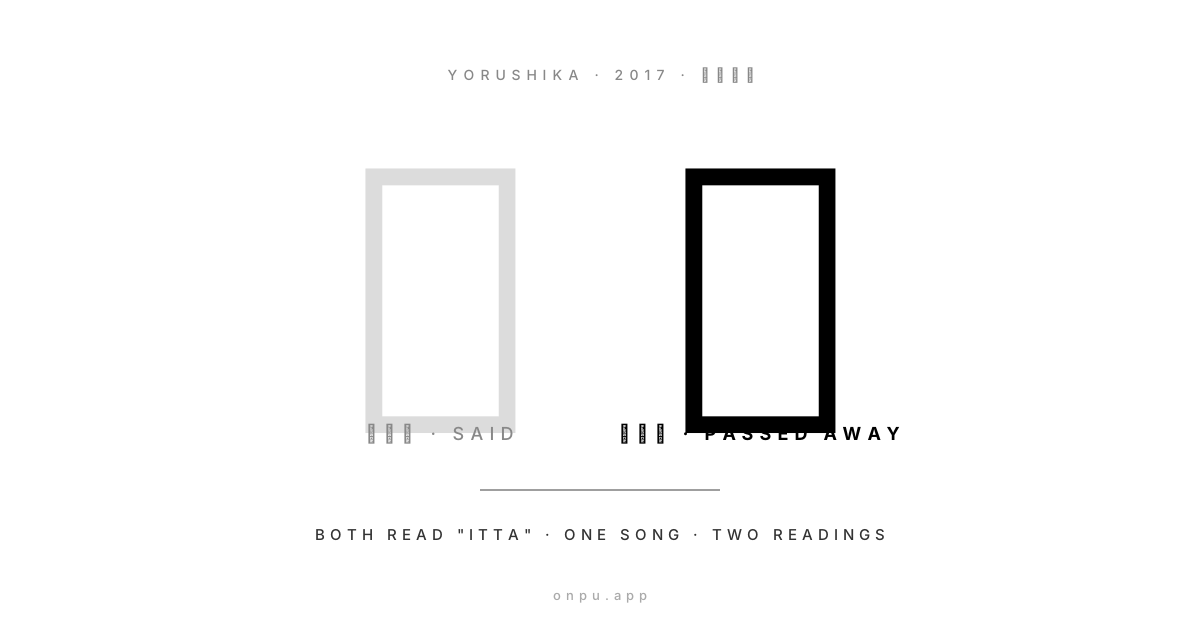
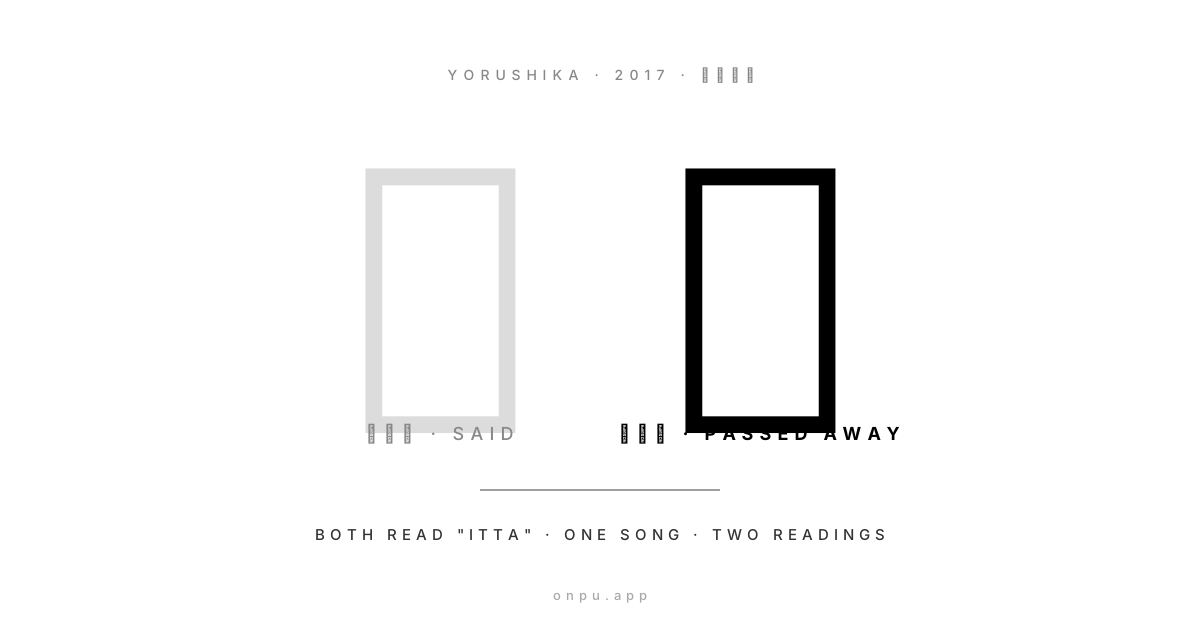
Yorushika's 言って. opens with 言った (said) and lands on 逝った (passed away). Phonetically identical. The song has two readings.
Itte Yorushika Meaning: The Two Kanji That Sound Identical But Turn a Love Song Into a Funeral
I have had 言って. by Yorushika in my headphones on and off since the year it came out. For years I assumed it was a breakup song. Soft piano, gentle vocal, the narrator quietly begging the other person to speak up. Very obviously "please say what you feel before we fall apart" energy.
Then I actually opened the lyrics.
Here is the thing I missed for an embarrassingly long time.
The song uses the reading "itta" twice. The first time, it is written 言った (said). The second time, it is written 逝った (passed away).
The two kanji sound identical. They differ by one radical. On a first listen, you hear a love song. On a second listen, you read a farewell to someone who is already gone.
In this post, you will learn:
- The two kanji that share the reading いった and do different work
- What 言 and 逝 look like up close
- The exact line where the song tilts from plea to eulogy
- Why the chorus hits in a completely different register once you see the swap
4 min read.
The song opens with "the thing you said"
The first couple of lines are, in Japanese:
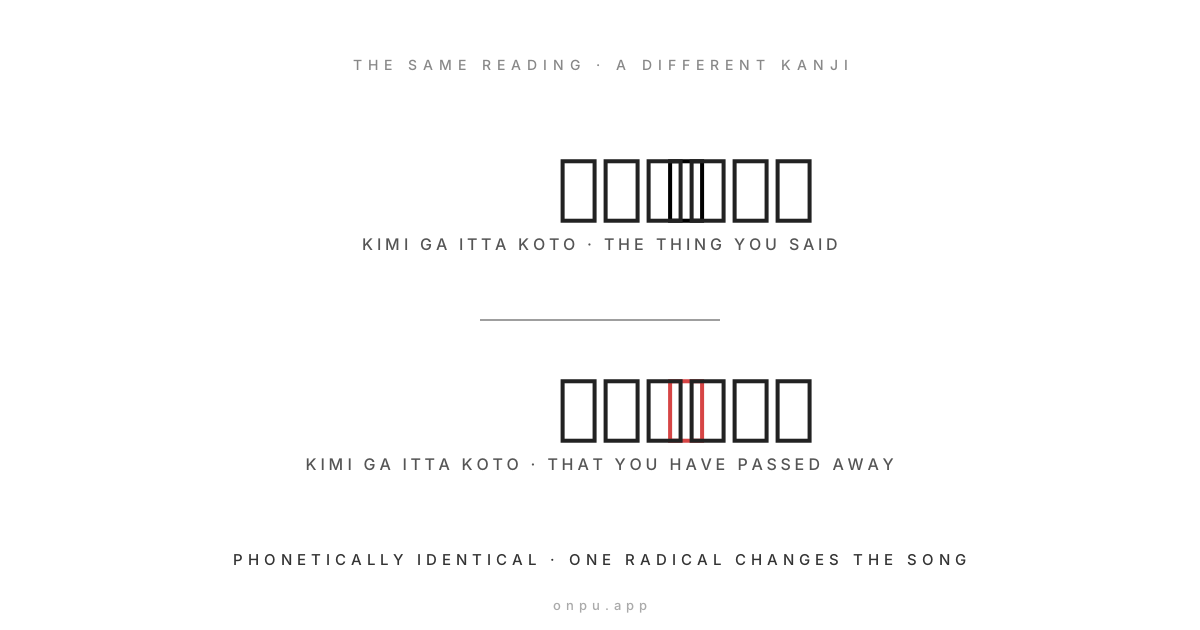
あのね、私実は気付いてるの ほら、君が言ったこと Ano ne, watashi jitsu wa kizuiteru no. Hora, kimi ga itta koto. Hey, you know, the truth is I've been noticing. The thing you said.
言った is the past tense of 言う. 言 is listed in kanji-data.json as N4, meaning "say, word, language." This is the first verb any Japanese textbook teaches. A hiragana-plus-one-kanji form that sits in every casual conversation. There is nothing hidden here yet.
So on first listen, this plays as exactly what it sounds like. The narrator is saying: I have been sitting with the thing you said. I have been avoiding it. I know.
If the whole song stayed in this register, it would be a very nice indie love song about two people who needed to be more honest with each other. Plenty of songs do exactly that. I assumed this was one of them.
And then later, the song uses "the thing where you went away"
Further in, the same narrator says:
もう君が逝ったこと Mou kimi ga itta koto. The fact that you have already passed away.
Identical pronunciation. Itta. One kanji has changed.
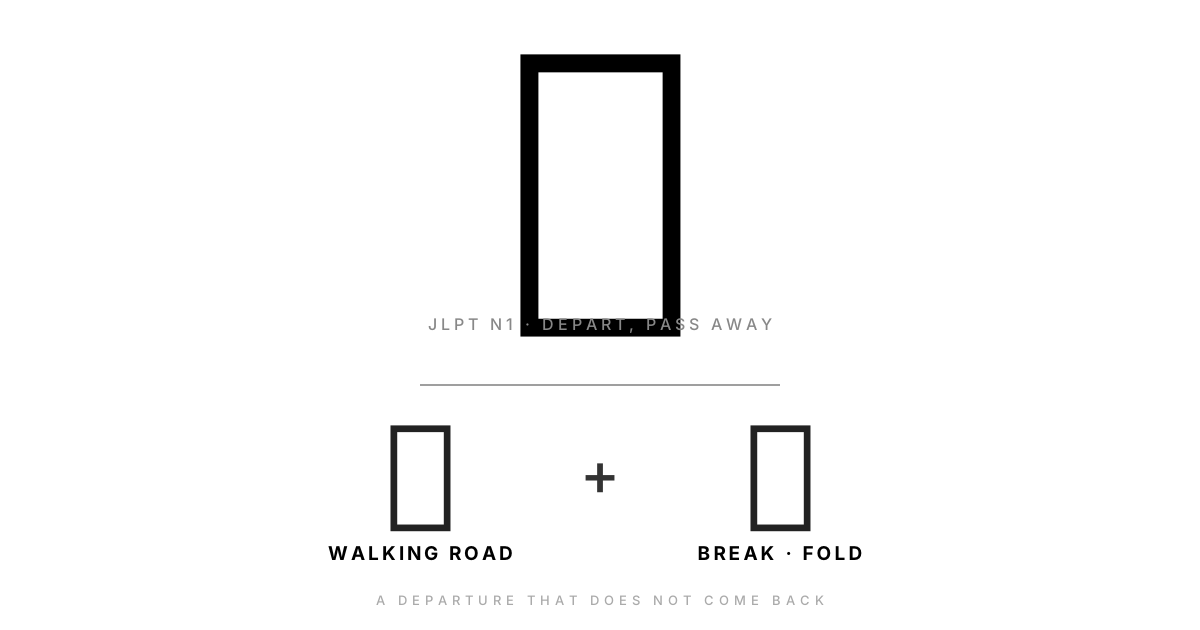
逝 is listed in kanji-data.json as N1. Its meaning is "departed, die." Its components are 辶 (the walking road radical, number 162) and 折 (bend, break, fold).
So the second いった sits inside a verb that literally images somebody walking off and breaking away. Where 言った is "what you said," 逝った is "the walking out that does not end."
The two lines rhyme to the ear. In your headphones, the first いった and the second いった sound like the same word, sung by the same voice, over the same delicate piano. If you are only listening, you never know the swap happened.
If you paste the lyrics into anything that shows you the kanji though, the swap is right there, and the song reveals a different shape.
言 and 逝, up close
Let's look at the two characters side by side, because the useful part is not that they are homophones. The useful part is what each one is pointing at.
言 is one of the most common kanji in the language. kanji-data.json lists it at N4. It shows up in 言う (iu, to say), 言葉 (kotoba, word), 言語 (gengo, language), and roughly a thousand verbs and nouns built around communication. When you see 言 in a song lyric, it is almost always this. Someone speaks. Someone says. Someone talks.
逝 is rare. N1. Its most common home in modern Japanese is the formal, slightly literary verb 逝く (yuku / iku), "to pass away." You see it in funeral language, in obituaries, in poetry, in songs that do not want to use the blunter 死ぬ (shinu, to die). It softens death into a departure.
The components are worth sitting with. 辶 is the "walking road" radical you also see in 道 (road), 進 (advance), 追 (chase). Motion. Going somewhere. 折 means bend, break, fold. Stack them together and you get: walk away, and break. A departure that does not come back.
I want to be careful here. This is a visual reading of the modern kanji, not an etymology lecture. The historical origin is a whole scholarship I do not have the right to narrate. What I can say confidently is: when you see 逝 in a song, the song is using the polite word for death. And when you see 逝 instead of 言 in a lyric where the reading is いった, the song is doing something on purpose.
The chorus reads differently after the swap
Here is the chorus. Four beats of もっと, and then one short imperative.
もっと、もっと、もっと、もっと ちゃんと言って Motto, motto, motto, motto. Chanto itte. More, more, more, more. Actually say it.
On first listen, this reads like someone still inside a relationship, pleading for their partner to be more honest. A reasonable interpretation. It is sung gently. The piano is patient.
On second listen, after 逝った has landed, every もっと is aimed at somebody who can no longer answer. ちゃんと言って stops being "speak up in this conversation" and becomes "I wish I had heard you when I still could." Same four syllables in the chorus. Same voice. The target moves.
This is the reason the song hurts on a rewatch. Nothing about the melody changes. The listener's own mental picture of the second person is what changes. The song stops being a conversation and becomes a letter read over a grave.
Near the end, Yorushika lets one more verified line land:
人生最後の日も愛をうたうのだろう Jinsei saigo no hi mo ai wo utau no darou. Even on my last day of life, I will probably be singing of love.
After 逝った has already happened in the song, this line sits differently too. The narrator is talking about their own eventual last day while standing on the other side of somebody else's. Which is, for my money, the quiet thing that makes this song stay with people for years.
This move shows up across Japanese songwriting
Japanese has a much denser homophone layer than English by design. There are fewer distinct syllables, so words overlap in sound more often, and writers lean into the overlap. The kanji is where they mark it. If a song circles back to the same reading over and over, scan the lyric sheet. If the kanji changed, that is the hinge.
You have seen this trick on the blog before. Lemon by Kenshi Yonezu parks one kanji (苦) in two consecutive chorus lines to mean "bitter" and "suffering" in the same breath. Kyouran Hey Kids strips one kanji off the title and starts every chorus line with it. Hai Yorokonde hides an SOS inside what sounds like an energetic call-and-response.
言って. belongs on that same shelf. The song is using a homophone to keep you in the "please speak up" reading as long as possible, and then the kanji tilts the frame.
Closing
I am not going to pretend I know what n-buna or Suis were picturing in the studio. I have not read an interview where anybody on Yorushika's side said "we did it because of the kanji." What I can say is that the swap is literally there in the lyric sheet, and the swap changes what the song is about.
That is the reading I am comfortable sharing. It is the one the kanji make for you.
If you love this song, paste 言って. into Onpu and let it sit on the line 君が逝ったこと. Watch the app pull 言 and 逝 apart and put them next to each other so you can see the walking-road radical doing all the work. It is the single cleanest homophone reveal I have ever shown a friend.