Yuki (雪) Shows Up in Almost Every Japanese Winter Song. The Kanji Itself Is Rain Falling From a Pig's Snout.
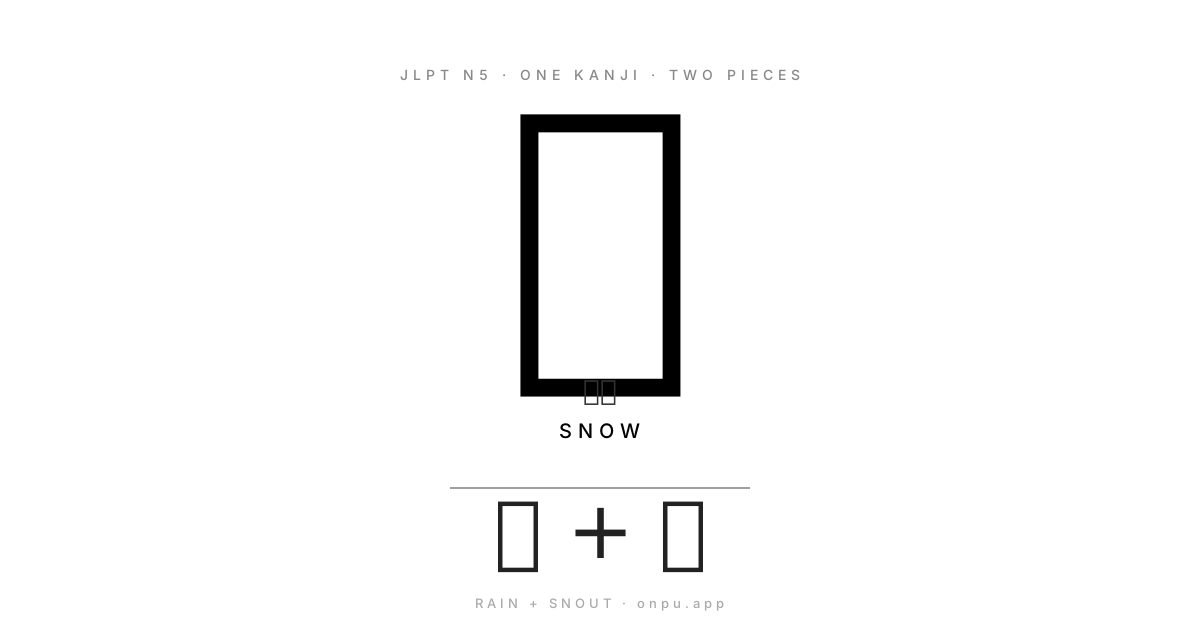
雪 means snow, but the kanji is built from 雨 (rain) sitting on top of an old snout radical. Once you see it, J-pop winter songs that use 雪 stop sounding like weather.
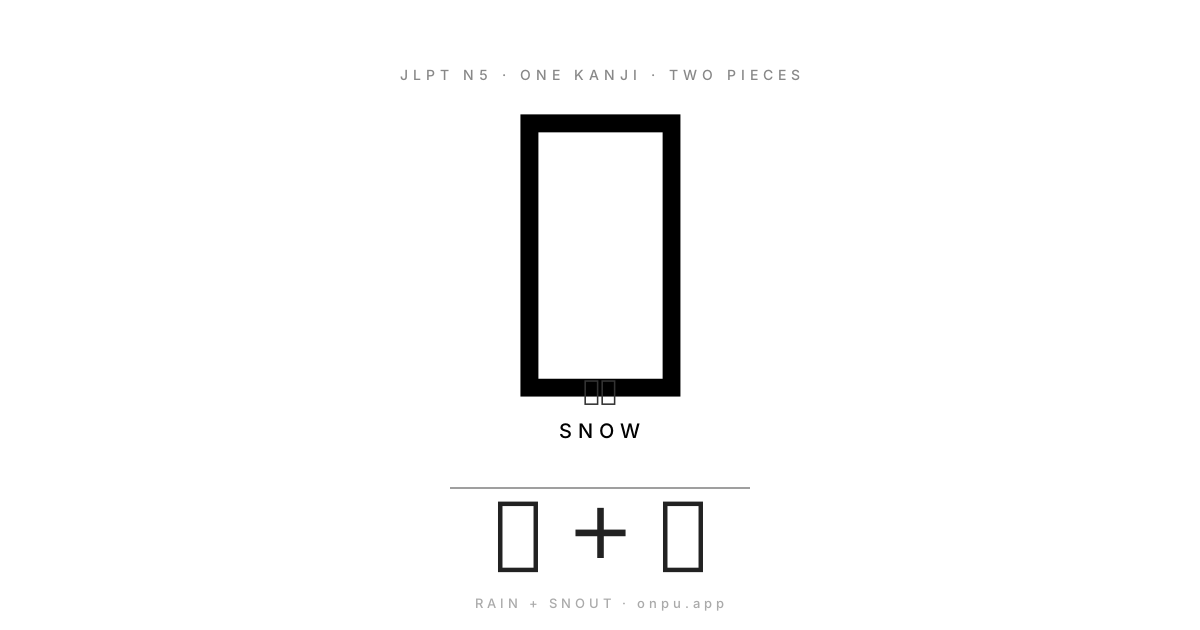
You already know the sound. A Japanese ballad slows down, the piano holds one chord too long, and a single word floats over the gap. Yuki. Snow.
That word is 雪, and it props up so much of the J-pop winter canon that once you hear it you can't stop hearing it. Remioromen built a whole song around 粉雪 (powder snow). Mika Nakashima built one around 雪の華 (snow flowers). Half of the Japanese winter drama soundtracks you've ever heard reach for it as the one image that means "this part hurts."
Some of that is just the seasons doing their job. But there is also something happening at the kanji level that I didn't expect when I first looked, and once I saw it I started reading every winter lyric a little differently.
This post will take about 5 minutes to read and you'll know:
- Why the kanji 雪 is built out of a shape you already recognise
- The funny, surprisingly literal mnemonic that ships with our kanji data
- How two of the most famous Japanese winter songs do their emotional work with this one kanji
- A short list of 雪-compounds you'll start catching everywhere in lyrics
The kanji itself
Before I get to the songs, look at 雪 for a second.
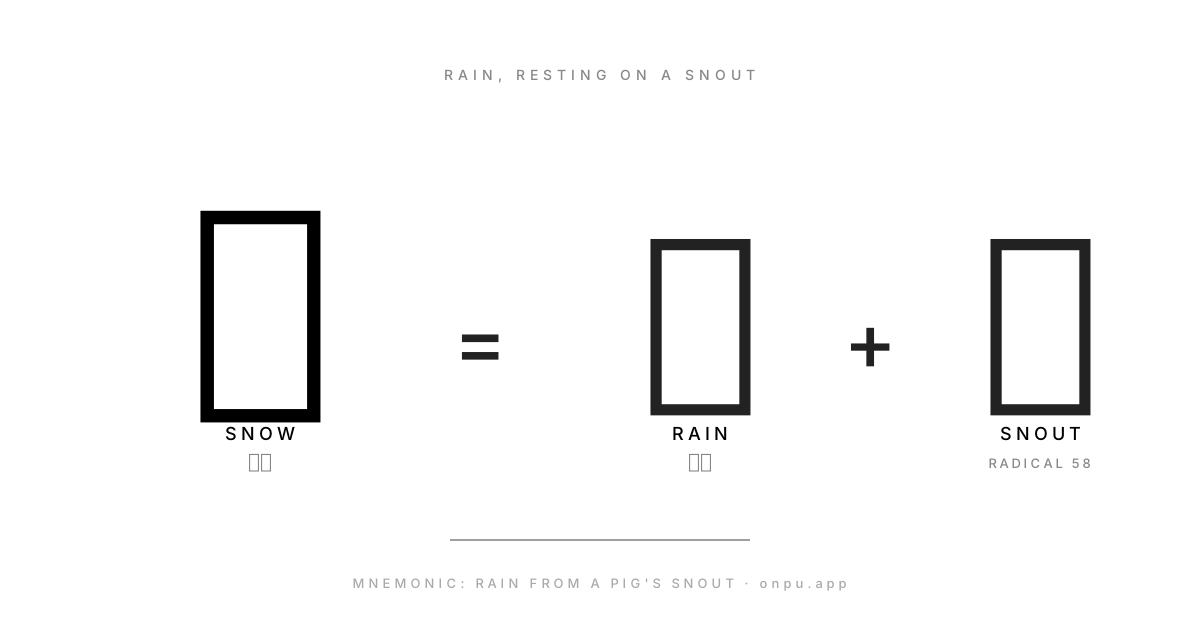
Two pieces stacked. The top is 雨, the kanji for rain, the one we already spent a whole post staring at. The bottom is 彐, which our kanji data calls the snout radical, or the pig's-head radical. It's catalogued as Kangxi radical number 58.
The mnemonic Onpu ships for 雪 reads, in full: rain from a pig's snout.
I laughed out loud the first time I saw that. It sounds like a children's book. But it does the job. Once you've seen the breakdown once, the next time 雪 turns up in a lyric, your eye separates the two pieces automatically. Rain on top, snout underneath. Snow.
That isn't decoration. It's the whole point of how Onpu reads kanji to you: not one dense shape, but two things you already know, sitting next to each other.
Why this matters when you stare at a winter lyric
Once your eye starts splitting 雪 in half, you stop reading "snow" as a weather word and start reading it as a member of the 雨 family. Same horizontal frame, same four little marks inside, same shape that sits on top of cloud (雲), thunder (雷), and frost (霜). Snow is just one of the things the language makes by putting something underneath that frame.
I knew the meaning of 雪 long before I knew the mnemonic. The mnemonic is what made me feel the kanji.
There's a useful side effect for any lyric that pairs 雨 and 雪 in the same verse. Songwriters do it all the time. A rainy autumn verse that turns into a snowy chorus. A line about cold rain that resolves into the first snow of the year. When you can see 雨 sitting inside 雪, the transition isn't two different words on the page. It's the same shape, weighted differently.
粉雪 by Remioromen, when the title is already a kanji puzzle
This is the one a lot of you have at karaoke.
「粉雪」 was released in 2005 and used as an insert song in the Fuji TV drama 1リットルの涙. The melody is the part most people remember. But the title is the part that does the kanji work.
粉 (kona) means powder. The Onpu breakdown for it is 米 (rice) divided (分) into powder. Now stick it in front of 雪. You get 粉雪. Powdered rain-from-a-pig's-snout. Or, in normal English, powder snow.
What I love about this title is that the lyric tells you the band is paying attention to the kanji. The iconic chorus line in the verified lyrics on j-lyric.net reads:
粉雪 ねえ 心まで白く染められたなら
Powder snow, hey, if you could dye even my heart white.
The narrator is asking the snow itself to do the thing snow already does to a town. Dye it white. Cover the messy uneven surfaces with one quiet colour. The lyric works because 粉雪 isn't just "snow." It's specifically the kind of snow that's fine enough to drift sideways, soft enough to land on a sleeve without melting, slow enough to feel like it could keep going forever.
The kanji are doing some of that work. Rice ground into powder, sitting on top of rain with a snout. Every character in 粉雪 is small, fine, drifting.
雪の華 by Mika Nakashima, when the kanji turns snow into a flower
If 粉雪 is the karaoke pick, 雪の華 is the J-drama pick.
「雪の華」 was released in 2003 by Mika Nakashima, and over the next twenty years quietly turned into a standard. Korean covers, Chinese covers, a Japanese film, a permanent spot on every winter playlist in East Asia. The verified j-lyric.net lyrics give you the line that the whole song is named after:
舞い落ちてきた雪の華が 窓の外ずっと
The snow flowers that came dancing down, outside the window the whole time.
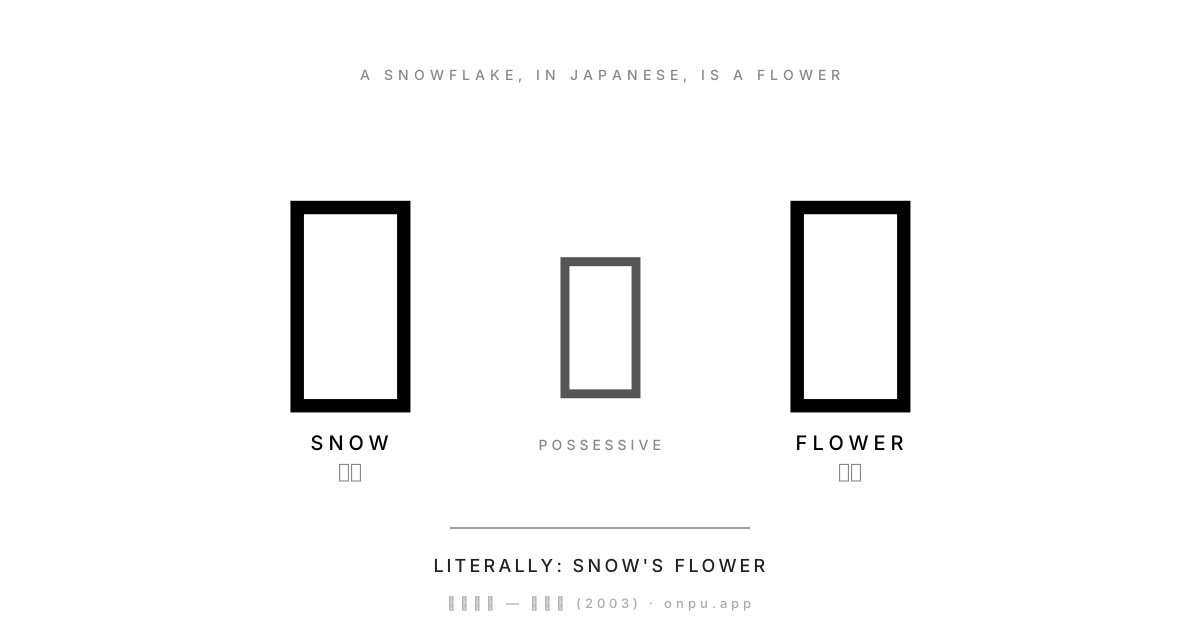
This is where the kanji do something I think English just can't do as cleanly. 雪の華 puts the kanji for snow right next to the kanji for flower. Not "snowflake" as one fused English word, where the "flake" part has nothing to do with flowers. The Japanese reaches for 華, an older, slightly more formal sibling of 花, the same flower kanji we spent a whole post on.
A snowflake, in this song's title, is literally a flower. Cold, slow, falling out of a winter sky, but visually a flower. The lyric never explains this. It doesn't have to. The kanji explain it before the singer's mouth opens.
There's a quiet pattern in Japanese lyric writing where the title compounds two heavy nature words, like 雪 + 華 here, and the song lets you sit with the pair. The English translation flattens it back into a single word like "snowflake," and the doubled image disappears. In the original, both kanji stay on the page.
Snow words you'll start catching
Once 雪 is sitting clearly in your eye, the family of snow words gets useful fast.
吹雪 (fubuki) is a blizzard. The kanji literally read "blow + snow," which is exactly what a blizzard is, snow being blown sideways. Japanese poetry will sometimes pair 吹雪 with cherry petals instead of actual snow, as a way of saying the petals are falling in such density they've become weather. That cherry-blossom version is one of the small reasons the kanji for spring sits next to the kanji for snow across a lot of Japanese lyric writing.
初雪 (hatsuyuki) is the first snow of the year. 初 means beginning, first time. Japanese gives this moment its own word, the way it gives 雨上がり (the moment after rain stops) its own word. Songwriters reach for 初雪 the way English songwriters reach for "the first time I saw you."
大雪 (ooyuki) is heavy snow. 小雪 (koyuki) is light snow, and also a fairly common woman's name in Japan, which means you'll occasionally see 小雪 in a lyric and have to decide from context whether the song is about snow or about a girl named Snow.
万年雪 (mannenyuki) is "ten-thousand-year snow," the Japanese word for the permanent snowcap on a mountain. It's not a word you hear often, but when you do, you'll feel the 雪 doing structural work. The same shape that's been holding up winter for the whole language.
Why songwriters keep reaching for 雪
The kanji is visible. 雨 already scans fast on a lyric sheet. Stick a small extra shape underneath and you get a character that registers from across the room as weather, but specifically the slow falling-from-the-sky kind.
It's also visually onomatopoeic in a way 雨 isn't quite. 雨 looks like rain falling. 雪 looks like rain falling with something solid holding it up underneath. The snout, the broom-shape, whatever the bottom radical originally was, it makes the snow look like it's settling rather than splashing.
I'm not going to pretend I had any of this in my head the first time I learned 雪 from a textbook. The textbook just gave me "snow." It did not tell me the mnemonic was "rain from a pig's snout," and it did not tell me the most famous J-pop winter song would compound 雪 with the kanji for flower and let me sit with that for four minutes.
If 粉雪 or 雪の華 is anywhere on your winter playlist, paste it into Onpu and tap the 雪. The breakdown that pops up is the same one I've been quoting here. I'd love to know which winter line did it for you.