Haru (春) Shows Up in Almost Every J-Pop Song You Love. The Kanji Itself Is the Sun Catching a Plant the Moment It Pushes Through the Ground.
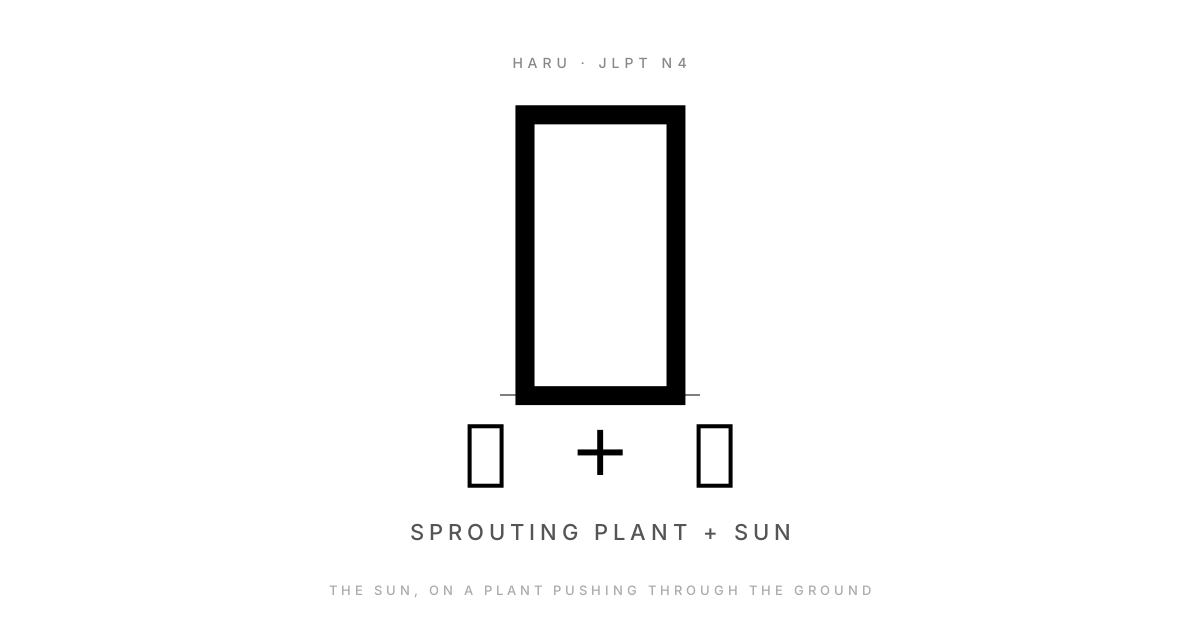
春 means spring. The kanji breaks into sun above a sprouting plant. Once you see it, J-pop songs about spring stop being about cherry blossoms.
Haru (春) Shows Up in Almost Every J-Pop Song You Love. The Kanji Itself Is the Sun Catching a Plant the Moment It Pushes Through the Ground.
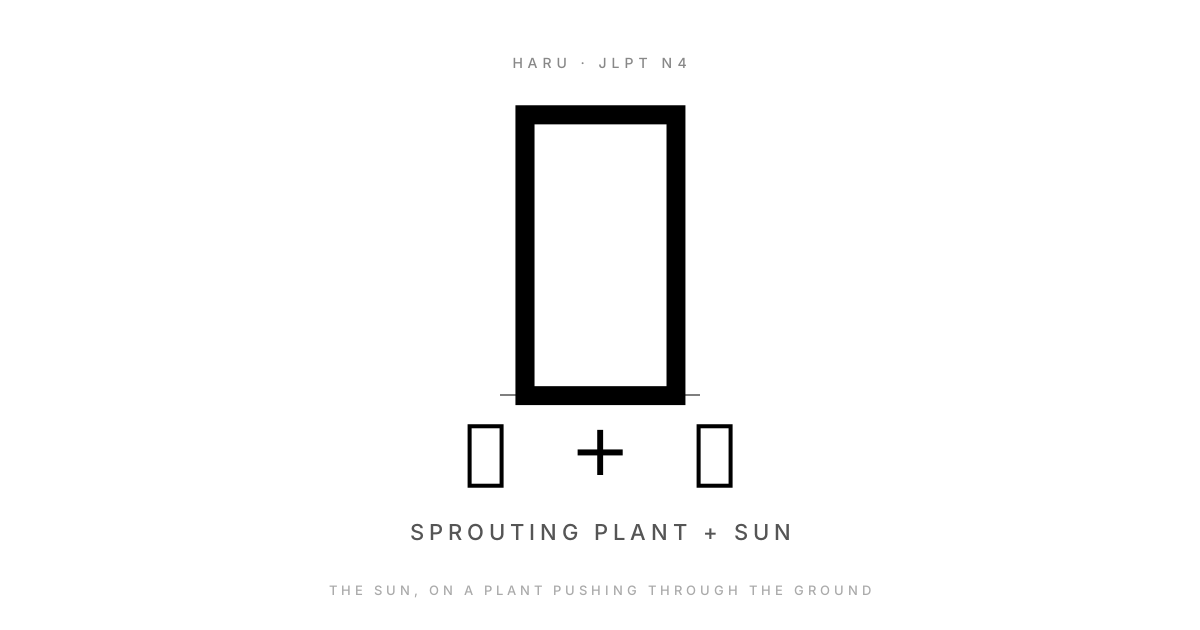
There is a J-pop chorus where the singer drops into a hush before the word, and then the strings come up under one long syllable. You have heard it sung this way in commercials, in karaoke rooms, at someone's wedding. The word is haru.
That word is 春.
It is one of the first two hundred kanji a Japanese learner picks up, and one of the kanji that quietly does the most work in a song. The way it is built tells you something about how the language thinks about the start of a year.
Here is what you will find in the next few minutes:
- What 春 is actually a picture of, and why the literal answer is "the sun catching a plant pushing through the ground"
- The Matsutoya Yumi song that addresses spring as a person you can call out to by name
- The Yonezu Kenshi song where 春 is the setting for someone walking into your life
- The Spitz song where 春 is what you reach when the muddy road finally ends
This should take about five minutes to read.
The kanji is sun, on a sprouting plant
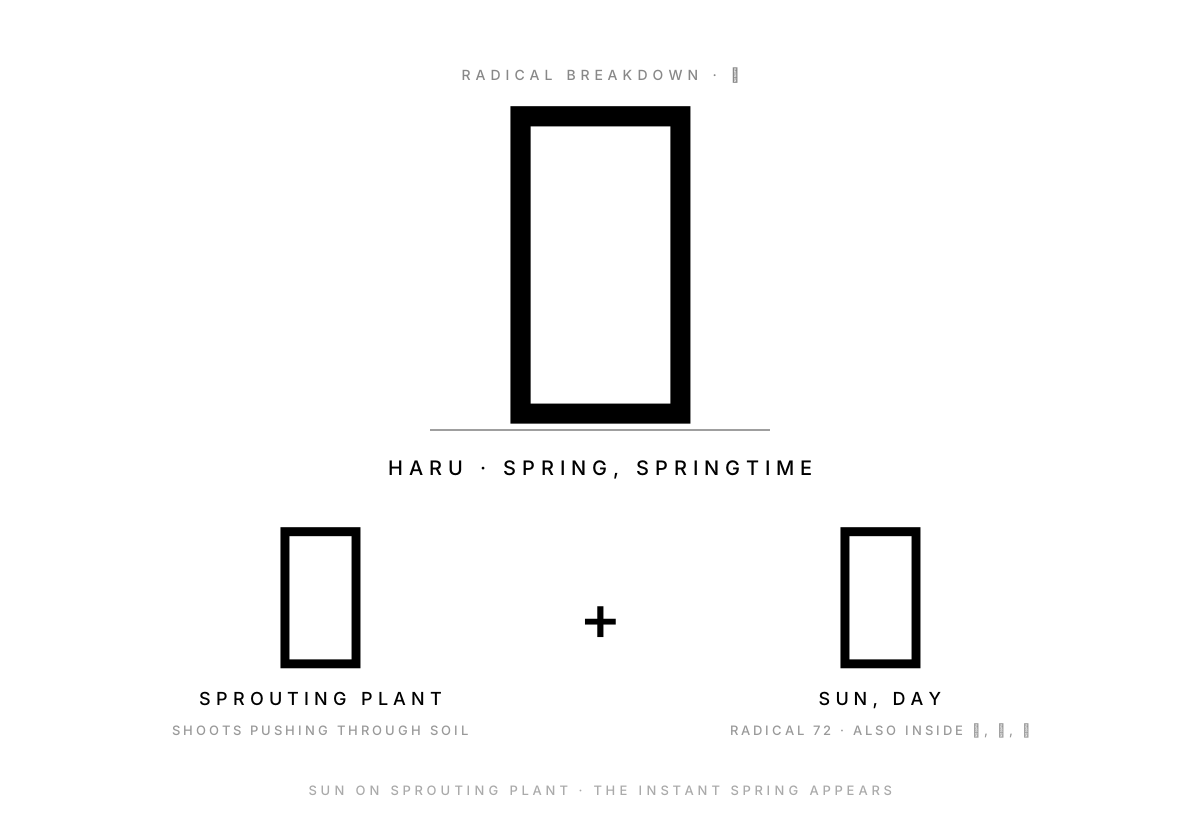
Most kanji are built from smaller pieces, and once you can see the pieces, you cannot unsee them.
The bottom of 春 is 日, the four-stroke shape that means sun and day. You have already seen it doing work elsewhere. It is the same 日 that sits inside 時 (toki, time), inside 明 (bright), inside 曜 (the days of the week). A kanji with 日 in it usually has something to do with the sun.
The top of 春 is 𡗗. Onpu's kanji data glosses it as a sprouting plant, the moment shoots are pushing up through soil.
Put the two pieces together and the literal reading is plain.
Sun, on the sprouting plant.
Not "the season that starts in March." Not "the three months between the equinox and the solstice." A single image. A plant has just broken through the ground. The sun has just touched it. That instant is 春.
English "spring" is a container word. It names a date range. The kanji is doing the opposite job, pointing at the instant the sun and the seed meet, the way you would point at one specific frame in a film.
Songs that use 春 inherit this. The spring in a J-pop chorus is almost never a calendar.
春 as something you call out to
The clearest place I have heard this happen is in 春よ、来い (Haru yo, Koi) by Matsutoya Yumi. Released in 1994 as the theme to the NHK morning drama of the same name. The title alone translates as "Spring, come."
The opening lines:
淡き光立つ 俄雨 いとし面影の沈丁花 溢るる涙の蕾から ひとつ ひとつ香り始める
Faint light in a sudden rain. The daphne flower carrying a beloved face. Buds welling up like tears, releasing their scent one by one. The song has not even said the word haru yet, and it has already given you four images of waiting.
Then the chorus arrives.
春よ 遠き春よ 瞼閉じればそこに 愛をくれし君の なつかしき声がする
The small particle doing the heavy lifting there is よ (yo). It is one of the simplest particles in Japanese, and it is the one you use when you are calling out to someone by name. Mama yo. Kami yo. Haru yo.
Matsutoya is not describing spring. She is addressing it.
The kanji is doing the same job. The plant exists. The sun has not arrived yet. The whole character is the gesture of waiting for a moment that is about to happen. The song is the same gesture, drawn out across five minutes.
"Distant spring." 遠き春よ. The plant is here. The sun is on the other side of the horizon. The singer closes her eyes and the voice of someone she loved is already there.
Next time you hear a Japanese song that uses 春 with the よ particle, listen for whether the song is talking about spring or talking to it. There is almost always a person hidden inside that よ.
春 as the moment a person appears
The same kanji does a heavier job in 春雷 (Shunrai), Yonezu Kenshi's 2017 song.
The title is two kanji, 春 plus 雷 (thunder). Spring thunder. Spring is the setting, the patch of light the song is already standing inside. Thunder is the thing that walks into the patch of light without warning.
Peek at 雷 for a second. The kanji is 雨 (rain) stacked on top of 田 (rice field), which is the whole story it tells: rain on a paddy, and somewhere inside it a flash of light. Yonezu has put one weather picture inside another.
The opening line:
現れたそれは春の真っ最中 えも言えぬまま輝いていた
"It appeared in the middle of spring. Shining in a way that could not be named."
The grammar is doing something quiet. The subject of the sentence is just sore, "that." Yonezu does not say who. He just says that. And that shows up in the middle of 春, the way thunder shows up in the middle of a rainstorm.
Later in the song he writes:
やがてまた巡りくる春の最中 そこは豊かなひだまりでした
Eventually spring comes around again, and there it was, a generous patch of sunlight.
Hidamari is the word for a patch of sun on a wooden floor, the spot a cat finds and sits in. The 日 inside 春 has become the whole image. The plant pushing through has become the place the singer is standing in.
Once you see that the kanji is a sun-on-plant moment, the song stops being about a season and starts being about one specific patch of light, the kind you can find again the next year.
春 as a destination at the end of the muddy road
The third example might be the most useful one. It is by Spitz, on the 2005 album Souvenir. The song is called 春の歌 (Haru no Uta). Literally, "song of spring."
It does not open with cherry blossoms.
重い足でぬかるむ道を来た トゲのある藪をかき分けてきた 食べられそうな全てを食べた
Came down a muddy road on heavy feet. Pushed through thorny brush. Ate everything that looked like it could be eaten.
Three lines of pure hardship. The narrator has clearly walked a long way through somewhere unkind. Spring has not arrived. The word 春 has not been said yet.
Then the chorus:
春の歌 愛と希望より前に響く
The song of spring. Sounding out before love and hope.
That is a strange line if you read 春 as a season. Love and hope are bigger and more abstract. Spring is a date range. Why would the date range come first?
It makes sense once you see the kanji. 春 is not a date. It is the moment the sun touches a plant that has just broken through the ground. That moment happens before anything built on top of it. Before love. Before hope. The plant finds the light first, and the rest gets built afterward.
The song is naming the moment, not the season.
The next time you hear a J-pop chorus that uses 春 as the payoff at the end of a hard verse, listen for the muddy road in the verses and the plant coming up in the chorus. Once you hear that shape, you start hearing it everywhere.
The compounds you have been hearing without noticing
Once you start tracking 春, it shows up in places that are not obvious.
青春 (seishun) is the word for youth, the one manga titles and coming-of-age dramas wear on the cover. It is 青 (blue, green, young) plus 春. Literally, "blue spring." Adolescence as a season the body is in.
春一番 (haruichiban) is the first strong south wind of late winter, the one that means winter is nearly over. Literally, "spring + number one." See the 風 deep dive for what 風 is doing in that compound.
思春期 (shishunki) is the Japanese word for puberty. Three kanji: 思 (think), 春, 期 (period). The thinking-spring period. The years when the sun first starts touching the plant.
Once you see the kanji as a piece rather than a word, the writing system starts opening up. The plant is everywhere. The sun is everywhere. You start spotting them in places that were just sounds before.
Try it on a song you already love
Pick any J-pop track with 春 in the title or the chorus. There are hundreds. Paste the lyrics into Onpu, tap the 春 character, and read what the kanji card says about 𡗗 and 日.
Then ask which job 春 is doing in the song. Is it being called out to, the way Matsutoya does it? Is it the setting for somebody walking in, the way Yonezu does it? Or is it the payoff at the end of a muddy road, the way Spitz does it? Most songs that use 春 are doing more than one of these at once and never signal which. The work goes to the listener.
You can run the same exercise on the kanji for flower, 花, which lives next door to 春 in almost every spring song that exists.
I would love to know which song you tried it on, and which job you think the 春 in that chorus is pulling.