Ame (雨) Shows Up in Almost Every J-Pop Song You Love. The Kanji Itself Hides Inside Snow, Thunder, and Even Electricity.
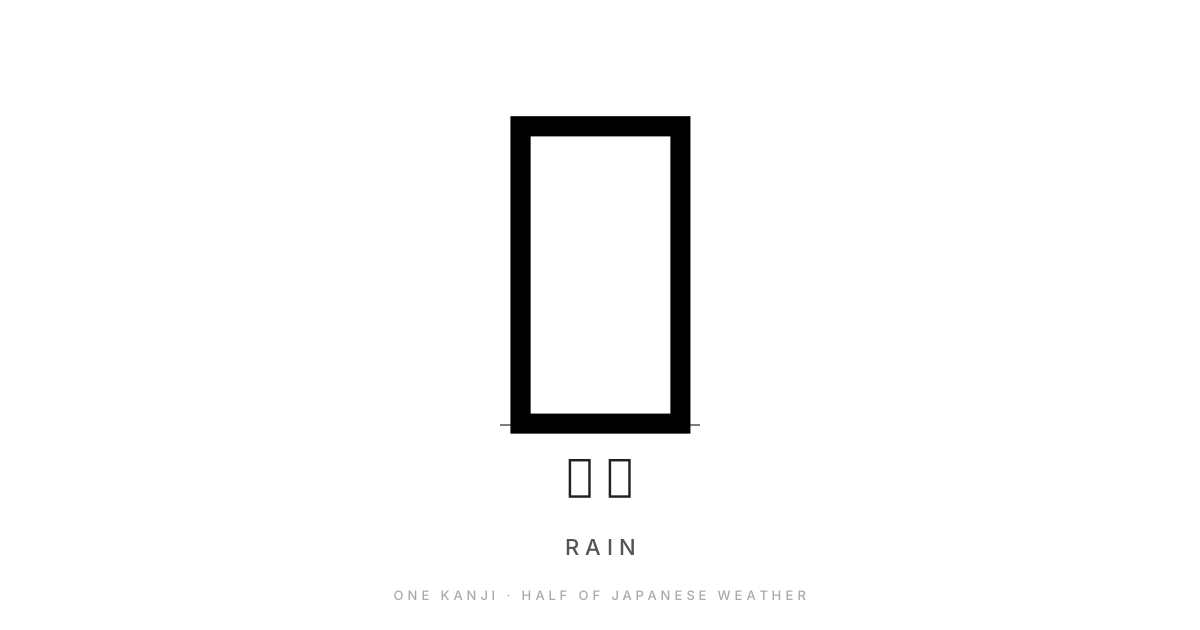
雨 means rain, but the same shape sits inside snow, cloud, thunder, fog, frost, dew, even electricity. Once you see it, J-pop songs that use 雨 stop sounding like weather.
You already know the sound. A J-pop song hits a slow part, the drums drop out, and one word floats in the gap. Ame. Rain.
That word is 雨, and once you start hearing it, you hear it in everything. Yorushika builds whole songs around it. Indie folk songs use rain as their entire emotional weather. Plenty of anime endings reach for it to mean "we didn't get the happy version of this story."
Some of that is cultural. Japan has a rainy season with its own name. But there is also something happening at the kanji level that I did not expect when I started looking, and once I saw it I couldn't unsee it.
This post will take you about 5 minutes to read and you'll know:
- Why the kanji 雨 is doing something deceptively simple but visual
- How 雨 quietly sits inside the kanji for snow, cloud, thunder, even electricity
- Why two famous Japanese songs make rain the entire mood of the lyric, not just the setting
- A short list of compounds you'll start catching everywhere once you've seen them once
The kanji itself
Before I get to the songs, look at 雨 for a second. It's one of the most picture-shaped kanji in the language.
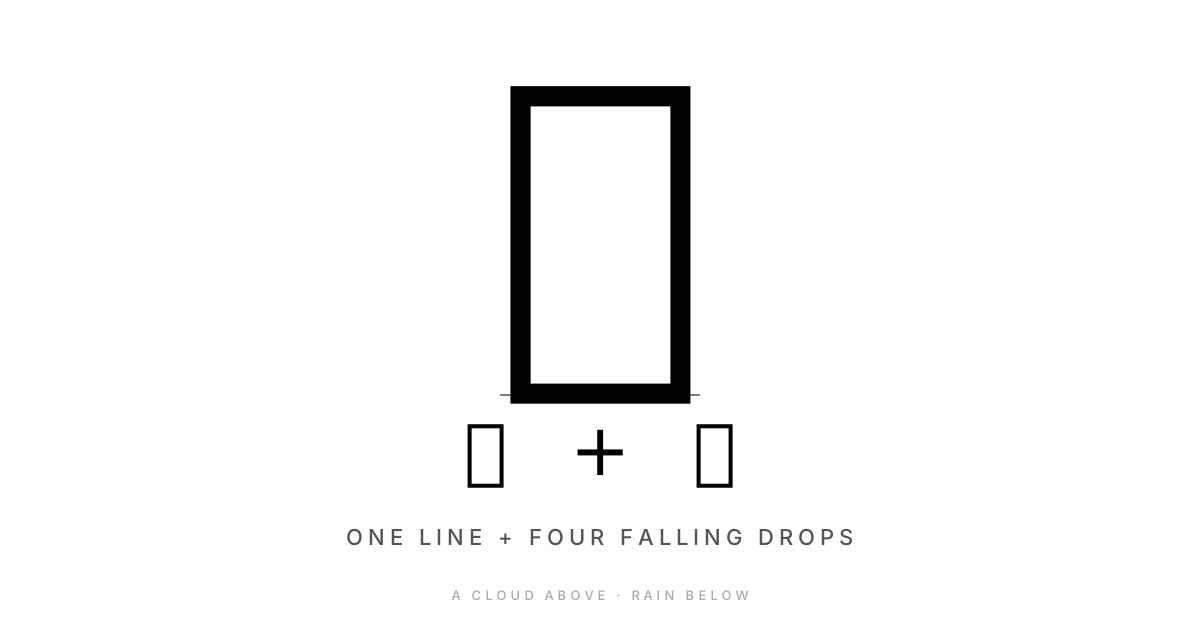
There's a horizontal line on top, a vertical frame, and four small marks falling inside the frame. The mnemonic that ships with our kanji data calls it "one (一) above four dots." The four dots are the rain. The line on top is the cloud. The frame is the sky between them.
You can almost see the storyboard. Someone, a very long time ago, wanted to write down the word for rain, and what they drew was rain.
That sounds obvious until you realise most kanji don't work like this. 思 doesn't look like thinking. 愛 doesn't look like love. 雨 looks exactly like the thing it means.
The shape that won't leave you alone
Here's where it stopped being a cute kanji to me and started being a structural clue about the whole language.
If you take 雨 and put something underneath it, you get a different weather word. Almost every time.
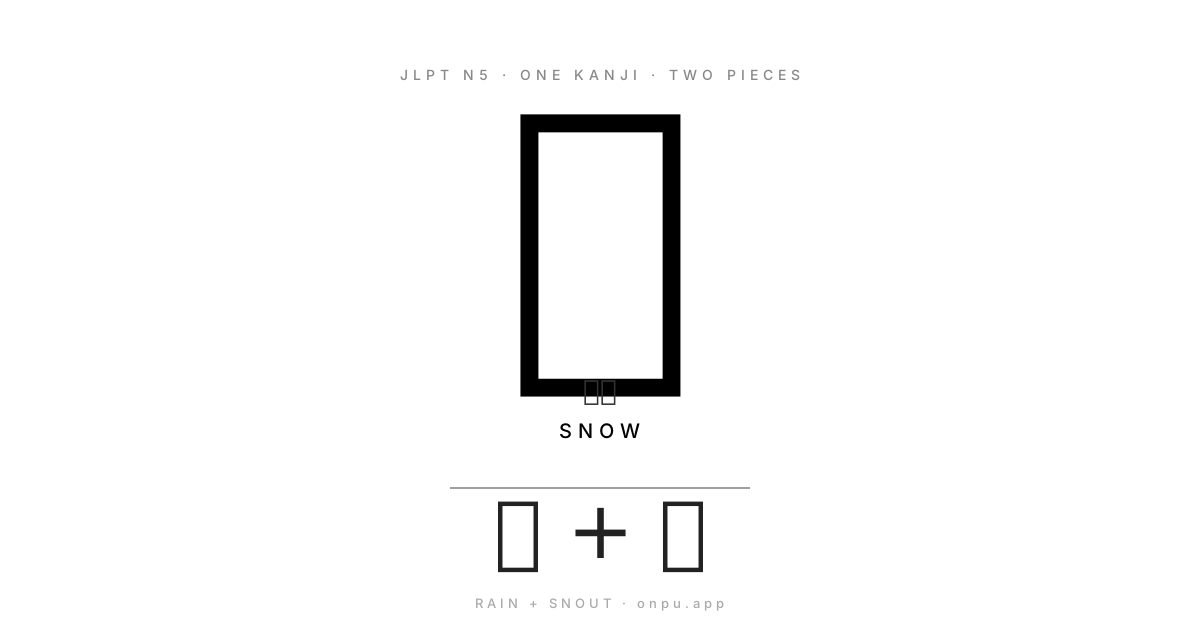
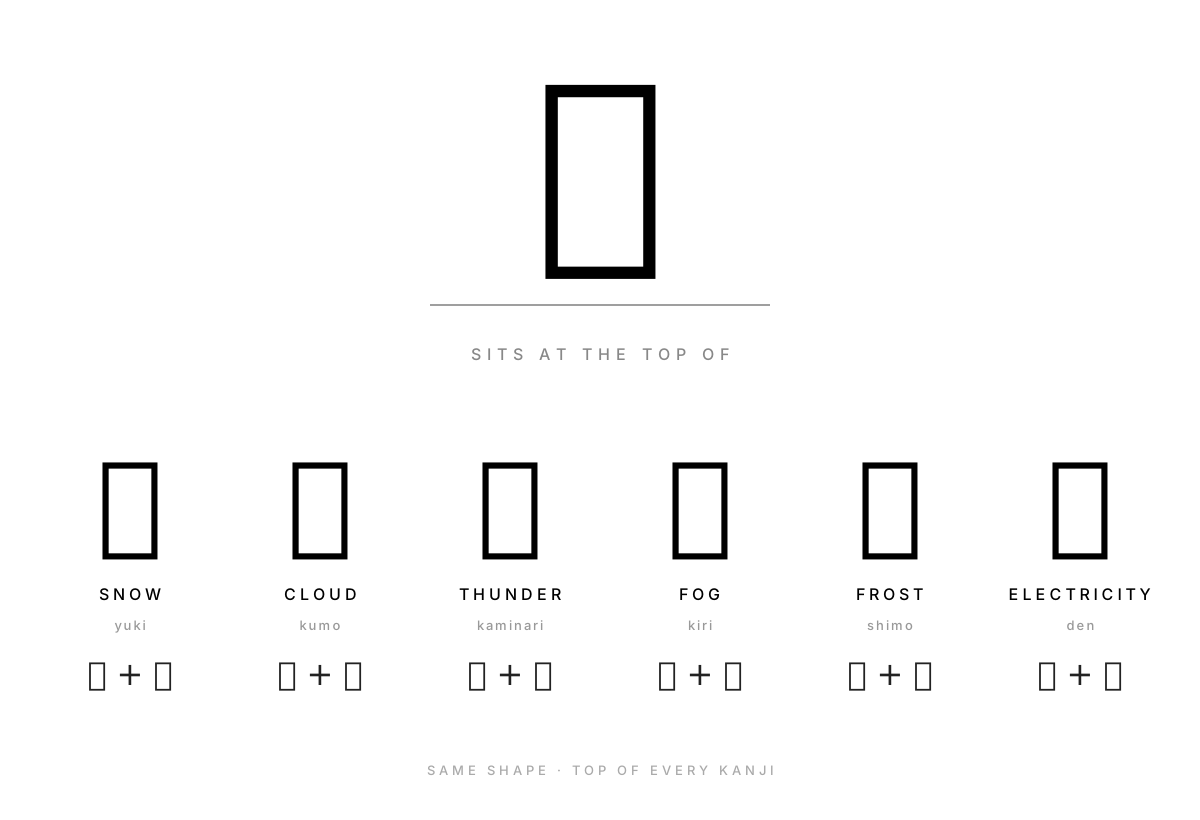
- 雪 (yuki, snow): 雨 + 彐, an old "snout" shape
- 雲 (kumo, cloud): 雨 + 云, an old form of "say"
- 雷 (kaminari, thunder): 雨 + 田, rice field. Rain over a field. That's thunder.
- 霧 (kiri, fog): 雨 + 務, duties
- 霜 (shimo, frost): 雨 + 相, "each other"
- 露 (tsuyu, dew): 雨 + 路, road
- 震 (shin, quake): 雨 + 辰, the dragon zodiac sign
Try this. Look at any one of those kanji at full size. The 雨 sits on top of every single one. Snow is rain plus a snout. Frost is rain plus the kanji for "each other." Dew is rain on the road.
Once I saw this, I started reading kanji vertically without meaning to. Top half, bottom half. Whenever I see 雨 on top, I know I'm looking at something the language considers weather.
That's not a trick I knew the first time I learned 雨. The dictionary just gives you "rain." It doesn't tell you that 雨 is the building block.
And then it leaks into things that aren't weather
This is the part I really didn't expect.
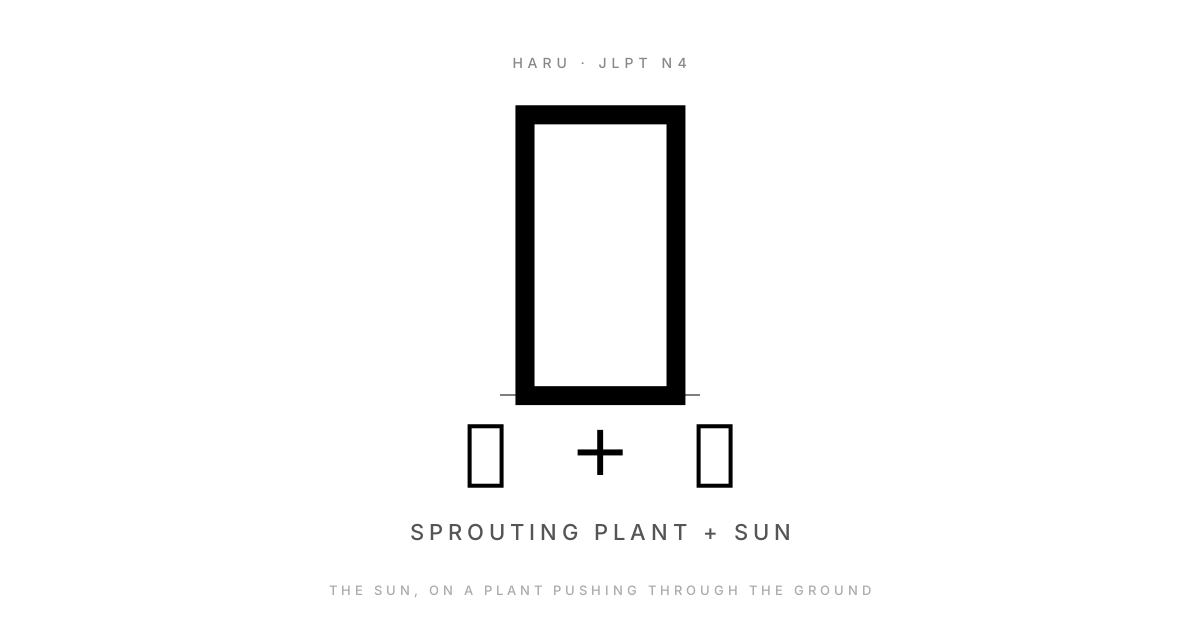
電 (den) means electricity. Not weather. Modern, technological, every-day. It's the den in 電車 (train), 電話 (phone), 電気 (the electricity itself). The way the kanji is built, in the data we use, is 雨 over 日. Rain over sun. Lightning, basically.
So when a J-pop song says "I waited for you at the station in the rain," you can mentally zoom in and see something a little stranger. The rain in 雨 and the rain in 電車 are the same shape. The train station has rain hiding inside it.
It doesn't stop at electricity. 雰囲気 (fun'iki), the word every Japanese person uses for the atmosphere of a room or a song, is built around 雰, which is 雨 + 分 (divide). And 零 (rei, zero) is 雨 + 令 (command). Even the digit zero, in formal kanji form, has rain on top.
I'm not going to claim that ancient Chinese scribes literally felt rain when they wrote the word for atmosphere. The deep etymology is harder to source than the modern shape. But the modern shape is what the reader of a lyric stares at. And in the modern shape, 雨 is everywhere.
Two songs where rain is the whole point
This is where it stops being a kanji game and starts mattering for the music.
Yorushika, 雨とカプチーノ. The title pairs rain with cappuccino, which is already a small Japanese-pop trick: take a heavy nature word and put a soft small everyday word next to it. Rain and cappuccino. One of the verified chorus lines reads:
さぁ揺蕩うように雨流れ
Let the rain flow as if it sways. Two characters that mean rain in this lyric: 雨 itself, and 流れ, which is the verb "to flow." The whole line is liquid. The melody under it does the same thing, this slow drifting feel that doesn't ever resolve. The 雨 isn't decorating the song. It's defining how the song moves.
never young beach, いつも雨. The title literally translates as "always rain," and the chorus repeats:
クライマックスはいつでも雨で 君を待つけど 会えないままで
The climax is always rain. I wait for you but we never meet.
I love this one because the lyric tells you what 雨 is doing in the song. The narrator's emotional climax is supposed to be the moment of meeting again, and instead it's rain. Rain stands in for the thing that didn't happen. The song uses the same structural trick over and over: the build never lands, because rain.
If both of these songs feel like they're doing emotional work with weather, that's because Japanese gives them more material to work with than English does. Rain in English is mostly a sound effect. Rain in Japanese is a piece of the kanji vocabulary you've been using all day, the same shape that's hiding in snow, in fog, in the train you're listening to the song on.
Compounds you'll catch now
Once you're listening for it, the list of 雨-words gets long.
大雨 (ooame) is heavy rain. 小雨 (kosame) is light rain. 雨上がり (ameagari) is the very specific moment after rain stops. Wet pavement, bright sky. There's a whole subgenre of city-pop and indie tracks built around that one word.
五月雨 (samidare) is early-summer rain. The kanji literally read "fifth-month rain." 梅雨 (tsuyu) is the rainy season itself, "plum rain," named for plum-ripening time. Japanese has a vocabulary for rain by season that English just doesn't have, and song titles use it.
If you hear any of those in a song now, the 雨 is sitting inside them, doing the same job it does in 雪 and 雲 and 電. It's the shape that means weather.
Why songwriters keep reaching for 雨
The kanji is unusually visible. Six strokes, four raindrops, a roof. It scans fast on a lyric sheet and sits inside enough other characters that even readers who don't catch every word still feel its shape rhyming through the line.
That's a useful tool if you're writing a song. You can use 雨 once at the surface level, the rain the lyric is about, and then again invisibly inside 電車 or 雰囲気 without ever pointing it out. The reader who's paying attention picks it up. The reader who isn't picks up a vibe they can't quite explain.
I've started doing the same thing the slow way, by reading lyrics and stopping every time I see one of these top-half-雨 kanji. It's changed how I read Japanese songs.
Hana (花) does similar quiet work in J-pop. Sora (空) carries an even bigger paradox, meaning sky and emptiness with the same character. And namida (涙) belongs in the same family of water words.
Try it yourself
Paste any J-pop song with 雨 in the title or the chorus into Onpu. Long-press the character and you'll see the four falling marks and the cloud line laid out. Then keep an eye on the rest of the lyric. If the song mentions a train, the 電 in 電車 has the same 雨 sitting on top of it. If the song mentions snow, the 雪 has it too.
The shape was always in there. I just needed someone to point at it before I noticed.