Kokoro (心) Shows Up in Almost Every J-Pop Song You Love. The Kanji Hides Inside the Words for Ninja, Sadness, and Forgetting.
The kanji 心 (kokoro, heart) is hiding inside the Japanese words for sadness, forgetting, feeling, and even ninja. Here is what that does to every song you already love.
Kokoro (心) Shows Up in Almost Every J-Pop Song You Love. The Kanji Hides Inside the Words for Ninja, Sadness, and Forgetting.
Most people know that 忍者 is how you write "ninja" in Japanese. What almost nobody knows is what the kanji actually looks like on the inside.
忍 is a blade (刃) stuck through a heart (心).
That is not a metaphor. That is the breakdown of the character. And once I found it in Onpu, I kept going. It turns out 心 (kokoro, heart) is hiding inside basically every Japanese word for emotion I had ever half-understood while singing along to something.
In this post, you'll learn:
- What 心 (kokoro) actually is beyond "the word for heart"
- Why the Japanese word for forgetting has a dead heart inside it
- Why sadness is written as a heart that has been wronged
- How 心 shows up inside ninja, feeling, thinking, and thought
- Where to find these kanji in songs you already know
About 6 minutes to read.
心 is not complicated. It is just everywhere.
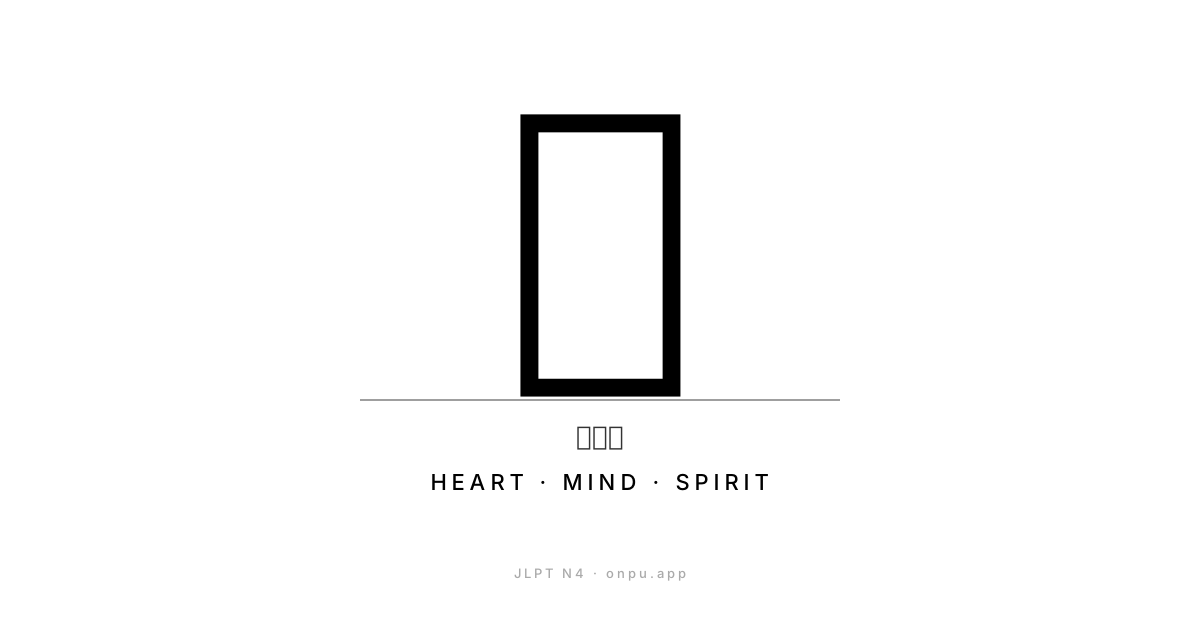
心 is N4. One of the first kanji you encounter if you are studying seriously, and one of the ones that floats past you if you are not.
It reads こころ (kokoro) on its own. In compounds, it usually reads シン (shin): 感心 (kanshim, admiration), 心配 (shinpai, worry), 心臓 (shinzou, the literal heart as an organ).
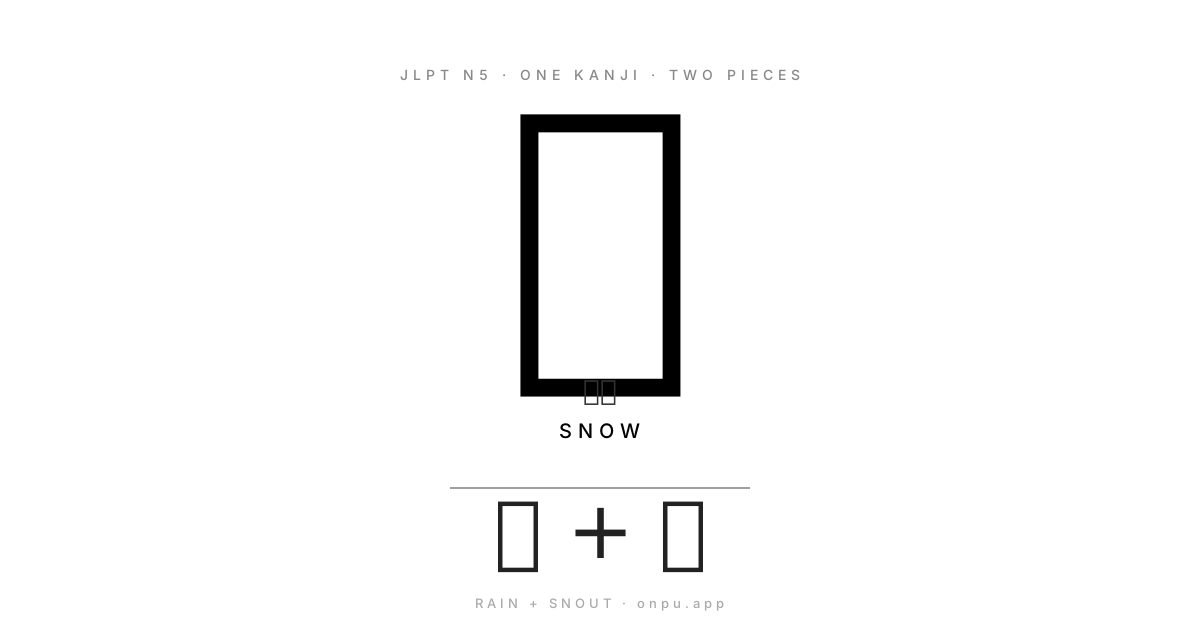
The character itself is a pictograph. The three strokes are a simplified drawing of the actual heart. And that means when I say 心 is "hiding inside" other kanji, I mean that literally: the pictograph of a heart is embedded in the structure of the word, the way 木 (tree) is embedded in 森 (forest).
The emotional vocabulary of Japanese is built around this shape.
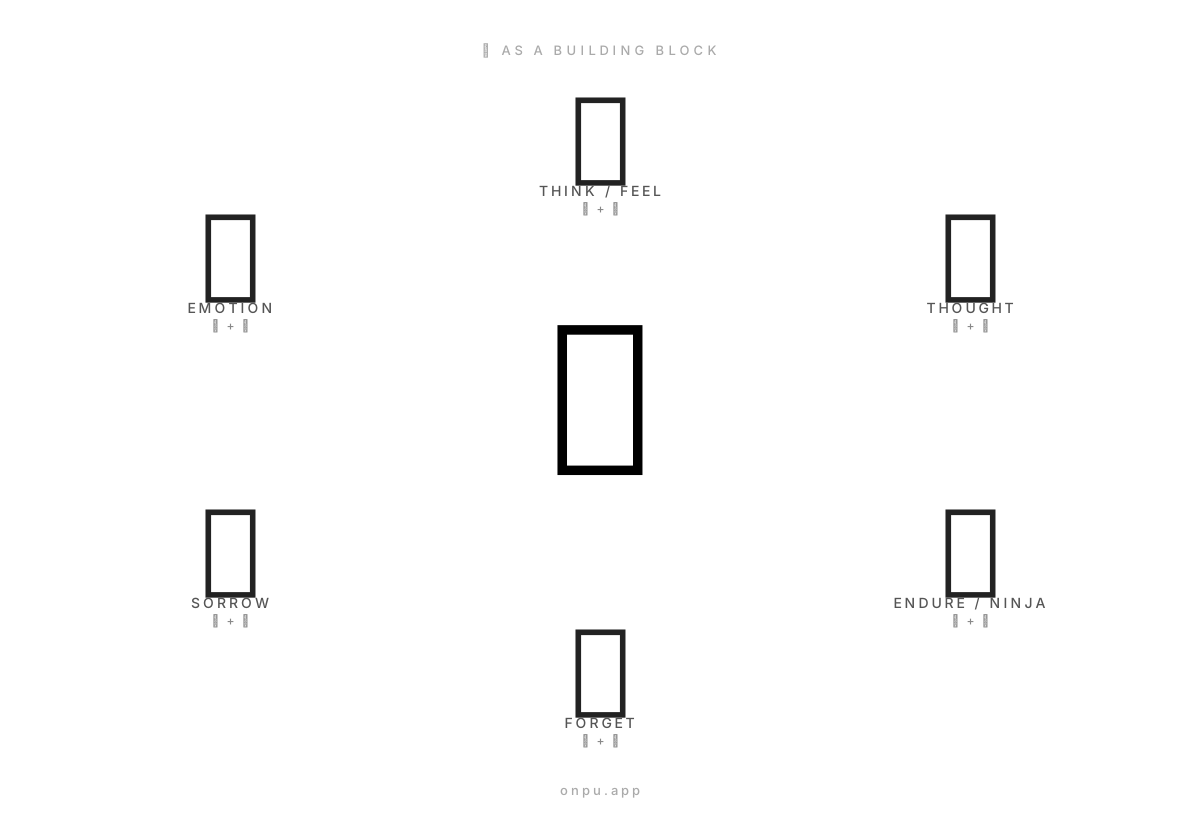
Let me go through the ones that stopped me.
When you forget, your heart dies (忘)
忘れる (wasureru) is the verb for forgetting. Standard N4. You hear it constantly in breakup songs, longing songs, the kind of song that plays over a scene where someone looks out a window at rain.
The kanji is 忘. And it breaks down as:
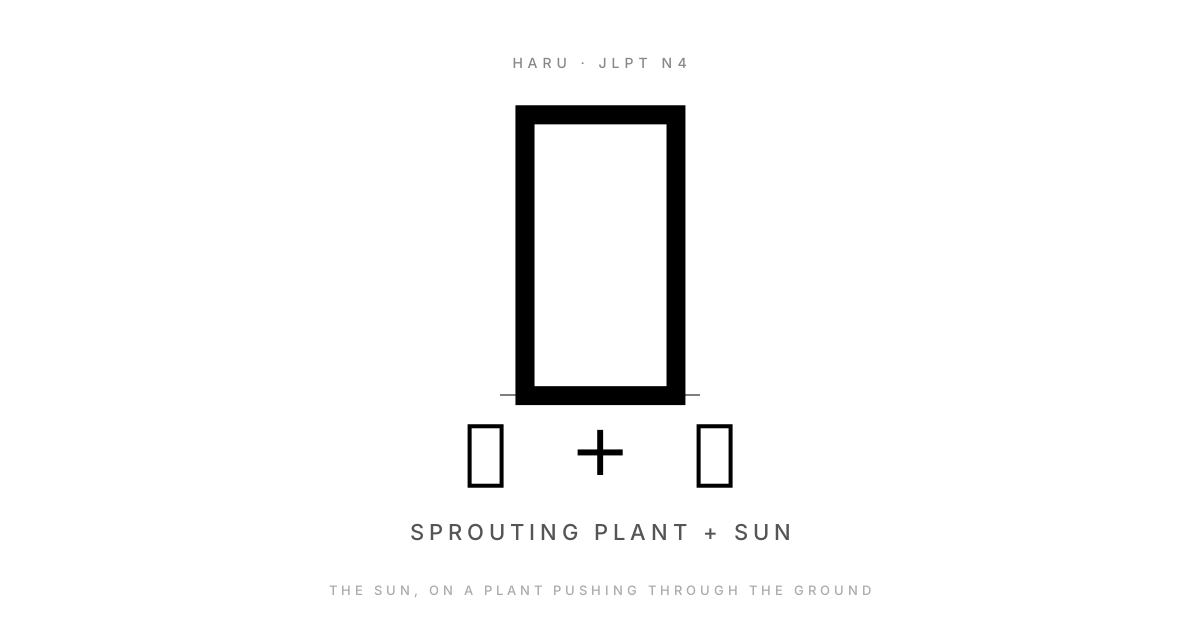
亡 (dying, deceased, perish) + 心 (heart)
Forgetting is a dead heart. A heart that has stopped responding to something. Not gone. Just no longer alive to that thing.
I had been using 忘れる for a couple of years before I looked at it in Onpu and actually read what it was made of. There is something honest in that breakdown. It matches the feeling. When you forget someone, the feeling does not vanish. It just dies down. The heart goes quiet.
Japanese put that exact idea inside the character.
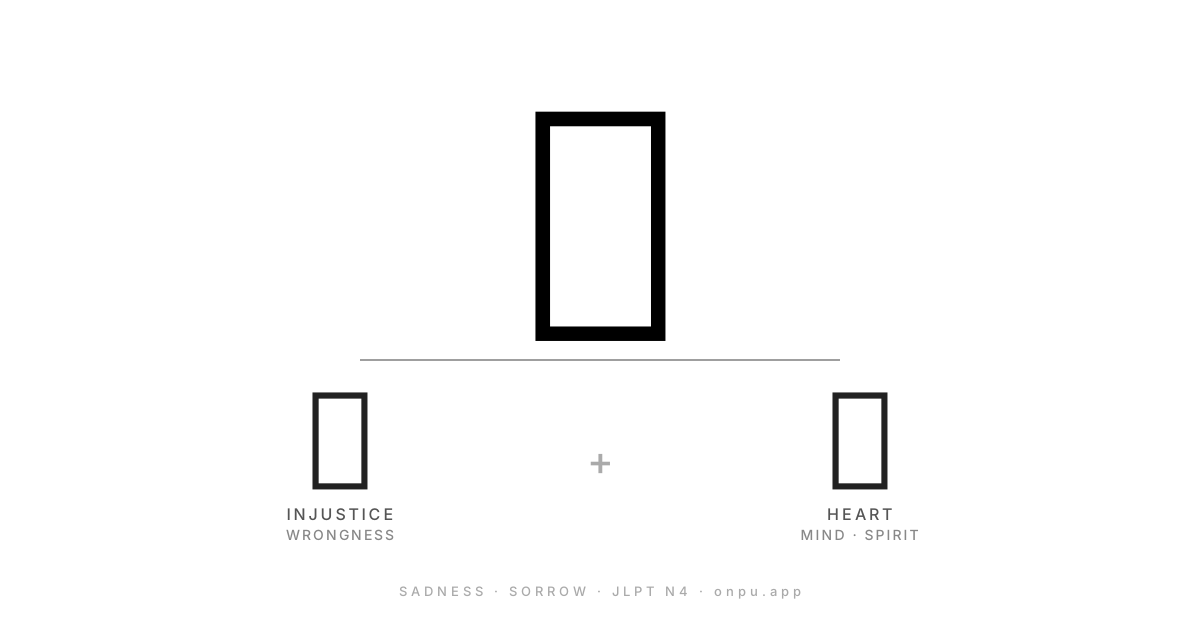
When you're sad, your heart has been wronged (悲)
悲しい (kanashii) is the standard word for sad or sorrowful. And when it shows up in a song (which it does constantly), the kanji is doing something worth looking at.
悲 breaks down as:
非 (injustice, wrongness, something that should not be) + 心 (heart)
Sadness is a heart that has encountered something wrong. Not broken. Not lost. Wronged. Like the situation itself was not supposed to happen, and the heart knows it.
That distinction showed up for me most clearly when I was reading Lemon (Kenshi Yonezu) in Onpu. There is a line in the pre-chorus:
あの日の悲しみさえ あの日の苦しみさえ
Even the sadness of that day. Even the suffering of that day.
Yonezu wrote that song after his grandfather died. The word he chose, 悲しみ, is not just "sad." It is the kind of grief that comes from something that should not have happened. A heart responding to wrongness.
If you have not read the Lemon breakdown yet, that post goes into how 苦しみ (suffering, from 苦) works in the same two lines: bitter and painful at once.
忍: Endure, Ninja, Blade in the Heart
This is the one I keep coming back to.
忍 is an N1 kanji. It shows up in 忍耐 (nintai, patience/endurance) and 忍者 (ninja) and 忍ぶ (shinobu, to endure or to conceal).
The breakdown:
刃 (blade, the cutting edge of a sword) + 心 (heart)
To endure is to have a blade in your heart and keep moving anyway. Japanese encodes that into the character. A ninja is literally someone who has learned to put a blade through their heart and keep going. Patience and concealment as the same act.
I found this one by accident. I was looking at something unrelated in Onpu and 忍 came up as a component, and I just stared at it for a minute. It reframes the whole concept of 忍耐. Patience in Japanese is not waiting cheerfully. It is something sharper than that.
The full pattern: 心 is inside every feeling
Once you see it in 忘 and 悲 and 忍, it starts showing up everywhere.
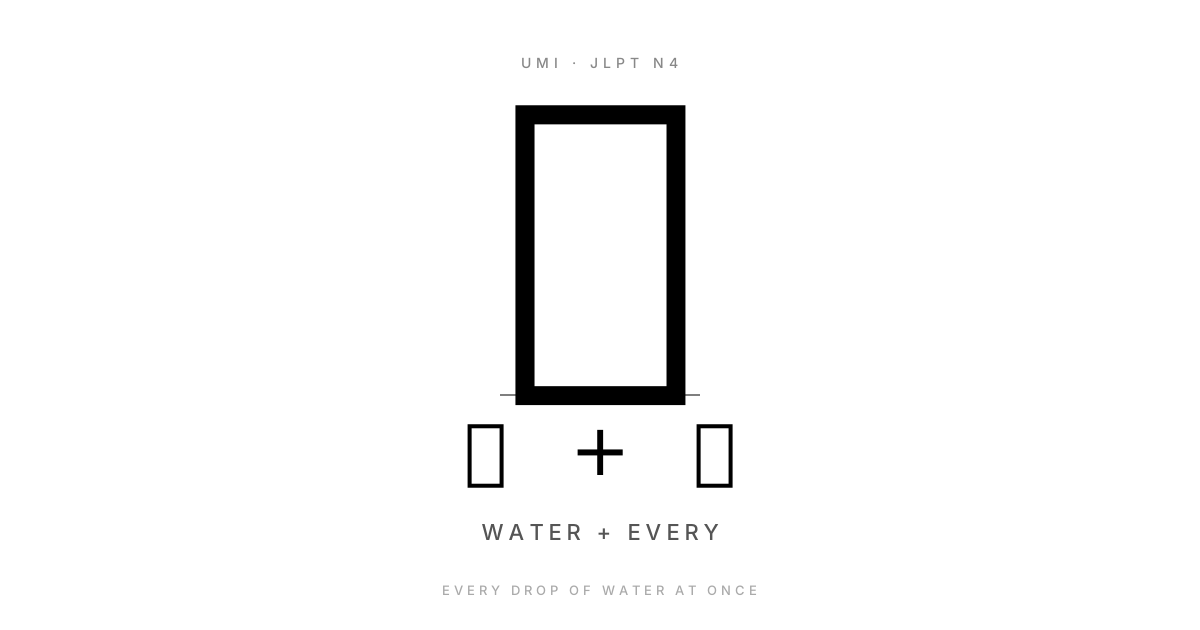
感 (N4, emotion, feeling) breaks down as 咸 (all, every) + 心 (heart). All hearts together. That is what emotion is. Not one person's private feeling but something collective, shared, recognizable across everyone who has a heart.
思 (N4, think, thought) is 田 (rice field) + 心 (heart). A rice field in the heart. Thinking in Japanese is not a head-centered act. The traditional image puts it in the heart. 思う (omou, to think/feel/hope) is the word J-pop reaches for constantly when someone is holding feelings about another person.
念 (N4, thought, feeling, strong intention) is 今 (now) + 心 (heart). What is in your heart right now. A thought in Japanese is not an abstract calculation. It is what the heart is holding at this moment.
This is the pattern: emotional vocabulary in Japanese is physically heart-shaped. The kanji for 恋 (romantic love, longing) is 亦+心, which I went into in the koi vs. ai post. Porno Graffitti uses 恋心 (heart-of-longing) as the recurring word in Saudade, and it works partly because you can feel the 心 inside it. There is a full breakdown of that one here if you want the long version.
What this changes when you listen
I started approaching Japanese songs differently after I found 忍. Not differently in a dramatic way. More like I started noticing which emotional words were carrying 心 inside them, the way you notice a recurring instrument in a song after someone points it out.
悲しい: wronged heart. 忘れて: heart going quiet. 感じる: a heart responding to something. 思う: the heart holding something right now. 念じる: pushing a feeling outward from the heart.
The kanji are not decoration. They are structural. And once you find the heart inside them, you see it every time.
If any of these songs are in your rotation, paste the lyrics into Onpu and tap the kanji. Every one of the characters above will show you the heart inside.
Onpu is a lyrics app for Japanese music. Paste any song's lyrics and tap any kanji to see the radical breakdown, reading, and meaning. No account needed to try it.