Japanese Has Two Words for Love. The Kanji Show They're Not Even the Same Feeling.
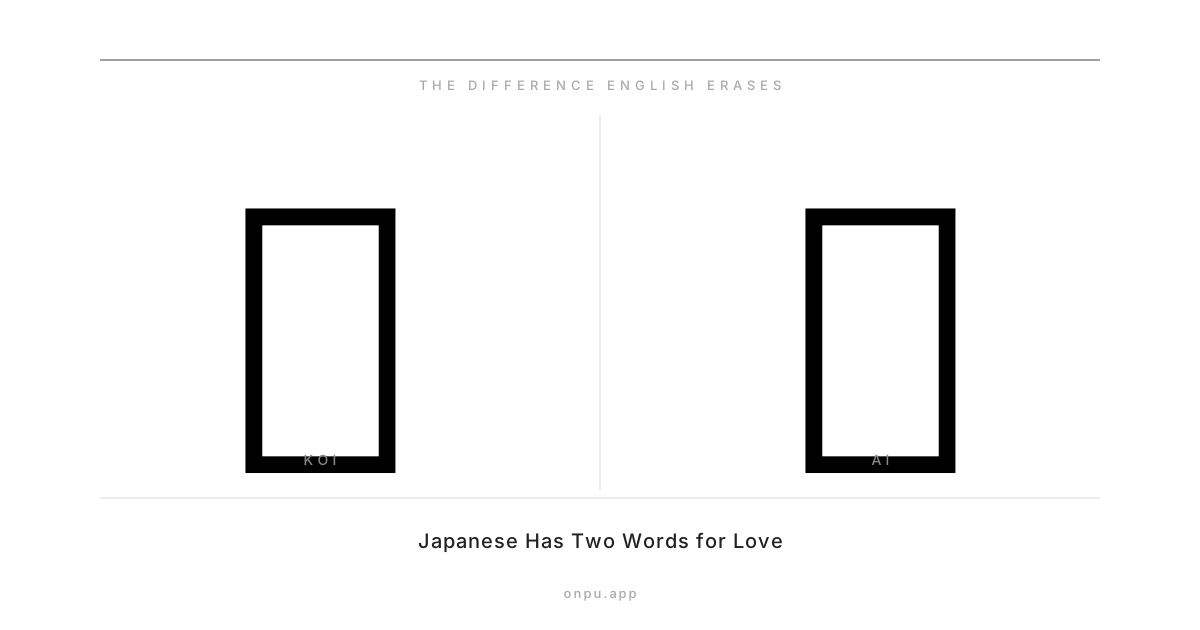
恋 (koi) and 愛 (ai) both get translated as love in English. But their kanji describe completely different feelings. Here is what the difference sounds like in J-Pop.
Japanese Has Two Words for Love. The Kanji Show They're Not Even the Same Feeling.
The first time I saw both 愛 and 恋 in the same song lyric, both translated as "love," I figured it was just stylistic variation. Two characters, same meaning, whatever. I moved on.
Then I looked at the kanji.
They're not the same thing at all.
This post will take you about 5 minutes and you'll come out knowing:
- The kanji breakdown of 恋 (koi) and what it tells you about the feeling
- The kanji breakdown of 愛 (ai) and why it's something different
- How a single PornoGraffitti chorus uses both words in the same breath, and what that means
- What to listen for the next time either word shows up in a song you already know
恋 (koi): the heart that keeps coming back
The kanji for 恋 breaks into two pieces.
At the bottom: 心 (kokoro, heart). At the top: 亦 (mata, again).
Heart. Again.
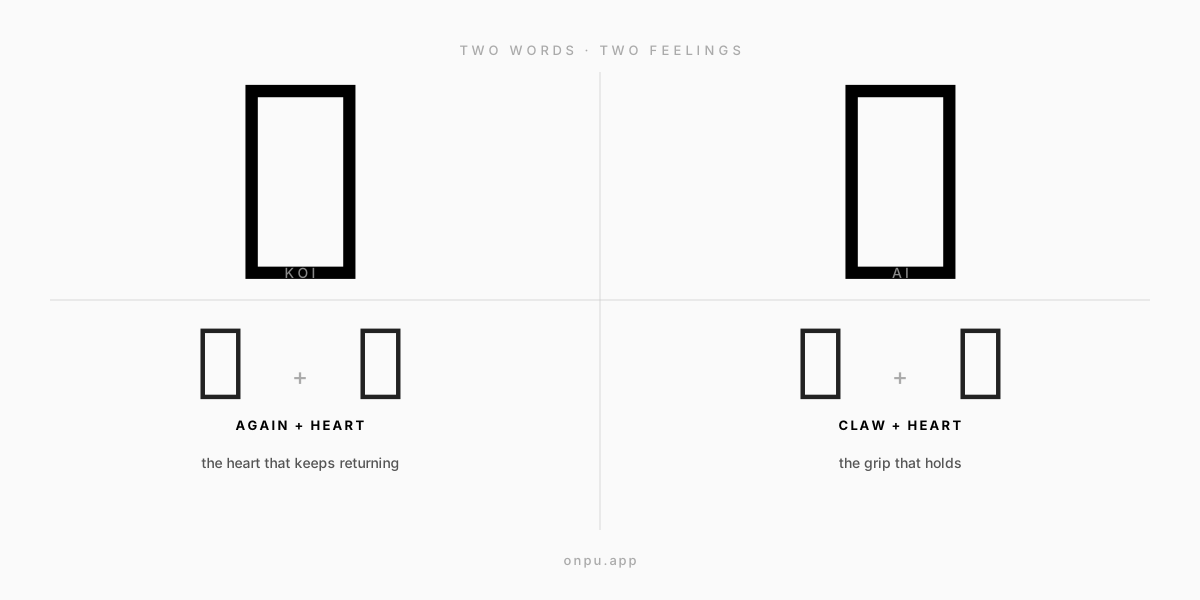
That's the whole feeling, right there. Not the arrival of love. The return of it. The heart that keeps circling back no matter what you decide. The kind of feeling that shows up uninvited at midnight when you hear the wrong song.
When you see 恋人 (koibito, a romantic partner), that's literally "the person your heart keeps returning to." When a song lyric uses 恋しい (koishii), the most direct translation is "I miss you" but the kanji underneath are doing something more specific: my heart is doing the loop again. It's not grief. It's not closure. It's the same pull, still pulling.
初恋 (hatsukoi, first love) has the same structure. 初 means "first." What comes next is 恋: the looping, aching, unresolved version of the feeling. Not first love in the sense of "complete and settled." First time the heart did this particular thing it keeps doing.
This is why 恋 tends to show up in songs about the early stage. The chase. The unrequited longing. The part that's electric because it hasn't resolved yet.
愛 (ai): something grips the heart
愛 is harder.
The kanji are built from 爫 (a claw, or a hand reaching down) over a heart. Onpu's kanji data puts it plainly: claws scratching a heart.
Not a flutter. A grip.
愛する means to love someone in a way that's committed, sometimes almost painful in its weight. 愛情 (aijou) is affection, but with permanence behind it. 愛しい (itoshii) is the word for looking at someone and feeling something almost too large to carry.
恋 is the longing. 愛 is the holding.
The chorus where both appear in the same breath
PornoGraffitti's サウダージ uses both words in the same chorus. Not alternating between verses. The same chorus.
The line is: 愛が消えていくのを 夕日に例えてみたりして / そこに確かに残るサウダージ
"Comparing the disappearance of 愛 to a sunset. And yet saudade, still there, undeniably."
Then 恋心 (koigokoro, the heart in a state of 恋) appears in every single chorus that follows. Four times. The same looping word, circling back.
The structure is precise. 愛 is the thing that disappears, like a sunset. 恋心 is the thing that doesn't disappear. It just keeps returning.
The songwriter is using the two words the way they're built: 愛 for the settled, deep thing that can fade. 恋 for the looping ache that outlasts it.
The サウダージ breakdown traces this through the full lyric: how 恋心 repeats while 愛 moves through and out. The two words aren't interchangeable. They're doing two separate jobs.
What you can now hear in J-Pop
This difference shows up in song titles before you even press play.
Song titles that use 恋 tend toward early-stage, unresolved longing. The fluttery feeling. The yearning. 恋のディスコクイーン (Disco Queen of Love), from the Yakuza karaoke catalog, puts 恋 right in the name: this is that light, kinetic feeling, not a declaration of something deep.
Song titles that use 愛 tend toward something weightier. A commitment, an anguish, something that's been gripping for a while.
Neither is better. They're just different states, and Japanese song titles tend to signal which one you're getting into.
The most interesting songs use both, and they're usually tracking a transition between the two. The エイリアンズ breakdown is a good companion post here, because it traces how KIRINJI's song lands on 好きだよ at the end instead of either 恋 or 愛. That's a third option entirely. The word choices in Japanese music are rarely accidental.
This blog spends a lot of time on words that appear across almost every J-Pop song you know. 恋 and 愛 are both in that category. Now that you've seen the kanji, you'll catch them everywhere.
Listen for the kanji
The next time you're listening to a J-Pop song that mentions love, in any form, in any verse, the word in the Japanese is either 恋 or 愛. Or sometimes 好き (suki, simple liking/affection), which is a completely different register.
The translation will say "love" for all of them.
The kanji will tell you which one it actually is.
If you paste a J-Pop song into Onpu and tap on either character, the radical breakdown is right there: heart-again or claw-on-heart. Once you've seen those two structures, you don't need to memorize which feeling is which. The kanji show you.