Namida (涙) Shows Up in Almost Every J-Pop Song You Love. The Kanji Itself Means Water Going Backwards.
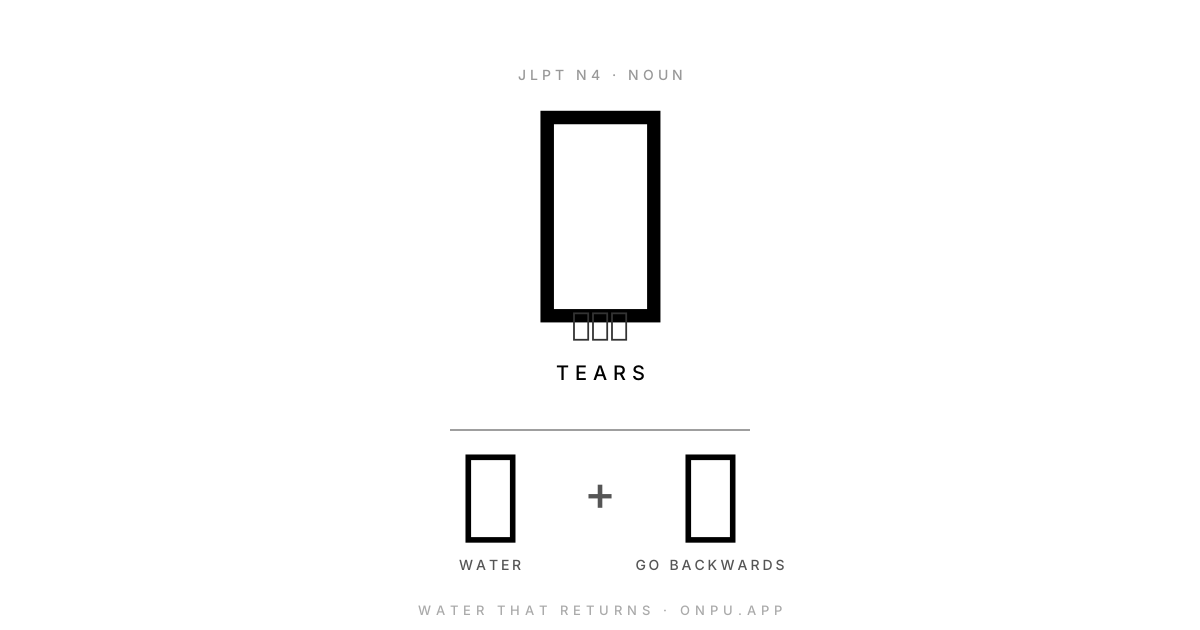
The kanji 涙 (namida, tears) is everywhere in Japanese music. The breakdown is water plus going backwards. Here is what that quietly does to every chorus you have already sung along to.
Namida (涙) Shows Up in Almost Every J-Pop Song You Love. The Kanji Itself Means Water Going Backwards.
If you listen to a lot of Japanese music, you have already heard 涙 (namida) hundreds of times. It is in Lemon. It is in Yoru ni Kakeru. It is in basically every chorus that ever made you sit up a little straighter on a train.
I had heard it for years before I actually looked at the kanji.
And the kanji is doing something quiet.
This post takes about 5 minutes and you will walk away with:
- What 涙 actually decomposes into when you look inside it
- Why a J-pop chorus reaches for 涙 instead of 泣く
- Two songs you already love where this kanji is doing more than it looks like
- A small habit you can try next time a song plays
You have sung past this kanji a thousand times
Try this. Open whatever Japanese song you have been on a loop with this month. Pull up the lyrics. Scroll until you see 涙.
It will be there. It is almost always there.
Anime endings. Vocaloid ballads. Yakuza karaoke songs that sound cheerful until you read what they say. Yorushika songs that read like someone left their diary in a coat. Kenshi Yonezu, almost always. YOASOBI, often. The word floats up out of the chorus like nothing, because in J-pop convention, that is exactly what tears do. They float up.
I had it sitting in my brain for years as just "the word that means tears." Like the way a beginner Spanish learner files away "lágrima" and stops thinking about it.
The thing I was missing was inside the kanji.
涙 is water plus going backwards
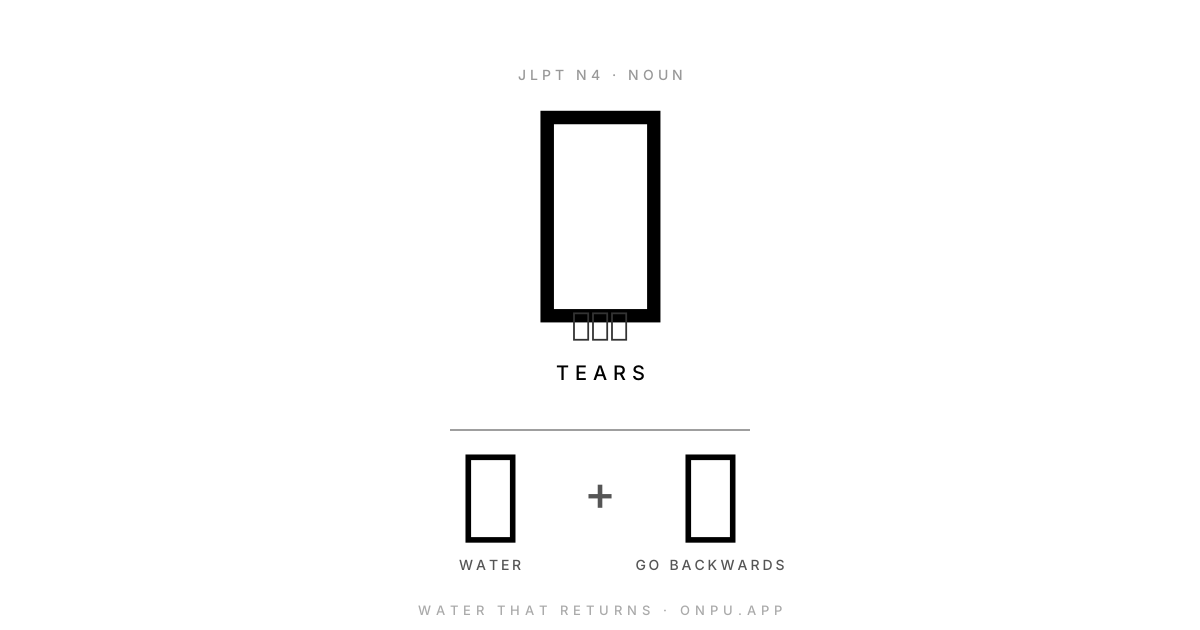
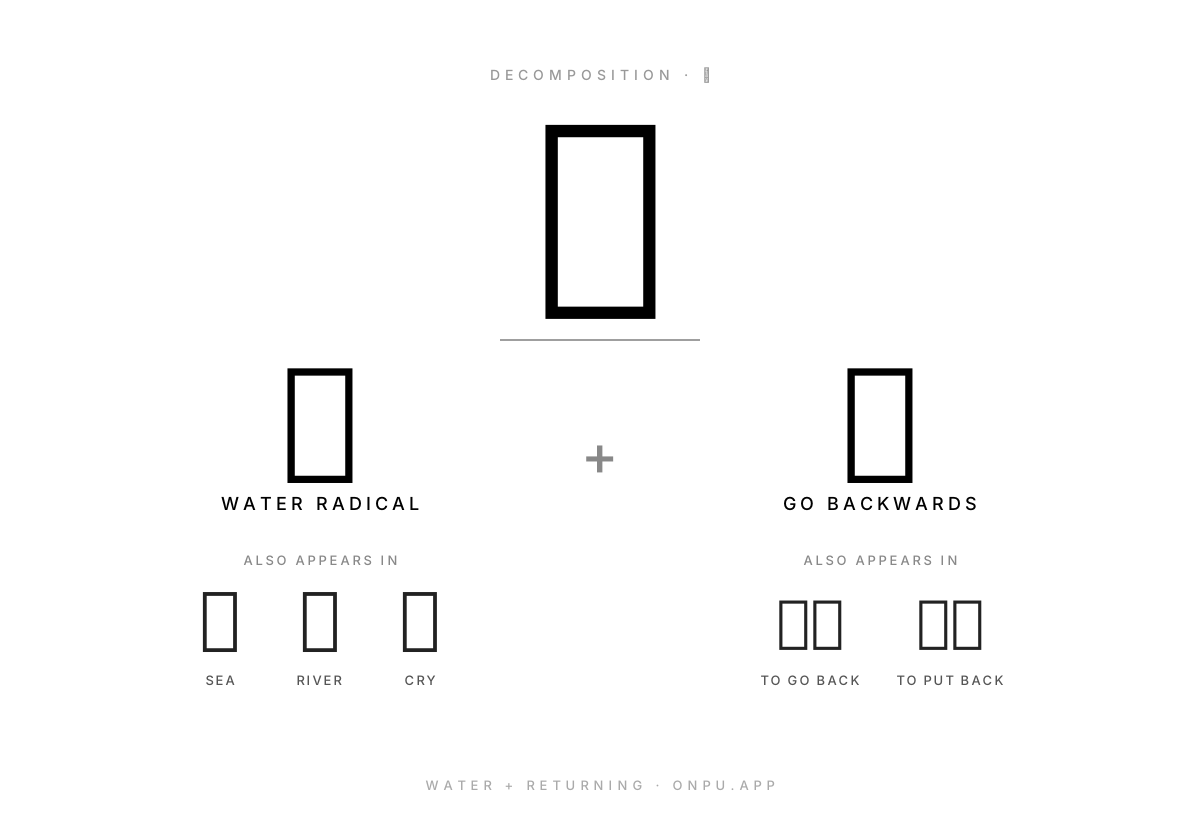
If you long-press 涙 in Onpu, the breakdown is two parts.
The first part is 氵, the three-stroke water radical. You see it in 海 (sea), 河 (river), 泣 (to cry). Anytime a kanji is about something liquid, that little dripping shape is on the left.
The second part is 戻. On its own, 戻 means "go backwards, return, restore." It is the kanji you see in 戻る (modoru, to go back) and 戻す (modosu, to put back).
Stack them and you get water + going backwards. Or water that returns. Or water that comes back when it should not.
That is what Onpu shows you when you tap the character.
I am not going to pretend this is the historical etymology, because the actual etymology is messier than any one breakdown suggests. But this is the breakdown the app shows you, and once you see it, it sits inside the word permanently. Tears as water that returns. Water that you thought you were done with.
Lemon: the only thing that won't stop overflowing is tears
Open Lemon by Kenshi Yonezu. Scroll to the second half. There is a line that reads:
溢れてやまないのは涙だけ
Roughly: "the only thing that won't stop overflowing is tears."
Read that line with the breakdown in your head. The verb 溢れる (afureru) means to overflow. The noun 涙 sits at the end of the line carrying the water + returning meaning. So the line is saying, in its own kanji-level logic: the only thing that keeps overflowing is the water that keeps coming back.
That is the song. Lemon is about a person who is dead and a person who is still here. The grief does not finish. It returns, overflows, returns again. The kanji 涙 is doing this in miniature inside one word.
There is another line a few verses later, 涙にくれ 寂しさの中にいるなら ("if you are drowning in tears in the middle of loneliness"), where the word does the same quiet job.
I wrote a whole post on Lemon and the bitter-suffering kanji wordplay before I noticed this layer in 涙. I had to come back to the song. Which felt fitting.
Yoru ni Kakeru: tears that overflowed in the unending night
Now flip to YOASOBI's Yoru ni Kakeru. Scroll to the final chorus. There is a line:
明けない夜に溢れた涙も
Roughly: "even the tears that overflowed in the unending night."
Same verb (溢れた, the past form of overflow). Same noun. But now the image is night, not loneliness. Tears overflowing into a night that does not end.
If you read the line as just "tears in a long night," it lands as sad J-pop chorus filler. If you read it with the kanji breakdown in your head, the picture sharpens. Water that keeps coming back. In darkness that does not lift. The kanji is matching the night.
This is also the part of the song where the protagonist is making the decision the song is named for. The Yoru ni Kakeru post goes deep on what that decision actually is. The 涙 in this line is doing real work inside that moment.
Why 涙 instead of 泣く
Japanese has more than one way to talk about crying.
涙 is the noun. The substance. The thing that is on your face.
泣く (naku) is the verb. The act. The thing you are doing.
J-pop reaches for 涙 a lot more than it reaches for 泣く. Not always, but often. The song wants the image, not the action. It wants something the listener can see, something that holds still long enough to be a chorus word.
You can feel this if you swap them in your head. "明けない夜に泣いた" (I cried in the unending night) is fine, but it is a sentence about an action. "明けない夜に溢れた涙" is a picture. The kanji even helps you see it. Water plus returning, sitting at the end of the line.
This is not a rule, just a tendency. Yoru ni Kakeru actually uses 泣く earlier in the bridge ("怒って泣いていくの", "we get angry and cry") for the act of crying mid-fight, and switches to 涙 in the chorus for the image. Same song, two different words for what is basically the same hurt, picked deliberately.
Once you notice this pattern, you start hearing it everywhere. Yorushika's 言って does something similar with two homophones, picking specific words to do specific emotional jobs inside one song. Japanese songwriters are precise like this. They get to be, because the writing system gives them more dials.
Try this on the next song you put on
Next time you have a Japanese song on, scroll through the lyrics and look for 涙.
If it is there, long-press it in Onpu. Sit with the 氵 + 戻 breakdown for a second before you keep scrolling. See if the line around it reads any differently.
You do not need to memorize anything. The breakdown will just sit in the word from now on. The next time a chorus says 涙, you will hear water that comes back underneath it, and that is the entire upgrade.
If you find a song where 涙 is doing something I have not noticed, I would actually love to know. The blog is mostly me catching up to what is already there in the songs.