Lemon Kenshi Yonezu Meaning: The Word for Bitter and the Word for Suffering Are the Same Kanji
Kenshi Yonezu wrote Lemon while his grandfather was dying. One kanji pulls the bitter and the suffering together. Here is what it really says.
Lemon Kenshi Yonezu Meaning: The Word for Bitter and the Word for Suffering Are the Same Kanji
Lemon is the song everyone has heard even if they don't listen to Japanese music. Over a billion YouTube views. The theme song for アンナチュラル, a drama about forensic coroners sorting through unnatural deaths. The kind of melody you can hum before you can place where you first heard it.
But I had heard Lemon a hundred times before I noticed what one kanji was doing.
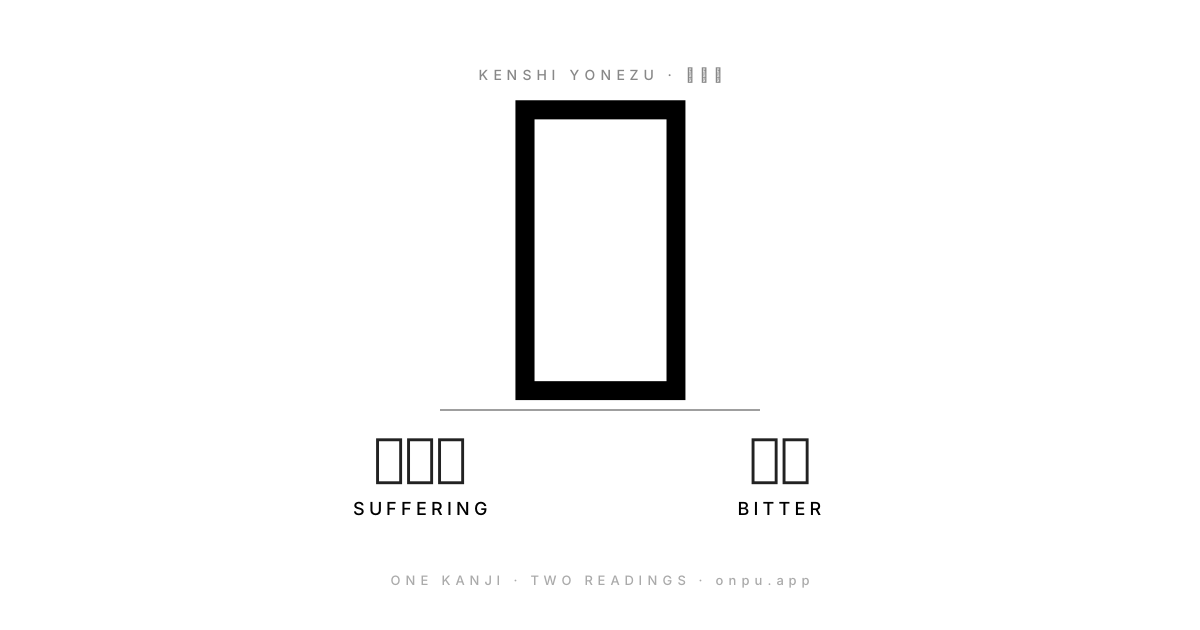
The word for "bitter" in the chorus is the same character as the word for "suffering" two lines earlier. Not similar. Not related. Literally the same glyph, 苦, doing both jobs in the same verse.
And once you see that, the song stops being a ballad about missing someone. It becomes something stranger and more specific.
In this post, you'll learn:
- Why Lemon is a funeral song, not a love song
- The one kanji (苦) that does double duty in the chorus
- What 胸 (chest) means in Japanese that it doesn't mean in English
- How the same line at the start and the end of the song says two different things
5 min read
The song is not a love song. It is a funeral song.
Most of us found Lemon through the drama, or through one of the countless covers that flooded YouTube in 2018. Kenshi Yonezu wrote it as the theme for アンナチュラル, a show about coroners figuring out why people died when the cause wasn't obvious. That is already the tonal register a theme song has to sit in.
Then the day before the single dropped, Yonezu gave an interview to Natalie.mu where he said the thing that reframes the whole song.
His grandfather had died while he was writing it.
The song he had planned, he said, was supposed to "gently wrap around a hurting person." What came out instead, in his words, was a song saying "I am sad you are gone." He wrote through the loss in real time.
You can hear that shift if you listen for what repeats. 夢 (yume, dream) shows up in the opening line and the second line. 忘 (wasureta, forgotten) appears twice in the first verse. These are the verbs you reach for when someone is gone and the mind won't let them go.
Next time the song comes on, try counting how many times 夢 shows up in the first thirty seconds. I stopped counting at three.
The kanji that pulls bitter and suffering into one character
Here is the move the song makes. In the big chorus, two lines sit back to back:
あの日の悲しみさえ あの日の苦しみさえ ano hi no kanashimi sae, ano hi no kurushimi sae Even that day's sadness, even that day's suffering
And then, seven seconds later:
胸に残り離れない 苦いレモンの匂い mune ni nokori hanarenai nigai remon no nioi The bitter scent of lemons won't leave my chest
Look at the bolded character in each line.
Same kanji. 苦. Different reading.
In the first line it is kurushimi, and it means suffering. In the second it is nigai, and it means bitter, as in the flavor of a lemon you bite into raw. The Japanese word for a painful emotion and the Japanese word for a sharp taste are written with the same single character. English separates these. We have "bitter" and "suffering" as two different words built from different roots. Japanese puts them in one glyph and lets context pick the reading.

What this means for Lemon, specifically, is that the bitter lemon in the chorus is not a symbol of grief the way English metaphor works. The grief is already inside the word for bitter. You cannot sing "nigai remon" in Japanese without the character for suffering being right there, doing the job of describing a lemon's taste. Yonezu did not make the lemon mean pain. Japanese did that before he wrote the song.
The kanji breaks down as 艹 (grass) over 古 (old), which the mnemonic frames as old grass causing suffering. Fine. Cute. That is not the interesting part. The interesting part is that the character does not separate the taste from the ache.
Next time the chorus comes around, listen for the two different readings of 苦, seven seconds apart. You will hear the same glyph twice in a row, first as pain, then as flavor. Once you catch it, it won't un-catch.
胸 is the Japanese word for "chest" and also where grief lives
One more character worth sitting with. The lemon's scent lands on a specific part of the body:
胸に残り離れない mune ni nokori hanarenai Won't leave my chest
In English, "chest" is anatomy. It is where your ribs are. You would not say "a memory lives in my chest" unless you were writing a song and trying very hard. In Japanese, 胸 is already doing the emotional work by default. 胸が痛い (mune ga itai, "my chest hurts") is a standard phrase for heartbreak. 胸に残る (mune ni nokoru, "to stay in the chest") is a standard phrase for something you cannot forget.
So when Yonezu writes that the bitter scent of lemon won't leave his chest, a Japanese listener is not picking up a physical image and translating it to an emotional one. The emotion is pre-installed in the word. It arrives already heavy.
This is the word you will see everywhere in Japanese songs about loss. It is in 言って (Yorushika). It is in 夜に駆ける (YOASOBI) — and if you want to see what 夜に駆ける does with its own opening kanji, that song runs the same double-reading trick at the word level. If you start watching for 胸, you start spotting the same emotional move in a dozen different songs.
"You are still my light"
The line that repeats is this one:
今でもあなたはわたしの光 ima demo anata wa watashi no hikari Even now, you are my light
It shows up twice, once early and once late. The words do not change. What changes is everything around them.
The first time it lands like a love song. A partner you still think about, a relationship the speaker still feels warmed by. The second time, after all the tears and the bitter lemon and the "please forget me," it lands like something you would say at a funeral. The person is still your light. They are also not here.
This is the whole move of Lemon, compressed into one line. A phrase that means one thing at 0:45 and a different thing at 3:15, and the song is the distance between. NIGHT DANCER pulls the same trick with the verb 刻む, where context at the end of the song inverts what you heard at the start.
Closing
I am not going to pretend I know what Lemon means in some definitive way. Yonezu wrote it through his grandfather's death. Fans have heard it as the end of a relationship, as a song for anyone they have lost — if that quiet ache of grief without closure has a name, it is the Japanese word for this specific quiet-grief ache, 切ない — as a karaoke ballad to cry to. All of those reads are in the song. They have to be, because a song big enough to hit a billion views is a song that lets a lot of different griefs sit inside it.
What I had been missing was smaller and more specific. One kanji, 苦, doing two jobs in the same verse. The word for suffering and the word for bitter written the same way, because Japanese does not pull them apart.
If you also listen to Yonezu, paste Lemon into Onpu and tap the 苦 in 苦しみ, then tap the 苦 in 苦い. Same character, two readings, same ache. I would love to hear what else I'm missing in this song.