NIGHT DANCER imase Meaning: The Whole Song Is a Clock That Won't Tick Until the Chorus
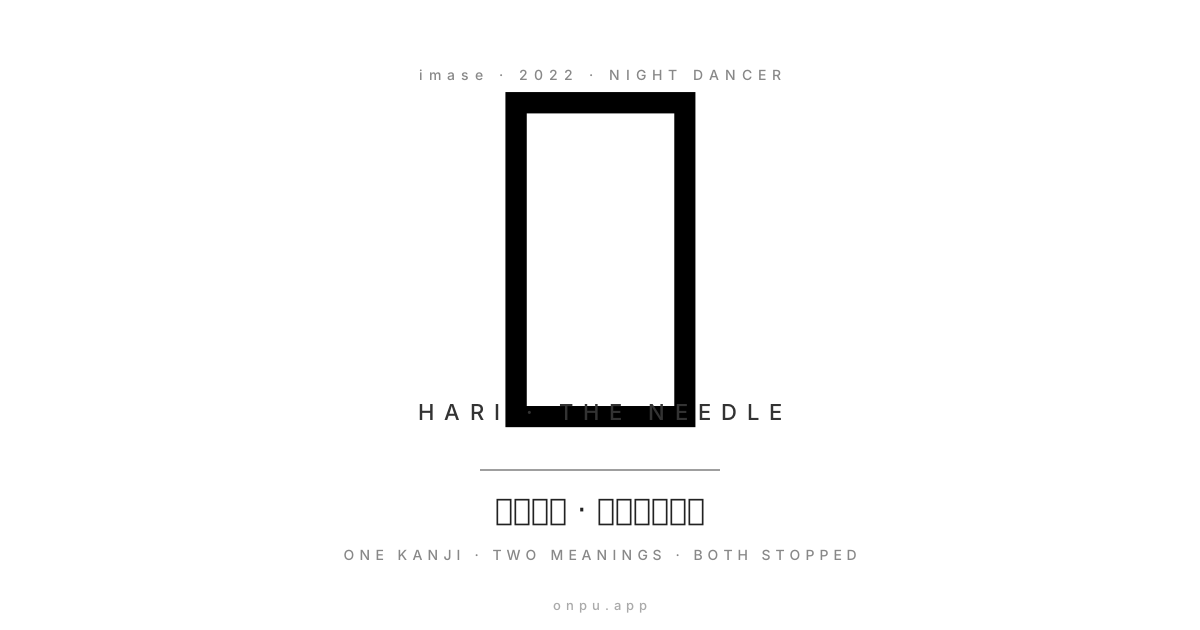
imase's NIGHT DANCER hides one kanji (針) doing two jobs across the verses. Every verb freezes. Only 踊ろう moves.
NIGHT DANCER imase Meaning: The Whole Song Is a Clock That Won't Tick Until the Chorus
You have heard this one. NIGHT DANCER was the song on TikTok in 2023, jammed into every other feed between the latte art videos and the cat clips. You know the chorus. You have probably danced to it in a kitchen in front of nobody at least once. That is fine. That is the point.
Here is the small thing I did not catch for an embarrassingly long time.
The verses of NIGHT DANCER are a list of things that have stopped.
Every main verb in the verses is frozen, stalled, or dropping a needle back onto a record that already played. The only forward motion in the song is the one word in the chorus: 踊ろう. Let's dance.
And there is one kanji holding the whole room together.
In this post, you will learn:
- Why the verses of NIGHT DANCER are quieter than the chorus makes them feel
- The kanji 針 (needle) that shows up three times and is doing two different jobs
- The 刻む (tick / carve) verb that flips sides halfway through the song
- Why 踊ろう is the first forward-motion verb the song lets itself use
5 min read.

The verses are full of stopped things
If you only know the song from the chorus, which is most of us, the whole thing feels celebratory. The beat is upbeat. imase sings it gently, the kind of modern J-pop texture that 踊り子 also builds with — a softness in the vocal delivery that makes the song feel lighter than what the lyrics are actually carrying.
Then you read the verses.
まだ止まった 刻む針も Mada tomatta, kizamu hari mo. The ticking hand is stopped again.
入り浸った 散らかる部屋も Iribitatta, chirakaru heya mo. The cluttered room I have been holed up in.
また止まった 落とす針を Mata tomatta, otosu hari wo. Stopped again. The needle we drop.
よく流した 聞き飽きるほど Yoku nagashita, kikiakiru hodo. We played it a lot. Enough to get sick of.
Four lines. The mood is not "Saturday night downtown." The mood is "Sunday afternoon, same messy apartment, same record you always play, the clock stopped at 3:14 and nobody is going to reset it" — the Japanese word 切ない captures this exact late-night ache: a bittersweet feeling for something you cannot quite name or fix.
止まった (tomatta, stopped) shows up in two of the four lines. A few bars later, the verse pushes further into the same territory with 足踏みして (ashibumi shite, marching in place) and ズレた針 (zureta hari, the hand that slipped out of sync). Feet moving, ground not. Clock present, hand off by a few minutes.
This is not a party song — it uses the same hide-the-real-subject trick as 夜に駆ける, wrapping a quiet, personal stall inside something that sounds like it should be played loud. It is a song about a room that has stopped moving.
If you have only ever danced to the chorus, try listening to the first verse once with your eyes open on the Japanese. You will notice 止まった before you even get to the second line.

針 is doing two jobs in a row and nobody points it out
Here is the quiet trick.

針 (hari) is the kanji for "needle." Its components are 金 (metal) and 十 (ten). A small sharp metal thing you can hold between two fingers.
But 針 is not just one object. The same kanji is the word for a clock hand (時計の針), a record needle (レコードの針), a sewing needle, a compass needle, the pointer on any dial. Lots of small metal pointing things.
NIGHT DANCER uses it across two of those meanings in back-to-back lines.

刻む針 (kizamu hari, the ticking hand) is a clock. Time is being carved, one tick at a time. 落とす針 (otosu hari, the needle we drop) is a record player. Tonearm going down onto vinyl. 針を落とす is a stock phrase in Japanese for placing the tonearm, and it sits in the very next verse line, right after よく流した (we played it a lot), which is the verb you use for putting a record on.
One kanji. One word. Two different pieces of domestic furniture.
Both of them stopped.
The clock has paused. So has the record, at least long enough that somebody reached over and dropped the needle again to hear the thing they have already heard too many times.
Most English fan notes on this song mention 針 as a clock hand and stop there. The record-needle reading is sitting right next to it in the same verse.
If you want a quick test, look for 針 each time it appears and ask yourself: clock, or record? The answer shifts line by line.
刻む shows up twice. It flips sides.
Here is where the song gets a bit sneaky.

刻 (kizamu / kizami) means "to carve" or "to tick." Its components are 亥 (the zodiac sign of the hog) and 刂 (the standing knife radical). A knife is tucked into the right side of the character. 刻む is literally "doing knife work." When it is applied to time, it becomes "ticking."
The song uses it twice.
In the verse:
刻む針 Kizamu hari. The ticking hand.
In the chorus:
二人刻もう Futari kizamou. Let's carve this, the two of us.
Same kanji. Same root verb. Totally different direction.
In the verse, 刻む is something time does to the singer. The clock hand is ticking on its own, carving the present into the past with no one asking. The singer is passive. The kanji is watching them from the wall.
In the chorus, 刻もう (the volitional form of 刻む, the "let's do this" version) flips the verb. Suddenly the two of them are holding the knife. They are carving this moment together, on purpose. 刻む is no longer happening to them. They are doing it.
I do not have a quote from imase saying "I picked 刻 twice on purpose." It might be a happy accident. What I can say is that seeing the same kanji do "time happens to us" in the verse and "we take hold of time" in the chorus made the song bigger for me.
Next time you listen, try noticing 刻 in both spots. The character on the page is the same. The energy around it is not.
踊ろう is the only forward-motion verb in the whole song
Everything up to here is a stopped verb. 止まった. 刻む (of the clock, passive). 落とす. 足踏みして. ズレた. All stall, all return, all friction without travel.
Then the chorus lands:
"踊ろう" Odorou. Let's dance.

踊 (odoru) is the kanji for "to dance." Its components are 𧾷 (the foot radical) and 甬, which the data labels as "road with walls on both sides." So: a foot moving down a walled channel, a body passing through a corridor with no detours available.
The foot is finally doing the work, and for the first time in the song it is going somewhere.
Here is the bit I really like. The foot showing up inside 踊 rhymes with the other foot-shape kanji earlier in the song.
止 (tomaru, stop) is itself a foot-print kanji. The mnemonic in the data is literally "foot slams to stop." The character is drawn from the shape of a single stopped foot, and it leads every verse.
So the song's arc in the kanji runs: 止まった (stopped-foot), ズレた針 (clock stuck, foot still not moving), 足踏み (foot lifting but going nowhere), 踊ろう (foot finally moving down a road). Foot-stopped. Foot-stalled. Foot-moving.
I might be pattern-matching on a pop song at a coffee shop, and I will cop to that. But the stop-verb stack is not invented. Those verbs are in every verse, and 踊ろう really is the first verb of forward motion the song has earned, two full minutes in.
Once you can see the arc, the verse-to-chorus transition stops feeling like "now the beat drops" and starts feeling like "we are finally allowed to move again."
What to do with this next time NIGHT DANCER plays
Paste the lyrics into Onpu. Long-press 針 in the first verse and let the 金 + 十 breakdown slide open. Jump down to 刻む. Jump to 落とす針. Count the 止 appearances. Then scroll to the chorus and look at 踊ろう after all of that.
I am not pretending imase wrote this with a kanji checklist and a foot-radical colour key. What I know is that the verses are a catalogue of stopped things, that 針 is used across both of its most famous meanings in consecutive lines, and that 踊ろう breaks a pattern the song has been setting up since it started.
If NIGHT DANCER is on your playlist, you already know the chorus by heart. Give the verses one slow pass with the kanji open. I would love to know what else is sitting inside this one that I missed.