Melissa Porno Graffitti Meaning: The FMA Opening Is Named After a Plant, and the Songwriter Found It by Accident in a Dictionary
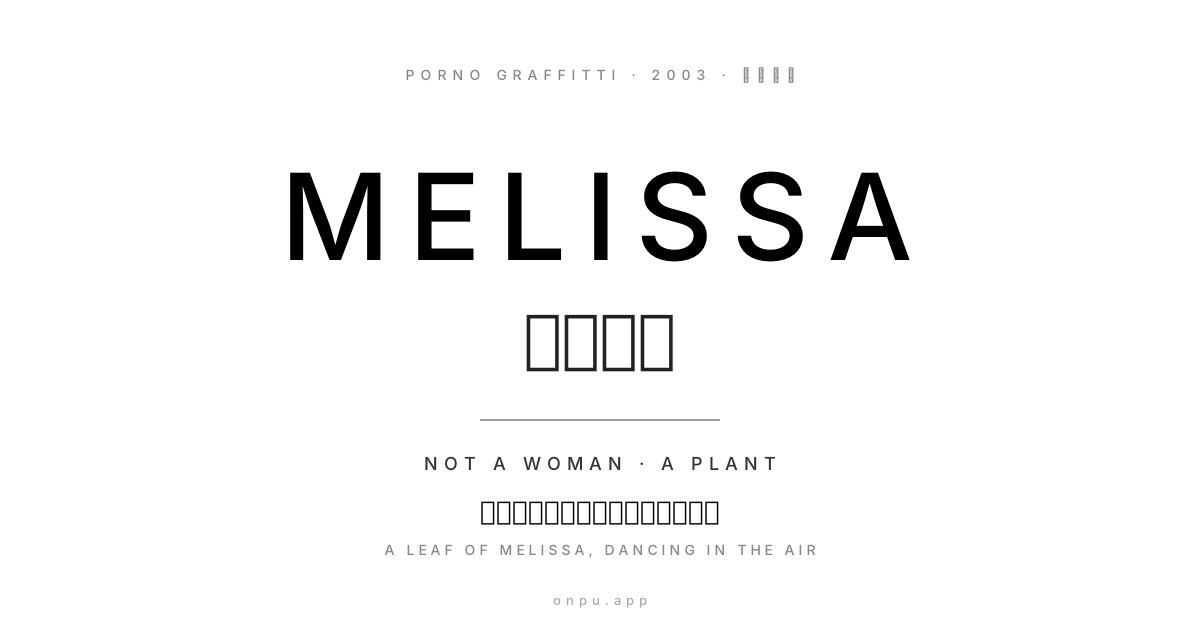
Porno Graffitti's Melissa (FMA OP1) isn't named after a woman. It's named after lemon balm, and the lyricist found the word by accident in a dictionary.
Melissa Porno Graffitti Meaning: The FMA Opening Is Named After a Plant, and the Songwriter Found It by Accident in a Dictionary
Melissa by Porno Graffitti has been the Fullmetal Alchemist opening in my head since I was a kid who did not know a word of Japanese. For years I assumed the title was a woman's name, because in English Melissa is a woman's name. A lover, a muse, a person the narrator is singing to.
Then I actually opened the lyrics.
Here is the thing I missed for an embarrassingly long time.
Melissa is not a person. Melissa is a plant. And the narrator of the song is asking to become a single leaf of it, spun up into the air.
On top of that, the songwriter has said in an interview that he picked the title almost by accident after his first choice turned out to mean "trade fair" in German. He has called it a ラッキー・パンチ, a lucky punch. A word he stumbled into that ended up fitting the song after the fact.
In this post, you will learn:
- That メリッサ is the Japanese word for lemon balm, the herb
- The one lyric line where the whole song reveals itself
- Why Shindo Haruichi (the lyricist) picked the word by accident from a dictionary
- Why the song is about self-sacrifice, not romance
- How the moon at the end of the song closes the loop
4 min read.
Melissa is a plant, not a person
In English, Melissa is almost always a woman's name. That is what my brain did with the title for a decade.
In Japanese, メリッサ is the borrowed name for lemon balm, the citrus-scented herb (also called レモンバーム). The word was sitting in Japanese dictionaries as a plant name when Shindo wrote the song. That is the reading the lyrics use.
The line that tells you so is this:
せめて宙に舞うメリッサの葉になりたい Semete chū ni mau merissa no ha ni naritai. At the very least, let me become a leaf of melissa, dancing in the air.
葉 (ha) is the word for leaf. It is listed in kanji-data.json as a common kanji with the mnemonic "Grass on a table, a leaf." The three blades of grass at the top of 葉 are literally three blades of grass. You can see the plant from the shape of the character.
So the chorus-adjacent line is not a declaration to a woman called Melissa. It is a narrator asking to become the smallest part of a plant named Melissa. A single leaf. Lifted up. Once you see that one line, the rest of the song rearranges itself.
The songwriter found the word by accident
The lyrics are by Shindo Haruichi of Porno Graffitti. In an interview reprinted in PORNOGRAFFITTI × PATi・PATi COMPLETE BOOK 〜15years file〜 1 (p. 248, cited on the Japanese Wikipedia entry for the song), he tells a small and very charming story about how the title came to be.
His working title was メッセ (Messe). He liked how it sounded.
Then somebody pointed out that "Messe" is a German word for "trade fair." Not a great match for a tender rock ballad about giving yourself up for somebody you love.
So he went back to a dictionary, flipped through, and landed on "Melissa."
Only after picking the title did he find out Melissa was a plant name, with a quiet symbolic reputation in European herbalism for comfort and healing. He called that overlap a ラッキー・パンチ, a lucky punch. The meaning of the title lined up with the meaning of the song by accident. The song had already been written around the theme of 自己犠牲 (self-sacrifice) before the title showed up.
I find this sequence so quietly perfect. The song already existed. The right title was waiting in a dictionary. The songwriter went looking because his first idea meant "trade fair."
The narrator doesn't ask for wings. They ask to be a leaf
Just before the leaf line, the narrator makes a specific negative choice. They say what they are not asking for.
羽が欲しいとは言わないさ Hane ga hoshii to wa iwanai sa. I'm not saying I want wings.
羽 is listed in kanji-data.json as "counter for birds, rabbits, feathers" with the mnemonic "Two wings (习习) for birds and feathers." The character is literally two wings drawn side by side. If you know even a little about Fullmetal Alchemist, you know wings are a loaded image in the story. The narrator refuses that image on purpose.
What do they ask for instead? The very next line is the leaf line. せめて宙に舞うメリッサの葉になりたい. "At least let me become a leaf of melissa, dancing in the air."
The pair of lines is doing precise work. Not wings. Something smaller. A single leaf. Lifted and carried, not flown.
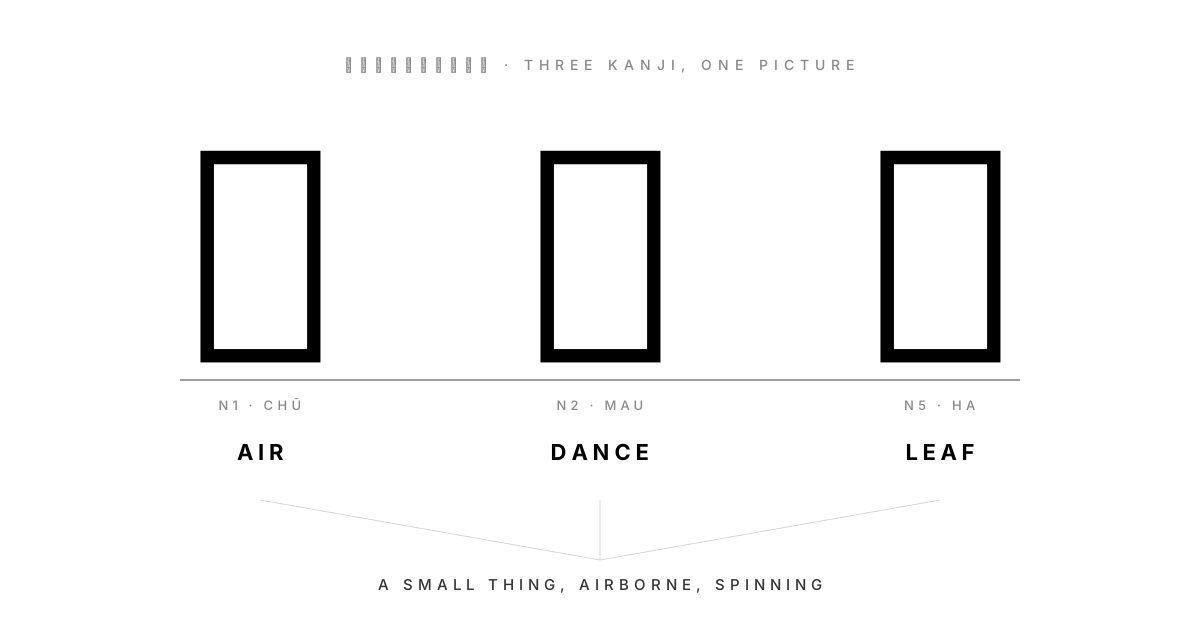
The three kanji in the leaf line all read the same picture:
- 宙 (N1, "air, interval of time"): mnemonic "Crown (宀) for a reason (由)." A roof radical sits over 由. Read loosely: a small something suspended under a ceiling of air.
- 舞 (N2, "circle, dance, flit"): mnemonic "Dancing legs (舛) in a circle (𠂉)." The bottom half of the character is literally two feet dancing.
- 葉 (N5, "leaf"): the grass-on-a-table kanji from earlier.
Air. Dance. Leaf. Three characters, one picture. A small thing, airborne, spinning.
I want to be careful here. I am giving you a visual read of the modern characters, not an etymology lecture. But the image on screen and the image in the lyric fit each other, and that is the thing that actually helps you remember what the song is about.
The moon at the end closes the loop
Near the end of the song, the narrator lands on this line:
今 月が満ちる夜を生み出すのさ Ima tsuki ga michiru yoru o umidasu no sa. Now, I'll bring about a night when the moon becomes full.
満 (N2, "enough, full") is listed in kanji-data.json with the mnemonic "Water fills the grass." In the song, 月が満ちる, the moon fills. Same verb, different vessel.
Shindo has said, again in the same interview, that the three tracks on the Melissa single were each themed around a phase of the moon. Melissa was the crescent. The B-side 見えない世界 was the half moon. The C-side 月飼い was the full moon. He drew the moon illustrations for each track himself.
Which means the song arc makes more sense once you see it. The narrator opens by asking to become a leaf carried off. They close by announcing that their self-sacrifice will bring about the full moon. The waxing of the moon across the single is the arc the songwriter laid down on purpose. The narrator is not the one who gets to see the full moon; they are the one who gets blown away so it can rise.
This is where the song stops being a love song in any conventional sense. It is closer to a vow.
This title trick shows up across J-rock
Japanese lyricists lean hard on katakana titles that read like names in English but turn out to be plants, drinks, technical words, emotions. If a song has a katakana title that could be a woman's name, check a dictionary before you assume.
You have seen this kind of title reveal on the blog before. Ageha-chou by the same band uses "butterfly" to do the whole heavy lifting of the song. Lemon by Kenshi Yonezu treats the fruit as a metaphor for grief, with two kanji sharing the same ache. Itte by Yorushika keeps you inside the word "say it" until a single kanji swap reveals what you were listening to.
Melissa belongs on that shelf. The title looks like a woman's name. It is a plant. The song is asking to become a leaf of that plant.
Closing
I am not going to pretend I know the full inner life of Shindo Haruichi when he sat down to finish these lyrics. I have the interview, the song's own words, and three kanji in the leaf line all pointing the same way.
The reading the lyricist gave and the reading the kanji give agree. The narrator is not begging a woman to stay. They are asking to become a small thing, lifted up, useful in somebody else's healing.
If you grew up on Fullmetal Alchemist, paste メリッサ into Onpu and sit on the line 宙に舞うメリッサの葉になりたい. Watch 宙, 舞, and 葉 line up into the same picture of a single leaf in the air. It is the cleanest title reveal I have ever shown a friend.