Umi (海) Shows Up in Almost Every J-Pop Song You Love. The Kanji Itself Means Every Drop of Water at Once.
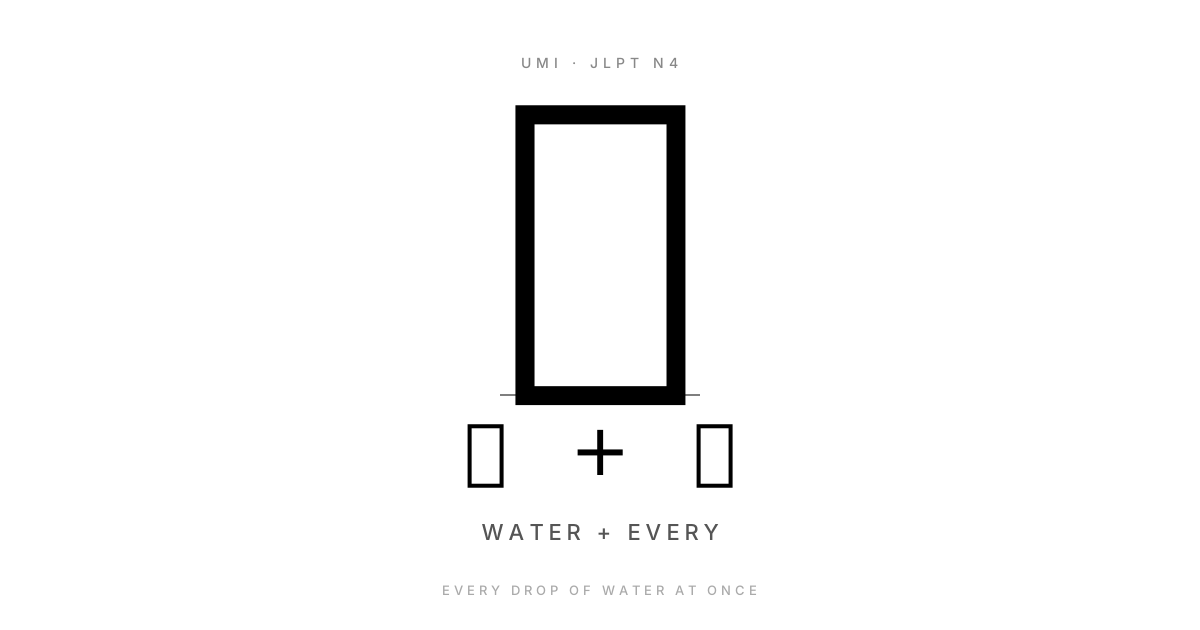
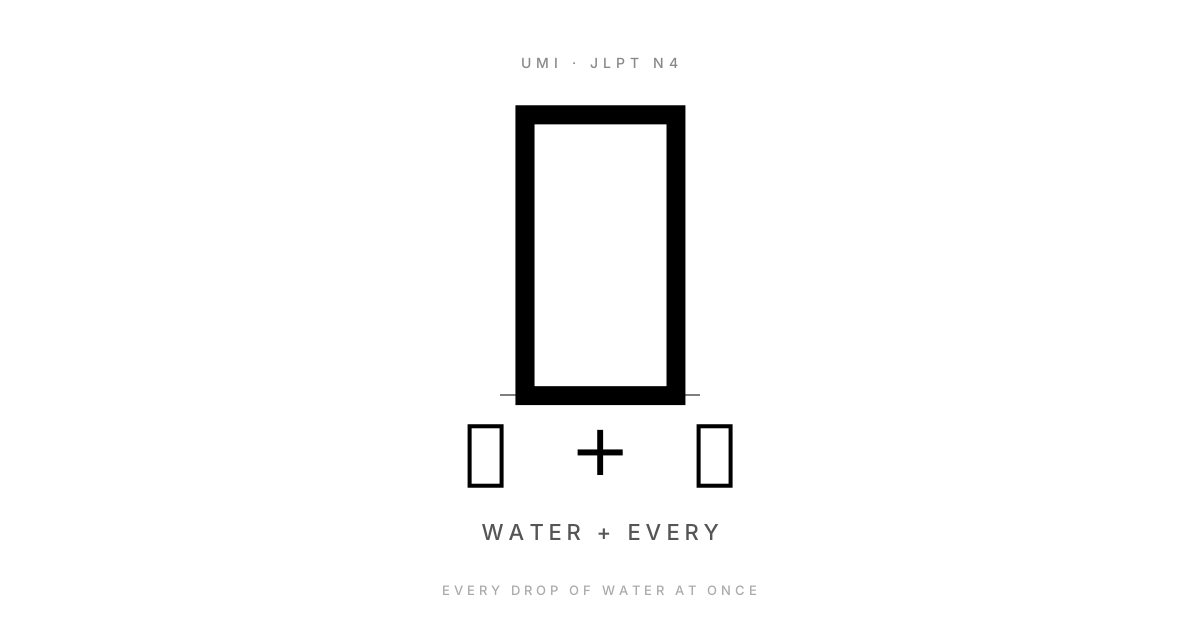
海 means sea. The kanji breaks into water plus every: every drop of water. Once you see it, J-pop songs about the sea stop being about the beach.
Umi (海) Shows Up in Almost Every J-Pop Song You Love. The Kanji Itself Means Every Drop of Water at Once.
There is a J-pop chorus you have heard, almost certainly more than once, where the singer holds one syllable a beat longer than the line needs. The strings open up under them. The drums go quiet for a half-bar. The word that lands on top of the silence is umi.
That word is 海.
It is one of the first two hundred kanji a Japanese learner picks up, and one of the kanji that quietly does the most work in a song. The way the character is built tells you something about how the language thinks about water.
Here is what you will find in the next few minutes:
- What 海 is actually a picture of, and why the literal answer is "every drop of water"
- The Kiritani Kenta song that names the sea as one voice among many, exactly the way the kanji does
- The Yonezu Kenshi song where the sea becomes a place that holds a ghost
- The Happy End line where a streetcar crosses the sea, and what the kanji is doing in that one small image
This should take about five minutes to read.
The kanji is water, plus every
Most kanji are built from smaller pieces, and once you can see the pieces, you cannot unsee them.
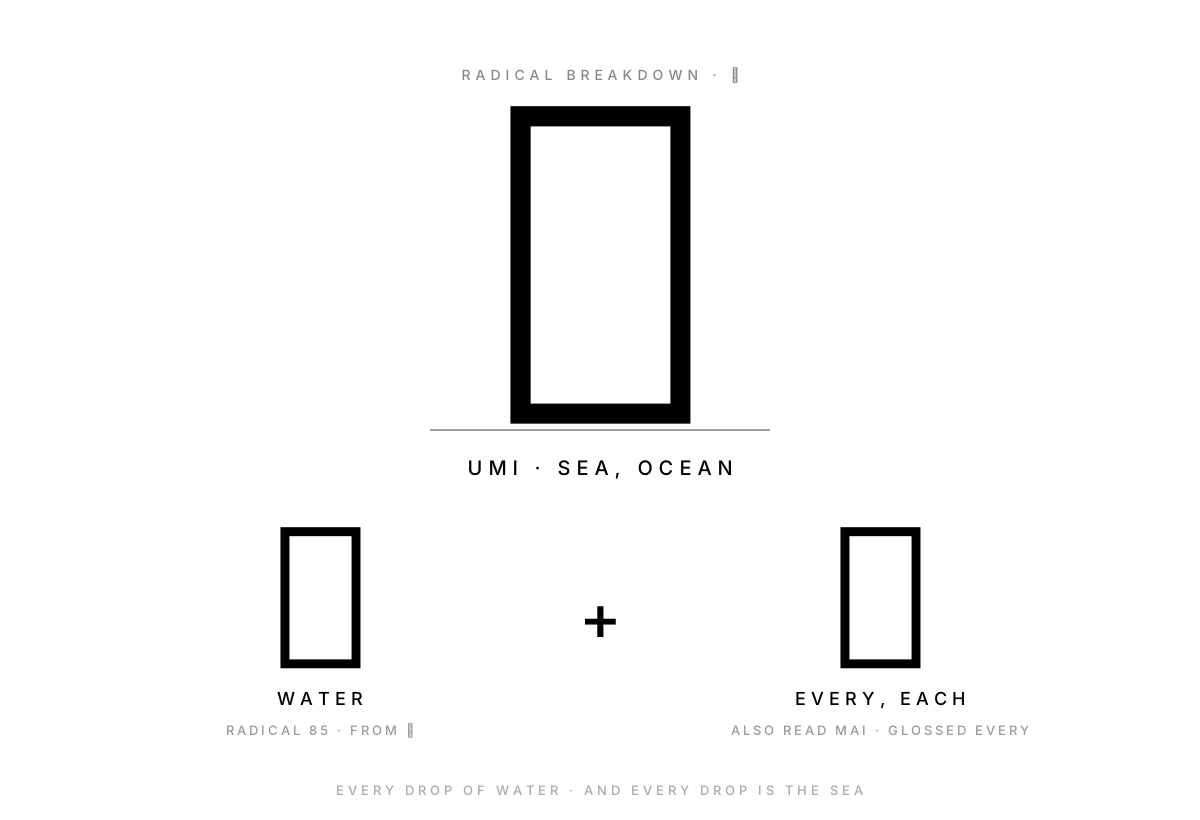
The left side of 海 is 氵, the three-stroke shape that almost every Japanese kanji for liquid uses. It is called the "water radical," the squeezed-down form of 水 (water). It shows up in 泣 (to weep), 涙 (tears), 河 (river), and dozens of other characters that touch water.
The right side of 海 is 每, glossed in Onpu's kanji data as a single English word: every.
Put the two pieces next to each other and the literal reading is plain.
Water, every.
The sea is every drop of water. Or every drop of water is the sea. The kanji does not commit to a direction. It sits in the space between the two, and the language uses it both ways.
The English word "sea" is a container word. It names a specific body of salt water that you can point at on a map. The kanji is doing the opposite job. It is not pointing at the Pacific. It is saying: take any drop of water, multiply it by every, and you have arrived at the same idea.
Songs that use 海 inherit this. The sea in a J-pop chorus is not always a beach.
海 as one voice among many
The clearest place I have heard this happen is in 海の声 (Umi no Koe), the song Kiritani Kenta sings as Urashima Tarou in the au "Three Tarou" commercials. Lyrics by Shinohara Makoto, music by Shimabukuro Masaru of BEGIN.
The opening four lines:
空の声が 聞きたくて
風の声に 耳すませ
海の声が 知りたくて
君の声を 探してる
The voice of the sky. The voice of the wind. The voice of the sea. The voice of you.
Four voices, listed in the same breath, given the same grammatical weight. The sea is not the subject of the song. It is one of four things the singer is listening to. By the time the listener reaches the fourth line, the you the singer is searching for has been folded into the same family as the sea and the sky.
The kanji is doing the same job. 海 is water, plus every. The sea in this song is a member of a set. The other members are sky, wind, you.
The closing of the song doubles down:
海の声よ 風の声よ
空の声よ 太陽の声よ
川の声よ 山の声よ
Sea, wind, sky, sun, river, mountain. The sea sits at the front of the list, and it is the kanji whose internal structure already says every.
Next time you hear a J-pop song that uses 海 alongside 風 or 空 or 川, listen for whether the sea is being named as one thing in a set. It almost always is.
海 as a place that holds a ghost
The same kanji does a heavier job in 海の幽霊 (Umi no Yuurei), Yonezu Kenshi's theme song for the 2019 animated film 海獣の子供 (Children of the Sea).
Yuurei is the Japanese word for ghost, the cold kind that lingers where it should not be. The literal translation of the title is "the ghost of the sea." The English title for the song is usually given as "Spirits of the Sea," which softens it.
A few lines in, Yonezu writes:
潮風の匂い 滲みついた椅子がひとつ
One chair, with the smell of the sea breeze soaked into it.
The chair is not in the sea. It is in a room, somewhere. The sea is not the location. It is what got into the chair and stayed there. The salt, the air, the residue of someone who used to sit in the chair after a swim.
Then later:
思いがけず光るのは 海の幽霊
What shines unexpectedly is the ghost of the sea.
And the song closes on:
風薫る砂浜で また会いましょう
Let us meet again on the wind-scented sandy beach.
Read those three lines together and the song is not really about the ocean. The ocean is the medium. It holds whatever the speaker is looking for. Memory soaked into furniture. Light catching on something that should not be there. A future meeting on a beach the speaker may or may not reach.
海 is not a location here. It is every drop of water the speaker has ever been near, gathered into one word. Of course it can hold a ghost.
海 as a thing you cross on the way to work
The third example is small. It is a single line in a 1971 song. It might be the cleanest illustration of the kanji's reach.
In 風をあつめて (Kaze wo Atsumete) by Happy End, the lyricist Matsumoto Takashi writes:
起きぬけの露面電車が
海を渡るのが 見えたんです
I saw a just-awoken streetcar crossing the sea.
The image is domestic. A morning. A streetcar that has barely woken up. The narrator is walking through a side street and looks up, sees the line moving somewhere across the bay.
The sea here is not the Pacific. It is the water between the side street and wherever the streetcar is going. A bridge over a harbour. Maybe an elevated track. 海 in this line is something ordinary. Something the streetcar does for a living.
The sea is every drop of water, which means every drop of water is also the sea. There is no separate character for "small body of water you can cross in a streetcar." Just 海, doing its compressed job.
The English word "sea" wants a horizon and a postcard. 海 will take the postcard, and it will also take the harbour under a bridge.
For the longer version of what 海 is doing in this track, the Kaze wo Atsumete song breakdown goes line by line.
The compounds you have been hearing without noticing
Once you start tracking 海, it shows up in places that are not obvious.
海岸 (kaigan) is coast, the second character meaning "shore." Same kanji as the sea, but pinned to the place where the sea touches the land.
北海道 (Hokkaidou), the name of Japan's northern island, is literally "north + sea + road." The road to the northern sea, named when the island was the frontier.
And then the two that are pure pleasure to spot.
海老 (ebi), the word for shrimp or prawn, is written "sea + old (man)." The kanji sits there in your sushi menu doing quiet work.
海女 (ama), the traditional female free-divers who harvest pearls and abalone off Japan's coasts, is "sea + woman."
Once you see the kanji as a piece rather than a word, the writing system starts opening up.
Try it on a song you already love
Pick any J-pop track with 海 in the title or the chorus. There are hundreds. Paste the lyrics into Onpu, tap the 海 character, and read what the kanji card says.
Then ask which job 海 is doing. A place? A voice in a set, the way it is in the 風 deep dive? A medium that holds something? Or the small, domestic version, the water under a streetcar? Most J-pop songs use 海 to do more than one of these at once and never signal which. The work goes to the listener.
You can run the same exercise on the kanji for rain, 雨, which lives in the same water family.
I would love to know which song you tried it on, and which job you think the 海 in that chorus is pulling.