Inochi (命) Shows Up in Almost Every J-Pop Song You Love. The Kanji Itself Is an Order to Exist.
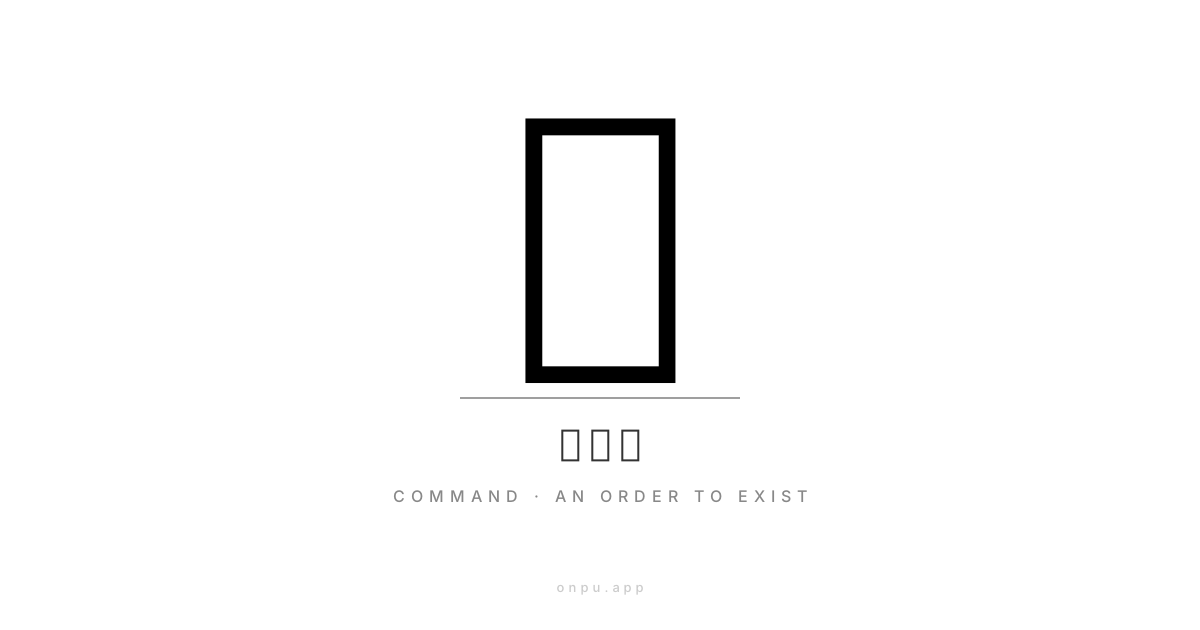
命 (inochi) means life in Japanese, but the kanji means command. Here is what changes when you know that.
Inochi (命) Shows Up in Almost Every J-Pop Song You Love. The Kanji Itself Is an Order to Exist.
The word 命 is all over Japanese music. It shows up in titles, in chorus lines, in the moments where a song drops its voice and says something it clearly means. Every English translation reads it the same way: life.
But the kanji doesn't mean life. Not exactly.
And once I found that out, I couldn't stop thinking about it.
This post will take you about 5 minutes to read and you'll know:
- What 命 (いのち, inochi) actually contains when you break down the kanji
- Why "command" and "life" turn out to be the same concept in Japanese
- Three songs that use 命 three completely different ways, all of them somehow correct
- How that changes what you hear when 命 shows up in lyrics
The Kanji Does Not Say Life. It Says Command.
There are two kanji that get translated as "life" in Japanese. The first is 生 (sei, ikiru). You have probably seen it before. It is a plant sprouting from the ground, the pure biological fact of something being alive. That one is JLPT N5. Everyday vocabulary. It describes what life looks like.
The second is 命 (inochi). This is the one in the songs.
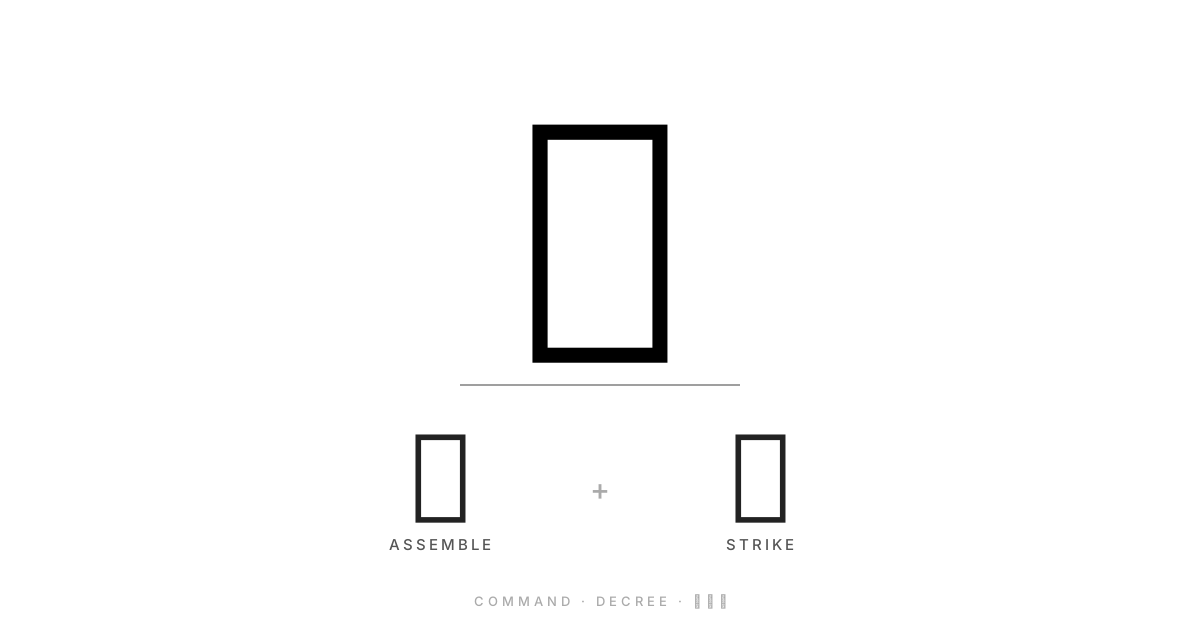
I looked it up in Onpu's kanji breakdown. The app shows 命 as built from two components: 亼, which means to assemble or gather together, and 叩, which means to strike.
Assemble. Strike.
The official meaning the data gives: appoint, command, decree.
Not life. A command.
There is something in that combination worth sitting with. Assemble and strike. The image of people gathering, a decree being proclaimed, something being called into existence by force of will from somewhere above. When a ruler issues a command, it arrives and lands. When life arrives, it also just lands. You did not ask for it. You were given it like an edict.
The Japanese reading いのち carries the everyday meaning: your life, a life, someone's life. But the kanji underneath that reading was built to describe something else entirely. An order. Something you are given no say in.
Two Words for Life, and Only One Is in the Ballads
Japanese has other options. 生 is simpler, softer, more descriptive. It handles the biological side of being alive. It is in 生きる (to live), 生まれる (to be born), 人生 (jinsei, a human life). The ongoing fabric of existing.
命 is different. It carries weight that 生 does not. When J-Pop writers reach for the life someone is risking, the life held onto through something hard, the life that was spent on a love or a purpose, they reach for 命. Not because they are doing etymological research. Because 命 has always sounded heavier.
Now I think I know why it sounds that way. There is a command buried inside it. Assembling. Striking. A decree that was issued before you arrived.
Three Songs, Three Ways to Carry a Command
The word 命 works differently depending on which emotional direction a song needs it to go. Three songs illustrate this pretty clearly, and they all use it in ways that make more sense once you know what is underneath.
竹内まりや (Mariya Takeuchi): いのちの歌
The title translates as "Song of Life" and puts 命 right at the center. This song appeared in a Japanese TV drama in the late 2000s and became one of those quiet classics that people pull out at genuinely emotional moments. The feeling of the whole song is gratitude: for the specific people and warmth found in living.
命 here is precious. Something earned or found.
Which actually makes more sense when you read it as a command. If life was decreed into you, issued without your input, then treating it with gratitude is a particular response to receiving something you did not ask for. You did not earn the command. But you can honor what it asked of you.
命に嫌われている。(Inochi ni Kirawarete iru): "Hated by Life Itself"
This Vocaloid song became massive, partly through the rhythm game Project SEKAI. The title alone is the whole idea: not "I hate life" but "life hates me." 命 is positioned as something active. Hostile. Working against you.
That framing only holds together if 命 has agency in the first place. A passive noun cannot hate you. But if 命 is a command, a force that was issued and is still in motion, then it can also withdraw from you. Turn against you. The song is built around the experience of 命 as something you did not choose and that might not have chosen you back.
Knowing the kanji does not solve anything the song is feeling. But it explains why the grammar works.
YOASOBI: もしも命が描けたら (Moshimo Inochi ga Egaketara)
YOASOBI wrote this for a stage play, and the title is hypothetical: what if 命 were something you could draw? Shape yourself? Fill in rather than receive?
That conditional only has weight if 命 is understood as something imposed. If life were just biological fact, just 生, a plant sprouting without intention, then drawing it differently would not mean much. But if life is a command whose contents arrive fixed at the moment of decree, imagining that you could draw it yourself is genuinely radical. You are not just reimagining your plans. You are reimagining the edict.
The song exists in the space between receiving a command and wishing you had written it.
YOASOBI do this a lot: build the whole premise of a song around what is underneath the lyrics rather than what is on the surface. I looked at how that works in Yoru ni Kakeru's actual subject matter, where the melody and the meaning are pointing in completely opposite directions.
What You Hear Now
There is a particular kind of J-Pop ballad where a singer holds a note on 命 and the whole room shifts a little. People who have been listening to Japanese music for years feel that weight without being able to explain why. The word just sounds like something significant is being said.
I do not think that is accidental. The kanji has been carrying "command" and "decree" for a long time. Language keeps those associations somewhere even when the explicit etymology gets forgotten.
Next time 命 shows up in a song you are listening to, try swapping "life" in your head for "the thing I was commanded to live." Not as a translation, just as a way of checking what the word was built to hold. For ballads about holding on, it tends to make the stakes feel higher. For songs about loss, it tends to make the absence feel more final. For songs about defiance, it tends to make the defiance feel more specific.
Not just pushing back against circumstances. Pushing back against a decree.
That is a different kind of song.
If you want to keep going with this series, 心 (kokoro, heart) is the other kanji that hides in surprising places. What it is doing inside the words for ninja and forgetting is one of the stranger things I have found in Japanese. And 涙 (namida, tears) has its own story too: the kanji itself means water going backwards, which is exactly how crying feels.
If any of these three songs are on your playlist, paste them into Onpu. When 命 shows up in the lyrics, tap the kanji. The reading will say いのち. The meaning will say command. Then listen to the song again. I would love to know if it lands differently.