Kimi (君) Shows Up in Almost Every J-Pop Song You Love. The Same Kanji Used to Mean King.
君 is the you in every J-pop chorus. The kanji is built from an official and a mouth, and the word used to mean king. Once you see that, the love songs read a little differently.
There is one word that lands in almost every J-pop chorus you have ever loved. Not a verb, not a noun for a feeling. A pronoun.
Kimi.
Written 君. Two strokes on top, a mouth on the bottom. It is the word a singer uses for the person they are singing to, and it is everywhere. The line you have been singing along to in the shower, the one that resolves on the strings coming back in, is almost certainly built around it.
Here is the part I did not catch until I started looking at the kanji on its own. The character that means you in every modern love song is the same one classical Japanese used for king.
Here is what you'll find in the next few minutes:
- What 君 is actually made of, according to the kanji data the Onpu app ships with
- Why a word for ruler ended up in every J-pop confession of love
- Three song lines where the original meaning is still doing quiet work
- The compounds where 君 still means sovereign, hiding in plain sight
The kanji is an official and a mouth
Most kanji you meet early are pictures of a thing. 月 is a moon. 木 is a tree. 山 is a mountain.
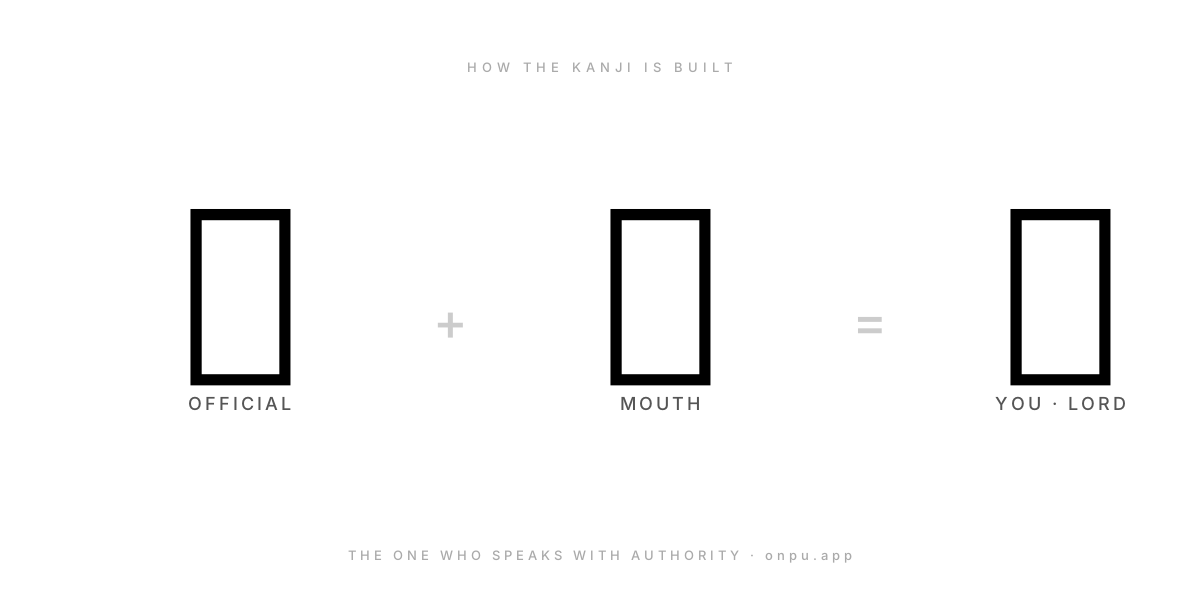
君 is a different category. It is two pieces stacked on top of each other.
The top piece is 尹. The Onpu kanji card calls it official. In older readings of the character, it represents a hand holding a writing implement or a baton, the kind of thing a governor or a minister would hold when issuing an order. Authority you can grip.
The bottom piece is 口. Mouth.
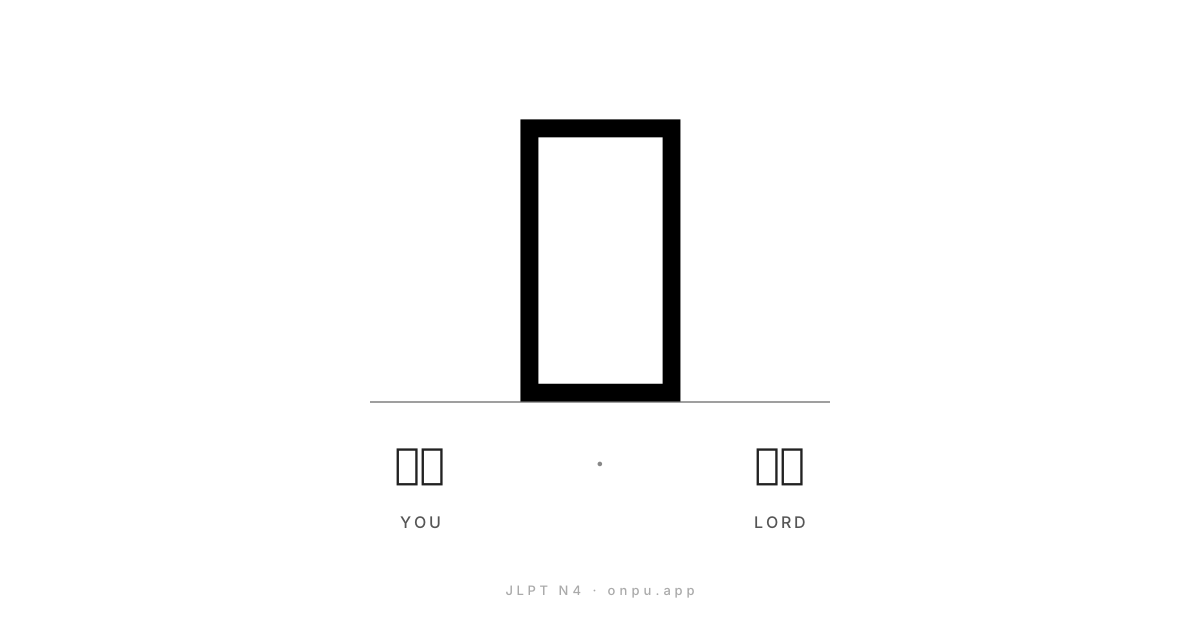
Put them together and the literal reading is something like the official's mouth, or the one who governs through speech. The Onpu mnemonic for the character is exactly that: "Official (尹) mouth (口) - you, lord."
The character was not built to mean you in the way English uses the word. It was built to mean the one whose voice carries weight. A ruler. A lord. The person at the top of the room.
The word used to mean king
In classical Chinese and old Japanese, 君 (read kun in compounds) was the word you reached for when you needed to talk about a sovereign. It still is, in some contexts.
君主 (kunshu) is monarch. Modern dictionaries still print it exactly that way, with the same character a high-schooler today writes on a love letter.
君臨 (kunrin) is the verb for to reign. A king reigns over a kingdom. A champion reigns over a sport. Same kanji.
暴君 (boukun) is tyrant.
諸君 (shokun) is what a general says when addressing a room full of officers. You all, but with the formal weight of someone speaking from the front of the room. Anime fans hear it in war and mecha shows for a reason. The word is old.
So when you see 君 in those compounds, it has not drifted at all. It still means the one in authority.
The drift happened in a different place, when the same character started being used as a pronoun in everyday speech. The kimi reading. And once it landed there, songwriters never let it go.
Mikazuki: addressing the moon-watcher
The most famous use of 君 in late-2000s J-pop is probably the chorus of Ayaka's 三日月 (mikazuki).
君も見ているだろう この消えそうな三日月
"You must be watching too / this crescent moon that looks about to disappear."
In English, you is just you. The line reads as a wistful long-distance lyric, and that is not wrong. But the Japanese listener hears 君, the same character that sits in the words for monarch and reign. The pronoun arrives with a faint formal echo, the way English would if someone wrote thou instead of you in a love poem.
That faint formal echo is exactly why songwriters love it. Kimi is not the casual you of texting friends. It is also not the cold anata a wife uses to mean dear. It sits in a third register, intimate and slightly elevated at the same time, like the addressee is being lifted up just by being named.
A song that says kimi mo miteiru darou is a song that has put the listener on a small pedestal before the chorus has even finished.
When the kanji is doing two jobs at once
Yorushika's 言って. opens its second verse with the line:
君が逝ったこと
In the post on that song I went deep on the homophone, the way 言って (said) and 逝って (passed away) sound identical and the kanji is the only thing keeping them apart. What I did not focus on at the time is the word that comes first.
君が. Kimi ga. The thing that died was you, addressed with the same character a samurai would have used for his lord.
The line lands as devastating in part because the speaker has not stopped honoring the dead person. The pronoun did not downgrade. They are still 君, still elevated, still the one whose name takes the formal pronoun. Loss with full ceremony.
You can read the line as a casual "you that left." Or you can let the kanji do its quiet work, where the you in question is being addressed the way classical Japanese addressed someone you owed everything to. Both readings live inside the same line. The character carries both.
When the song equates 君 with light itself
In Utada Hikaru's 光 (hikari), there is the line:
君という光が私を見つける
"You, the thing called light, finds me."
I wrote about 光 before, but the grammatical move is worth saying twice because of what 君 is doing. Kimi to iu hikari. "The light that is called you." The pronoun is not being compared to light. It is being equated with it.
That equation only lands the way it does because kimi carries the elevated register. If she had used お前 (omae, blunt and rough) or あなた (anata, formal and slightly distant), the line would have collapsed. Light is too lyrical for omae, too warm for anata. Kimi is the only pronoun in the language that can sit next to light without either word feeling out of place.
The kanji for you is the kanji for lord, and that is exactly why it can also be the kanji for the thing called light.
Why songwriters keep reaching for it
The Japanese language has at least five common words for you: お前, あなた, 君, 貴様, 自分, plus a stack of others depending on dialect and politeness. They are not interchangeable. Each one points the conversation at a different relationship.
君 is the only one with this particular shape: intimate, but with a faint memory of authority still attached. You can use it for someone you are in love with, and you can use it for someone you respect, and the word does not have to choose.
That ambiguity is the gift, not a problem. A pop song lives in the gap between I love you and I look up to you, and 君 is the only pronoun that fits inside that gap without breaking. English has to pick. Japanese can keep both meanings stacked on top of each other for the length of a chorus.
The kanji is doing the stacking. 尹 on top, 口 on the bottom, the official and the mouth, the original word for the one who speaks with authority. The love songs are written on top of that older meaning, and the older meaning is still in the room.
Try it on a song you already love
Pick any J-pop track with 君 in the title or the chorus, and there are a lot of those. Paste the lyrics into Onpu, tap the 君, and read what comes up.
You will see two components. An official wielding authority. A mouth. The character that has been the word for sovereign for as long as Japanese has been written down. The same character a singer is using right now to address the person they cannot live without.
Both meanings are sitting inside the same single character. I find that staggering, and I have only really started hearing it. If any of these songs are on your playlist, try the line again with the older meaning on. The chorus might not feel any different. Or it might land slightly heavier, the way the Japanese listener has been hearing it all along.