Driver's High L'Arc-en-Ciel Meaning: One Word in the Chorus Has Meant 'Die Together' for Three Hundred Years
Driver's High is more than an Initial D opening. The word HYDE uses in the chorus is the classical Japanese term for dying together, and the kanji in the final line confirm the ending he had in mind all along.
There is a version of Driver's High that most people have. It plays during the opening of Initial D Second Stage. It sounds like speed. It is an excellent song to play at high volume while driving somewhere in a hurry. This is a completely valid relationship to have with it.
Then there is the version you get when you start reading the actual Japanese.
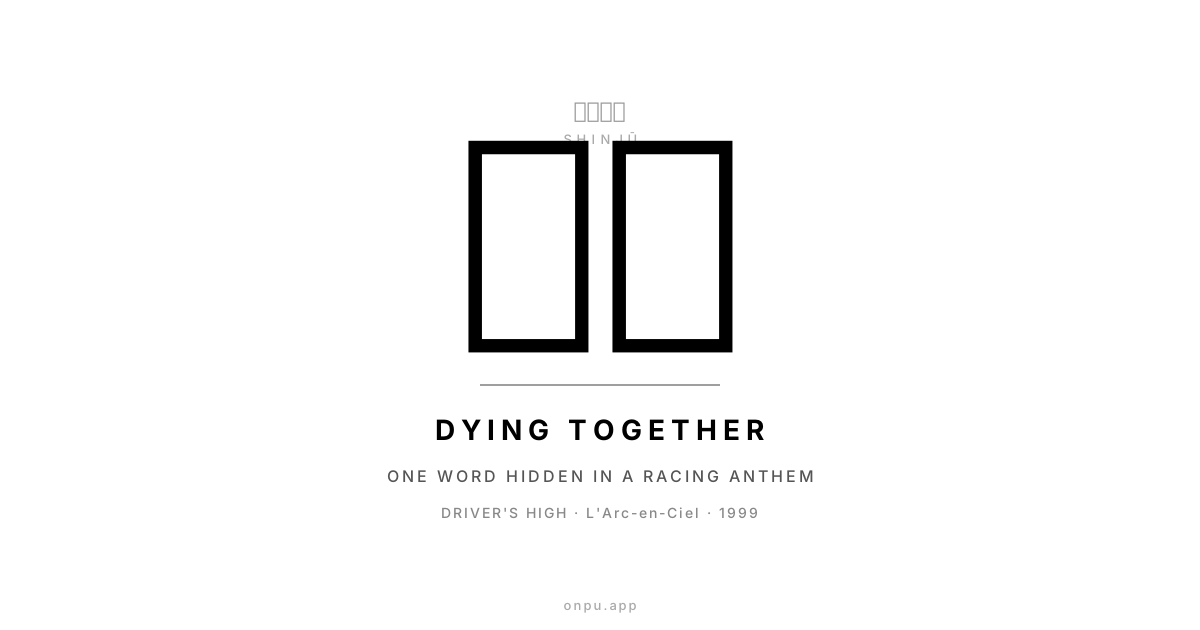
The word HYDE puts in the chorus is 心中. It has been in the Japanese language for three centuries. Every native speaker who hears it understands exactly what it means. And it is a strange word to find in a racing anthem.
What you'll walk away with
This post takes about six minutes. You'll come out of it knowing:
- The word HYDE chose for the chorus, and why it rewrites the emotional premise of the song
- The kanji for ash (灰) and what's hidden inside it
- The components of the kanji for wing (翼) and why "wings of steel" is more precise than it looks
- What the final line of the song actually says about where this whole thing ends up
The word HYDE chose for the chorus
About halfway through the first verse, after the silver metallic heart and the fuse being lit and the adrenaline, the song arrives at what might be the most important line. Racing past the city, to the ends of this world, let's blast through and — 心中しよう.
心中 (shinjū) is the classical Japanese word for dying together. It goes back to the Edo period, when playwright Chikamatsu Monzaemon wrote a series of tragedies about lovers who couldn't stay together in life and chose to leave together instead. The genre was called 心中物, shinjū mono. The English translations call them "double suicide plays." The tradition is older than most of the genre conventions we call J-pop.
HYDE could have written a dozen different things here. Let's keep going. Let's survive. Let's make it to the other side. He wrote 心中しよう, using the same term Chikamatsu used for his doomed lovers.
The racing context makes this more interesting, not less. Takumi in Initial D isn't driving to win a point. He's in some kind of trance, fully inside what he's doing, not thinking about after. This song describes that from the inside. Coming to the end of the world together, going until there's nothing left. The word for it is 心中.
心中 is written with two kanji: 心 (heart, mind) and 中 (center, inside). Heart-center. Or: the inside of a heart. There's a whole post here about 心 and how deep it goes in Japanese — if you want that one first, the kokoro deep dive is worth reading before coming back.
The double-meaning structure HYDE is using — where a word carries its literal meaning and a charged secondary reading simultaneously — is the same tool Yorushika uses in 言って。, where two kanji that sound identical pull the song in two directions at once. Different song, same technique.
The ash kanji
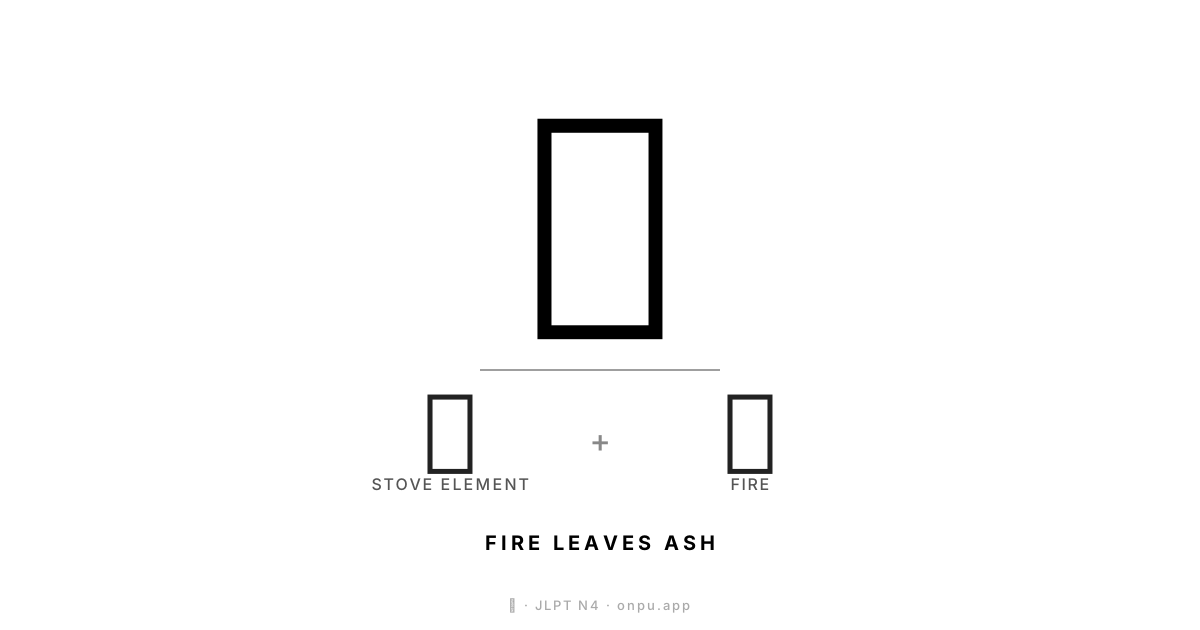
A few lines after 心中しよう, the song gives you the consequence. Even if we explode and turn to ash — just like this, you'll be laughing, surely. 爆発して灰になっても.
灰. Ash.
Break it into components and you find fire (火) underneath. The shape above it is an older element, sometimes described as a hand on a stove. Fire below, the tool that holds it above. Fire on a surface is what leaves ash. The kanji encodes the process.
HYDE continues: このままだと笑ってるね きっと. Just like this, you'll be laughing, surely. Not crying. Not regretting. Laughing.
The inversion matters. The sentence confirms you'll explode, turn to ash, and the response you'll have to that is amusement. There's a specific kind of recklessness that finds this funny rather than terrifying. The song is describing it, not endorsing it or condemning it. Just: this is what it looks like when someone is completely committed to going until there's nothing left.
Steel wings
The bridge of Driver's High has one of those lines that sounds so clean you might not stop to look at it. 鋼の翼で. With wings of steel.
鋼 is the kanji for steel. It's built from two parts: 金 (metal, gold) and 岡 (a hill or mount). Metal shaped by terrain. Forged. That's roughly what steel is — iron that's been worked under pressure into something stronger.
翼 is the kanji for wing. Its components are 羽 (feathers) and 異 (different, strange). Feathers that are not normal feathers. That decomposition already contains the concept of unusual flight — wings that work differently, wings that break from what wings usually are.
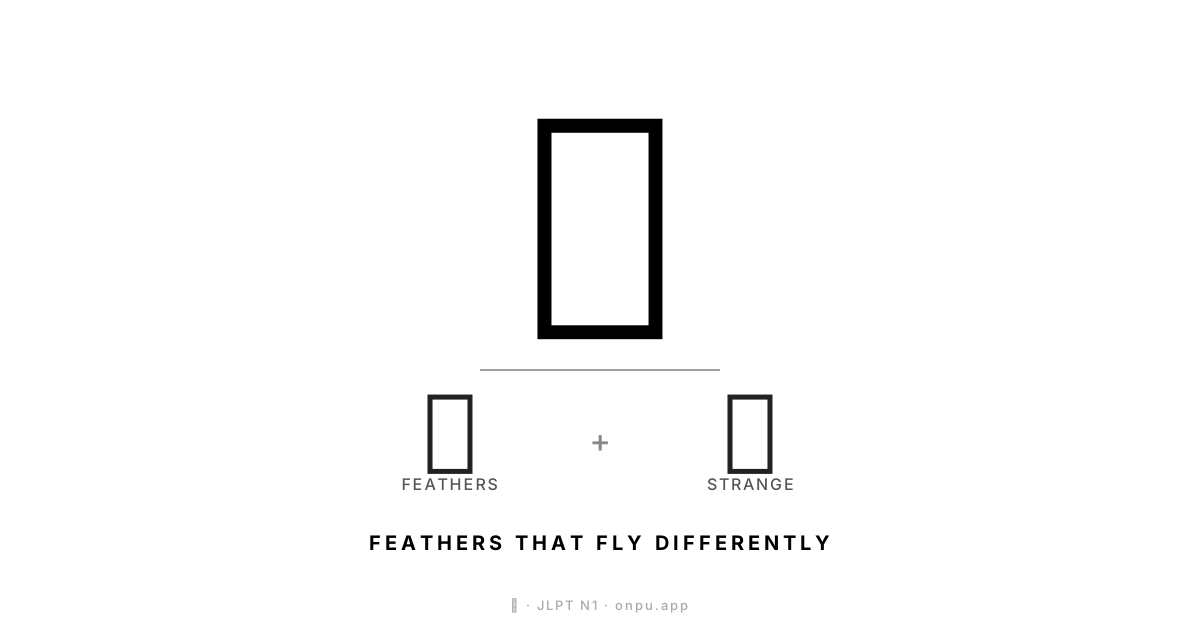
Put 鋼 and 翼 together and the image clicks into place. Steel wings are not natural wings. They are not feathers, not bird flight, not anything organic. They are fabricated from metal and shaped by force, and they carry you somewhere anyway. This is what the song says the narrator is flying on. Not momentum or hope or luck. Steel.
This is also what makes the line feel correct for Initial D. The AE86 Takumi drives is not a beautiful car. It's not sleek. It barely looks like it belongs on a mountain pass. It wins because of how it was built, and because of what the driver does inside it. Steel wings, not natural ones.
If you want to see how 翼 and 鋼 sit next to each other in the Onpu dictionary view, both are in there. 翼 is N1, which means it shows up less frequently in everyday writing, which is part of why this line has weight when it lands.
The last line
Driver's High ends with: 来世でまた会おう. Let's meet again in the next life.
来 means come or next. 世 means world, generation, era. 来世, raise, is the world that comes after this one. The afterlife. The next time around.
HYDE writes the line as a date, not a farewell. 会おう is volitional — it's "let's meet," a proposal, an agreement between two people. They're arranging something. They know where this ends, and they've made a plan for what comes next.
This is the last piece of the puzzle that the word 心中しよう sets up. The chorus said: let's go to the end of the world together and burn out. The final line says: and after that, we have somewhere to be. The song was not nihilistic. It was optimistic about a very specific thing, which is that the end of this is not actually the end.
The three hundred years of shinjū tradition in Japanese literature always included this part. The lovers don't die because they have nothing to live for. They die because they believe in something continuing. Driver's High inherits that logic. The racing, the adrenaline, the ash — all of it leads to a meeting in the next life.
How this reads in the app
When I looked at Driver's High in Onpu, the line-by-line view does something useful with these moments. Seeing 心中しよう translated next to the racing-past-the-city line makes the word's weight clearer than any English-only summary would. And the kanji tap on 灰 shows you the fire component immediately, which is the part that makes the ash metaphor feel intentional rather than incidental.
The Demon Slayer Mugen Train theme 炎 builds an entire post around the flame kanji — if that one caught your attention, the comparison between 炎 (the fire that is all emotion) and 灰 (what that fire leaves) is interesting. They're connected kanji, and homura-lisa-meaning gets into how 炎 works in detail.
Driver's High has been a song about burning out and laughing about it since 1999. The kanji were always there. It just takes looking at them.