Homura LiSA Meaning: The Demon Slayer Theme Reads 炎 as Homura, the Archaic Word for Flame of the Heart
LiSA's Demon Slayer theme 炎 is written with the kanji for flame, but she reads it as Homura, an archaic word that specifically means flame of the heart.
You already know the song. If you've seen Mugen Train, or if you've been anywhere near Japanese Twitter in 2020, you've heard the opening line a hundred times. さよならありがとう 声の限り. Goodbye, thank you, with all my voice.
The kanji on the cover is one character. 炎. Flame.
But here's the thing I didn't catch for an embarrassingly long time.
That kanji has three readings. LiSA picked the rarest one.
What you'll learn
This post takes about 5 minutes and you'll know:
- The three ways to read the kanji 炎 and when each one gets used
- Why LiSA reads the title as Homura instead of the normal word for flame
- The signature line of the song that only makes sense once you catch the reading
- Why even modern AI tools default to the wrong reading here, and why that's actually the proof
One kanji, three readings
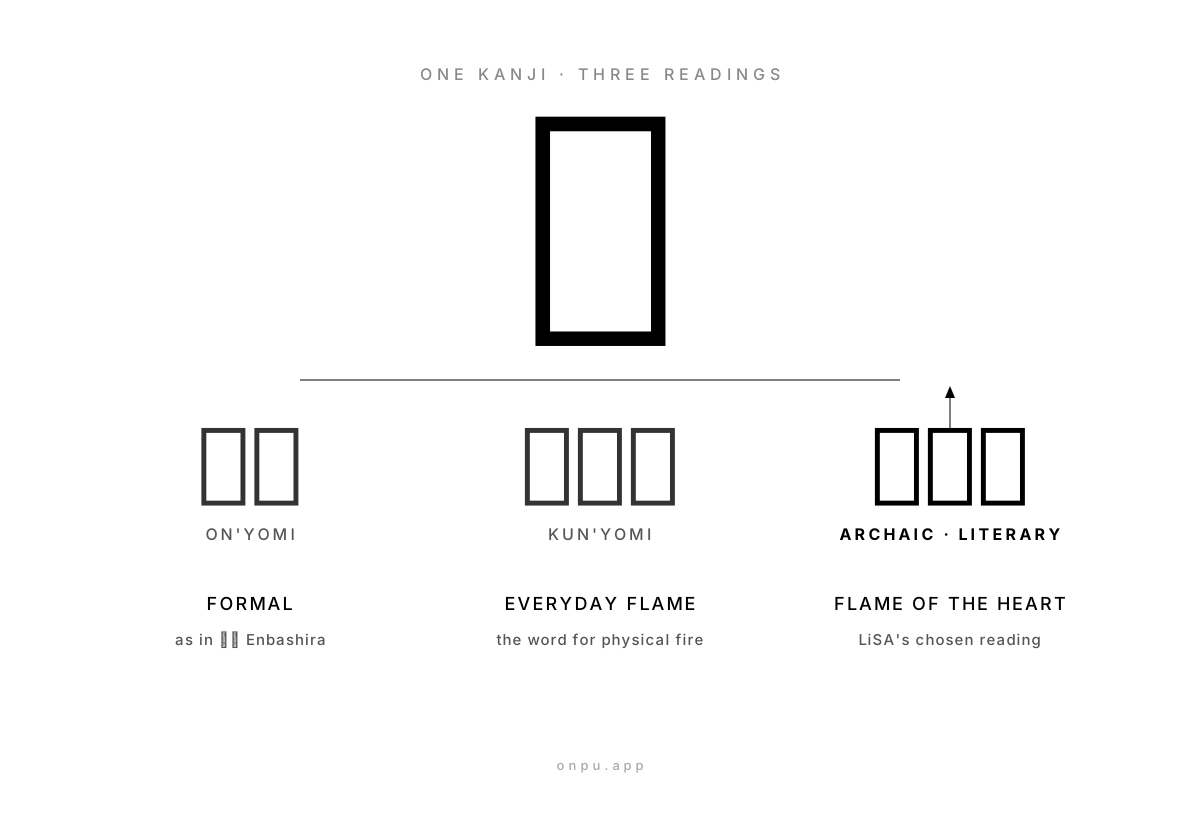
炎 is a standard N1 kanji. If you look it up in a dictionary, you'll find two readings and a clean definition.
- エン (en), the on'yomi, the Chinese-origin reading
- ほのお (honoo), the kun'yomi, the native Japanese word for flame
Rengoku's title in Demon Slayer, 炎柱, is read as Enbashira. That's the on'yomi at work. Formal. Titular. The kind of reading you use when you're labeling something.
If you wanted to say "there's a flame over there" in a normal Japanese sentence, you'd say honoo. That's the everyday word. Physical fire. The thing that burns.
Then there's a third reading that doesn't sit in the dictionary's primary entries but shows up in literature, poetry, and song. ほむら. Homura.
Homura is the flame of emotion. Rage, devotion, grief, love that doesn't burn out. It's archaic. It's literary. You don't use it to describe a candle. You use it to describe what's still burning in someone after the thing that set them on fire is gone.
The line where homura does its real job
The song's most famous line shows up near the end, and it's the line every cover singer cries on.
心に炎を灯して 遠い未来まで
Kokoro ni homura wo tomoshite, tooi mirai made. "Light a homura in my heart, all the way to the distant future."
LiSA could have written 心に火を灯して. Light a fire in my heart. Same meaning, more or less. It would scan. It would rhyme. Japanese pop songs do this all the time.
She didn't. She wrote 炎 and sings it homura.
The difference is the reason the line lands. If you sing honoo, the metaphor is "light a physical flame in my heart," and the heart is doing the metaphorical work. You have to translate the flame from literal into emotional.
If you sing homura, the flame is already emotional by the time it reaches the heart. It's the specific word for "the fire that burns inside someone." Putting it in the heart is the most literal thing you could do with it. There's no metaphor to unfold. The word already is the feeling.
The same kanji. The same written line. One reading makes it a poem about fire. The other makes it a promise.
Even the AI gets this wrong, and that's the proof
Here's a small thing I noticed when I pasted the song into Onpu.
The line shows up exactly as written. 心に炎を灯して. The translation underneath is correct. "Lighting the flame in the heart, until the distant future."
But look at the furigana the app puts above 炎.
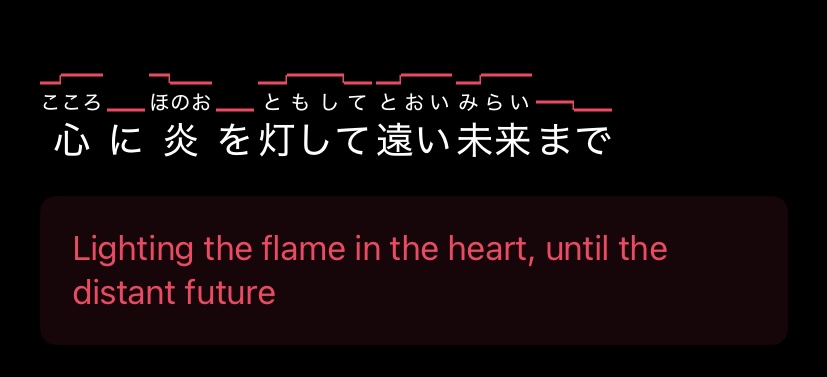
ほのお. Honoo. The dictionary default.
This isn't a bug. It's how every modern Japanese tokenizer behaves. The model has seen millions of sentences where 炎 reads as honoo and almost none where it reads as homura. Hand it a kanji with no audio, and it picks the reading the rest of the language uses.
If you only had the text, you'd never know. The reason you know LiSA chose homura is because she sings it that way.
That's how rare this reading is. It's a reading you have to hear. And it makes the move more deliberate than it first looks. She isn't writing the kanji and letting the reader pick. She's writing the kanji and singing the reading you wouldn't have guessed. The gap between what's on the page and what comes out of her mouth is where the song lives.
Next time a Japanese song's lyric video puts furigana you don't expect over a familiar kanji, that's worth paying attention to. The singer is telling you something the page didn't.
Why two fires stack into one kanji
The other thing the app gets right, and worth pausing on, is the breakdown of 炎 itself.
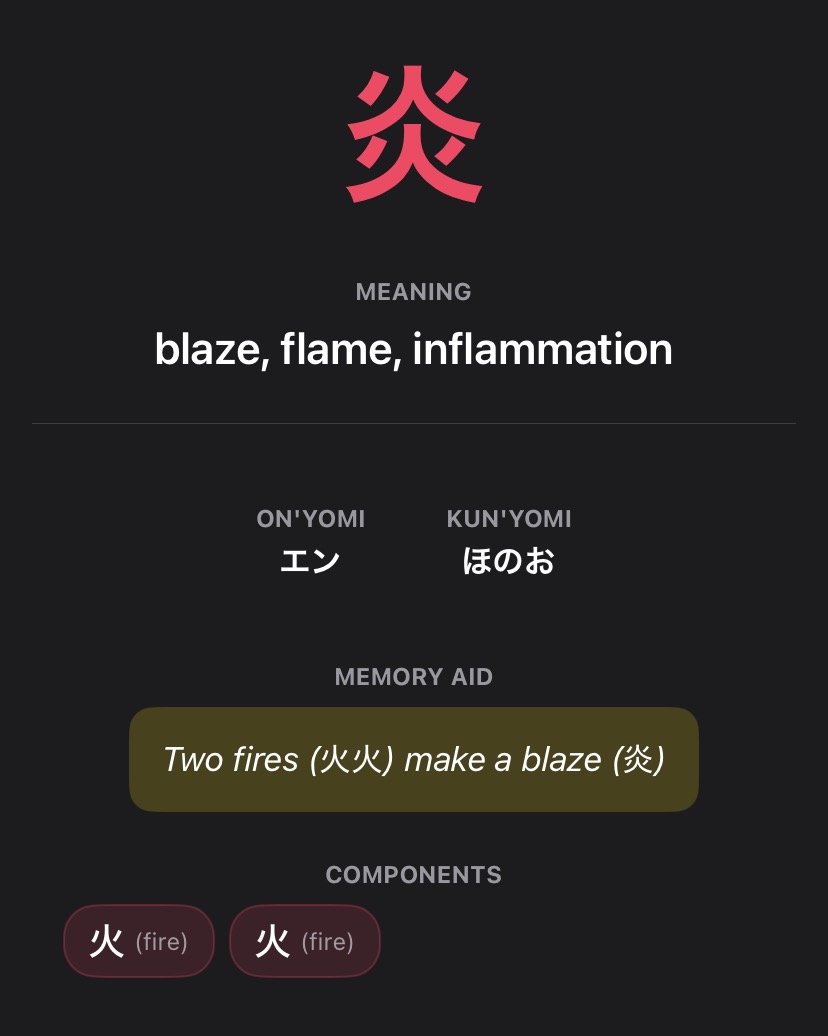
Two copies of 火 (fire) stacked on top of each other. Not fire plus something else. Fire on fire. A little pile of flames.
This is where the archaic reading starts to feel inevitable.
The etymology of homura is usually given as 火 (ho) plus 群ら (mura), where 群 means "group" or "flock." Homura is, literally, "a gathering of fires."
So the kanji's shape is two fires gathered. And the ancient word for what that shape depicts is "gathered fires." The archaic reading isn't a stretch. It's the one that matches the picture.
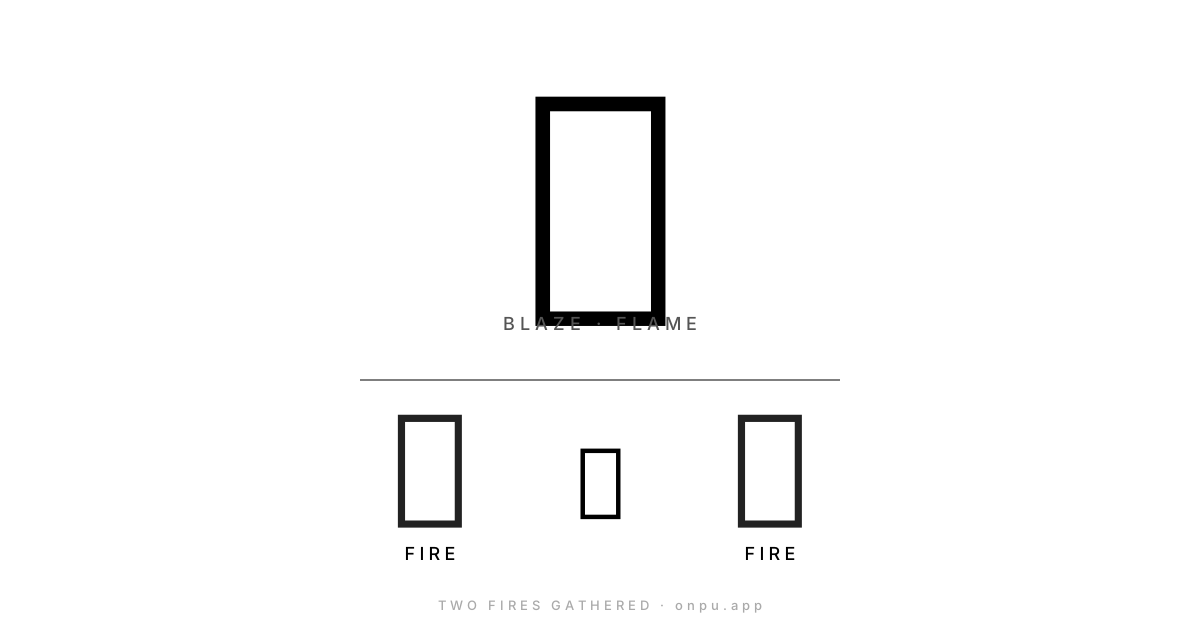
Honoo, the common reading, came later and flattened the meaning into generic "flame." Homura kept the older sense: not fire in general, but a mass of small fires burning together, the kind of flame you feel rather than touch.
I looked at that breakdown card and the whole song got heavier. Rengoku's title uses 炎 to mean the external flame he wields in battle. LiSA uses the same character to mean the internal flame that keeps burning after he's gone. Same kanji. Totally different register.
This is similar to what Yorushika pulls off with 言って and 逝って in their song, where two kanji with the same sound carry opposite meanings. Here the trick runs the other way. One kanji, multiple readings, and the reading choice is the whole argument.
What changes if you swap the reading
Try it. Read the line two ways:
If the line is kokoro ni honoo wo tomoshite, you're lighting a flame in your heart. It's a lovely metaphor. It's also the kind of thing you'd hear in any pop song. Fire equals passion. The move is old.
If the line is kokoro ni homura wo tomoshite, the flame is already the flame of memory, grief, and inherited will. Lighting it in your heart isn't a metaphor for passion. It's the thing itself, placed exactly where it was always going to live.
The song is a farewell. You don't have to have seen Mugen Train to feel what it's doing. But if you have, the choice of homura snaps into place. Rengoku's physical flame ends on that train. What the song is about is the version of the flame that doesn't end.
This is the same move Kenshi Yonezu makes with Lemon, where grief gets encoded into a single kanji carrying two meanings at once. And it's the same trick EGO-WRAPPIN' pulls off with 下弦の月, where the title says one thing and the chorus quietly undoes it. Japanese title kanji do a lot of work that translations tend to flatten.
Homura was never translatable as just "flame." The English title is "Homura" because the translators knew. Nobody picked a different English word because there isn't one. The whole song is about a flame that doesn't have a name in English.
If you want to see this yourself
Paste 炎 by LiSA into Onpu. Don't be surprised if the furigana on 炎 says ほのお. That's the dictionary reading, and that's what any auto-transcriber will guess. Tap on 炎 and you'll see 火 plus 火, the two fires the kanji is built from, the picture homura was named after.
Then put on the song and listen for that line. 心に炎を灯して. The page says one thing. LiSA sings another. The space between the two is where the song actually lives.
I'd love to know if there are other songs where the archaic reading of a kanji is doing this much work. Paste yours in and let me know what I'm missing.