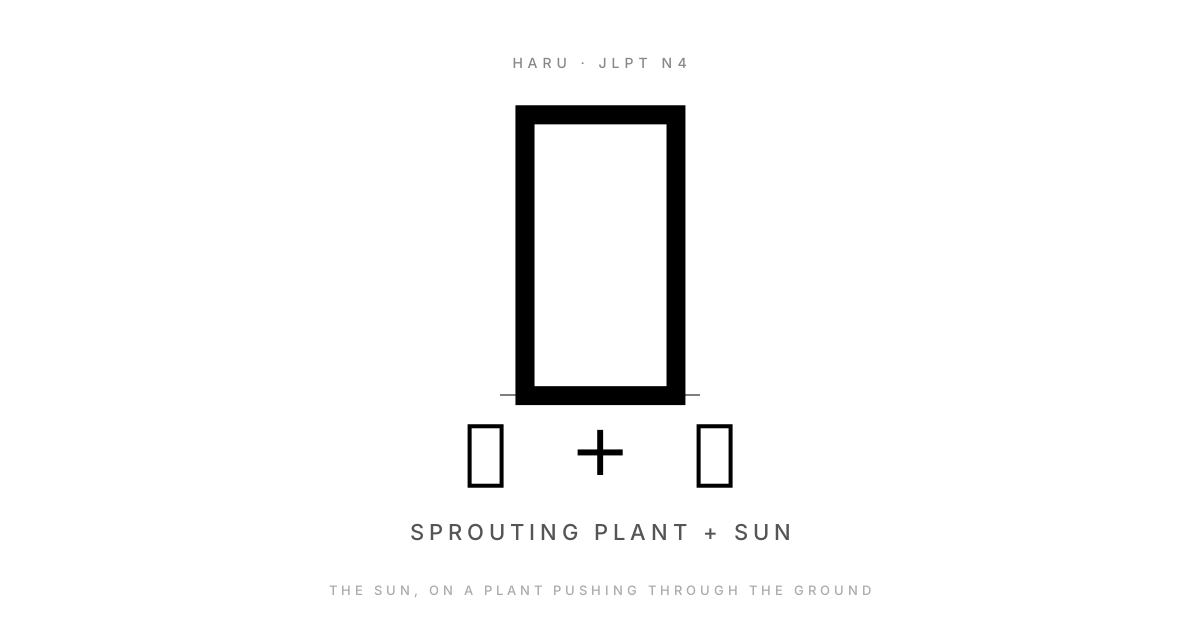
Hana (花) Shows Up in Almost Every J-Pop Song You Love. The Kanji Itself Is Grass at the Moment It Changes.
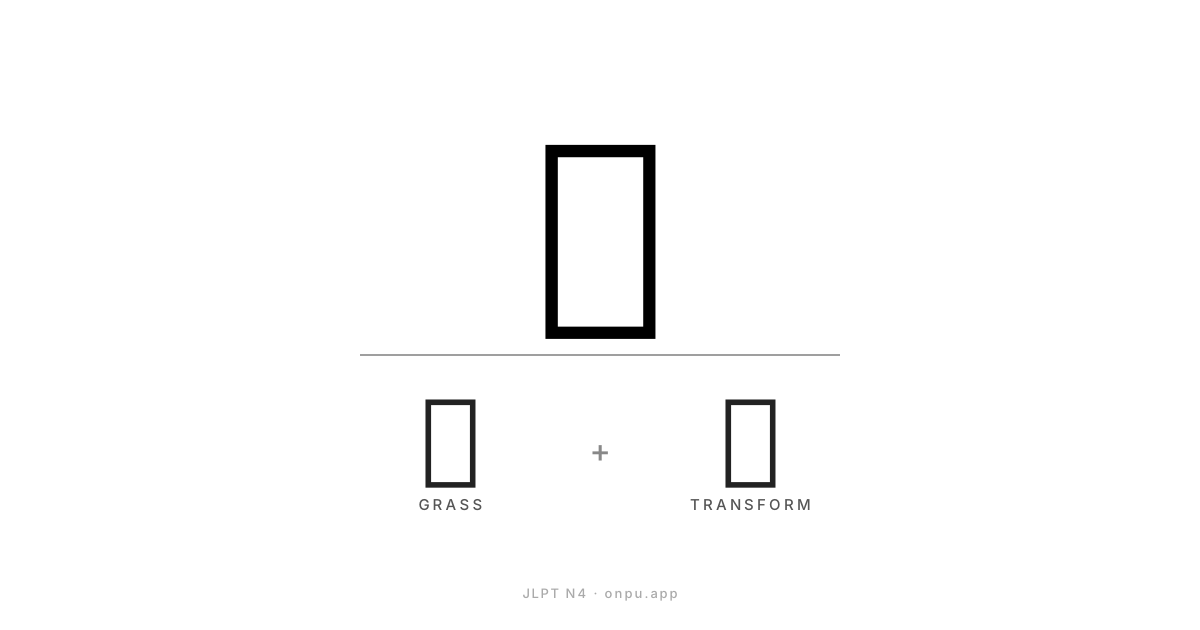
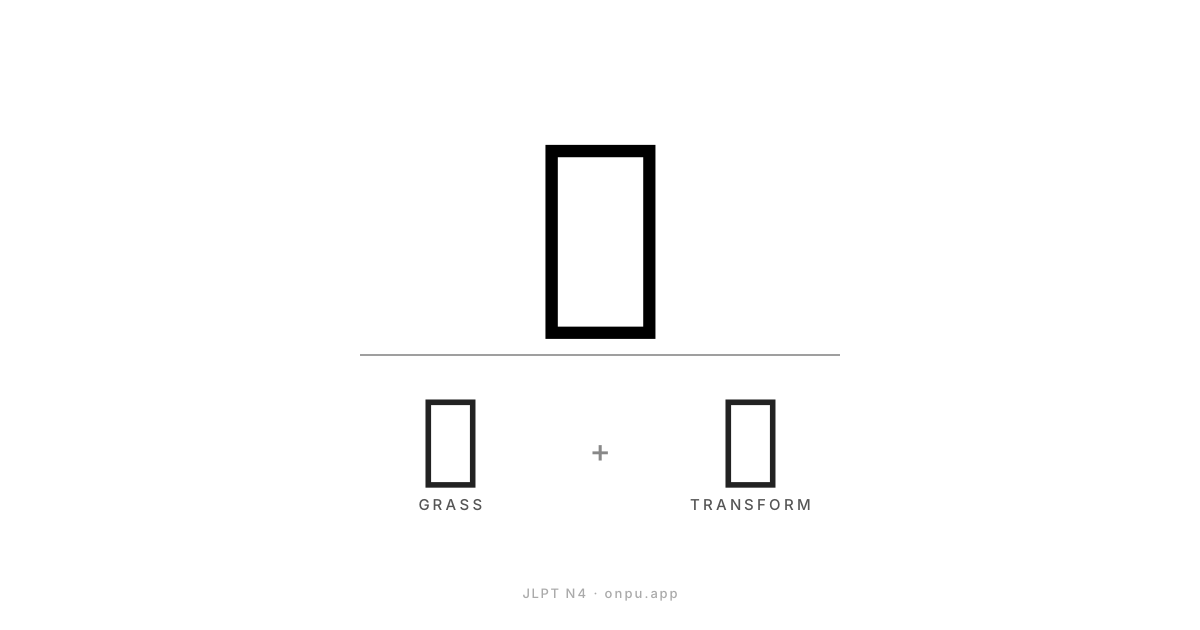
花 is grass plus the kanji for transformation. Once you see that, every J-pop song with 花 in it sounds different.
Hana (花) Shows Up in Almost Every J-Pop Song You Love. The Kanji Itself Is Grass at the Moment It Changes.
If you have listened to enough Japanese music, some words just sink in without any effort on your part. 花 (hana) is one of them. It is in song titles, lyrics, band names, album covers. You hear it so often that eventually you stop noticing it. The flower word. Moving on.
That was me for a while.
Then I actually looked at what the kanji says. Not just recognized the shape. Broke it down into its parts.
Grass. And transformation.
This post takes about five minutes. By the end you will know:
- What the two parts of 花 actually mean, and why one of them is the same kanji hiding in "chemistry" and "culture"
- Why classical Japanese poetry has used 花 to mean cherry blossom for a thousand years, with no qualifier needed
- The two verbs that belong to 花, and why knowing both of them changes what songs about flowers are actually saying
- How to hear 花 differently the next time it lands in something you are listening to
The Kanji Has Two Parts, and One of Them Is a Verb
花 breaks into two pieces.
The top part is 艹 (pronounced kusa-kanmuri, "grass crown"). It is a radical, a building block, that marks the plant family. Once you know it, you see it everywhere: 草 (grass), 葉 (leaf), 茶 (tea), 薬 (medicine). It is the sign that says: this thing is plant-adjacent.
The bottom part is 化.
Onpu's kanji data gives the mnemonic for 花 as "艹 (grass) changing (化) into a flower." That is not poetic interpretation. That is what the character is built to say.
So half of 花 is obvious. The other half is the interesting part.
化 Is Everywhere in Japanese Once You Notice It
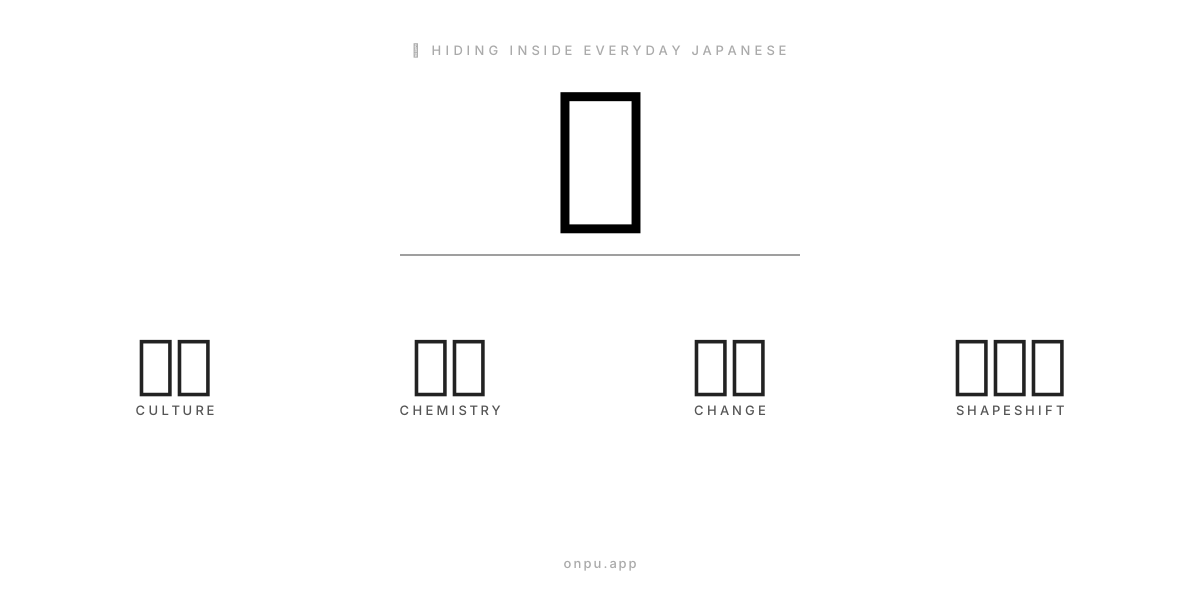
化 (pronounced ka, ke, or bake depending on the context) means transformation. Change. The state of something crossing from one thing into another.
Once you see it, you cannot un-see it.
文化 (bunka): culture. The transformation of language and practice into something that shapes a whole community. 化学 (kagaku): chemistry. Literally the study of transformation at the molecular level. 変化 (henka): change, shift, variation. Two transformation-related kanji stacked together. 老化 (roka): aging. The transformation of growing old. 美化 (bika): beautification. The transformation of something into beauty.
And then there is 化ける (bakeru), which is where it gets uncanny. It means to transform in the supernatural sense. To shapeshift. When a fox in an old Japanese story takes human form, that fox 化けます. Same kanji. The word for ghost stories and the word for chemistry and the word for culture are all built around the same idea: something crossing over.
All of that is sitting inside 花.
A flower, by the logic of the kanji, is not a pretty static object. It is grass that 化けた. Grass that crossed.
The next time you read a lyric with 花 in it, that is the layer underneath the image.
Why Japanese Poetry Has Used 花 to Mean Cherry Blossom for a Thousand Years
In classical waka and haiku, there is a convention that has held for over a millennium: 花 alone, without any qualifier, means cherry blossom.
Not 桜. Not 梅 (plum). Not anything else specified. Just 花. The flower. And everyone who reads it knows.
This is not arbitrary. Cherry blossoms are the most compressed example of 化 in nature. One week, maybe two. The trees go from bare to full bloom to scattered petals in a span that you can watch happen. The transformation is so fast and so complete that it became the defining image of Japanese aesthetics.
The concept wrapped around this is 物の哀れ (mono no aware). There is no clean English translation. The closest approximation: a bittersweet, aching awareness of things precisely because they do not last. The sensitivity to a moment as a moment, knowing it will be different soon, and feeling that knowledge as something closer to beauty than grief.
Cherry blossoms became the central illustration because their 化 is impossible to ignore. You are watching it happen in real time, standing under a tree that will look completely different next week.
When a modern J-pop artist writes 花 into a lyric, they are inheriting all of that. They might not be thinking about classical poetry. But the word arrives with the weight of a thousand years of cherry-blossom symbolism already attached.
I find this a little staggering, honestly. One syllable. Four strokes. A thousand years of context riding along.
The Two Verbs That Live Next to 花
There are two verbs that belong to 花 in Japanese, and they function as a pair.
咲く (saku): to bloom. The transformation beginning, arriving. The moment a flower opens.
散る (chiru): to scatter, to fall. The transformation finishing. The moment the petals stop holding on and let go.
花咲く. 花散る. The whole arc of 化, from arrival to ending.
A while back I was breaking down 春泥棒 (Haru Dorobou, "Spring Thief") by Yorushika in Onpu and came across the bridge: 花散らせ今吹くこの嵐は / まさに春泥棒. "This storm that scatters flowers right now is exactly the spring thief." The storm is not described as cruel or sad. It is named as a thief: something that takes the transformation away before you are ready. The 散る is the theft.
That is a different emotional register than "wind blowing petals around."
Once you have both verbs, you start noticing them in relationship. A song about 花咲く is also implicitly about what comes after. A song about 花散る carries the memory of what the blooming looked like. The pair is always there, even when only one of them appears in the lyrics.
If you want to see a similar dynamic with a different vocabulary word, the post on 涙 (namida) gets into how the water-going-backwards kanji changes what crying songs actually say. The 夢 (yume) post follows the same pattern with the dream kanji.
How This Changes What You Are Hearing
The shift is not complicated once you have it.
When 花 appears in a lyric, it is not describing a static backdrop. It is pointing at the moment of crossing. The specific instant when something ordinary becomes something that will not last.
Songs that put 花 in the title tend to be about that moment. Not always consciously. But the word brings it. Something beginning. Something ending. A transformation that cannot be held.
I noticed this one afternoon listening to a playlist I have had for years and realizing I had been hearing the word without hearing what it said. It did not feel like a discovery so much as a long-overdue read.
The post on 恋 vs 愛 gets into a similar thing: how two Japanese words that both translate as "love" are actually encoding completely different feelings. The kanji show the difference clearly once you look.
If you listen to a lot of J-pop, you have probably already heard 花 a few times this week without registering it. Paste any song with 花 in the title into Onpu. The kanji breakdown is right there when you long-press it, and so is 化 if you want to follow that thread. I would be curious which songs come to mind.