Hikari (光) Shows Up in Almost Every J-Pop Song You Love. The Kanji Itself Is a Person Standing on a Hilltop With Their Arms Wide Open.
The kanji 光 (hikari, light) is everywhere in Japanese music. When Onpu breaks it open, you get a figure on a bare hilltop with arms wide. Here is what that image quietly does to every song you already know.
Hikari (光) Shows Up in Almost Every J-Pop Song You Love. The Kanji Itself Is a Person Standing on a Hilltop With Their Arms Wide Open.
Utada Hikaru. Kingdom Hearts. That voice. One of the defining J-pop voices of the early 2000s, and her most iconic song is simply called 光.
I had been spelling her first name in romaji for years before it clicked.
光る. Hikaru. To shine.
The person who wrote a song called 光 has the same kanji living in her own name. That is either an accident or a kind of inevitability, and I have stopped thinking it is an accident.
In this post, you will learn:
- What 光 looks like when you break it into its pieces
- Two songs where it is doing more than physical light
- The J-pop pattern of using 光 as a stand-in for a person
- Something to listen for next time the word shows up in a song you already know
6 min read
Inside 光 is a figure on a hilltop
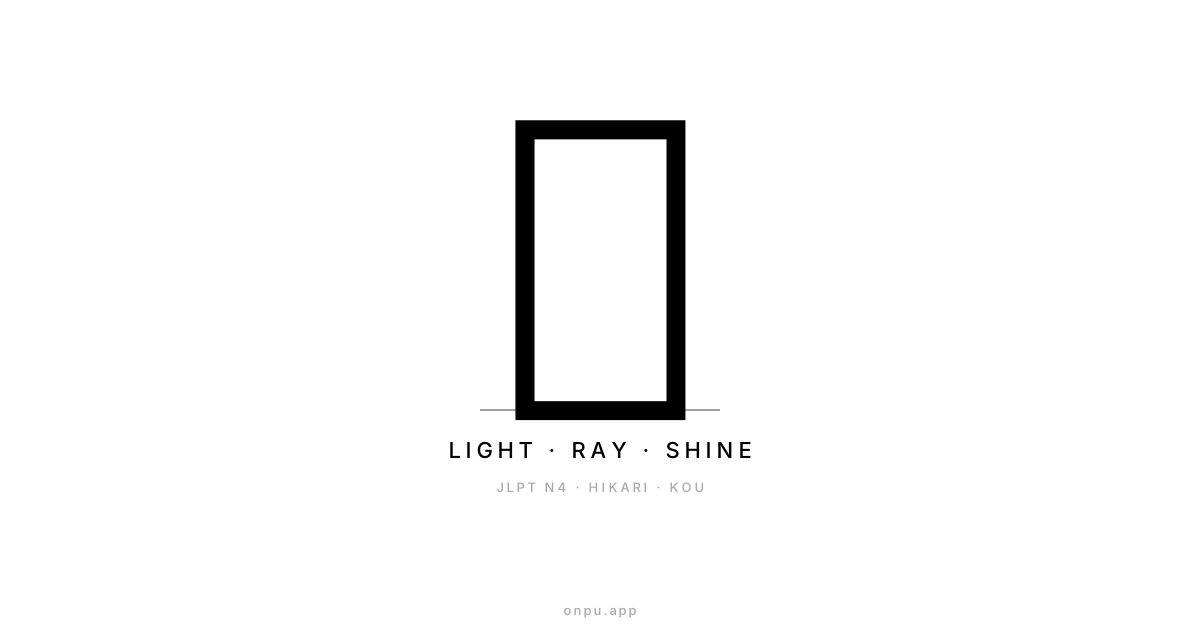
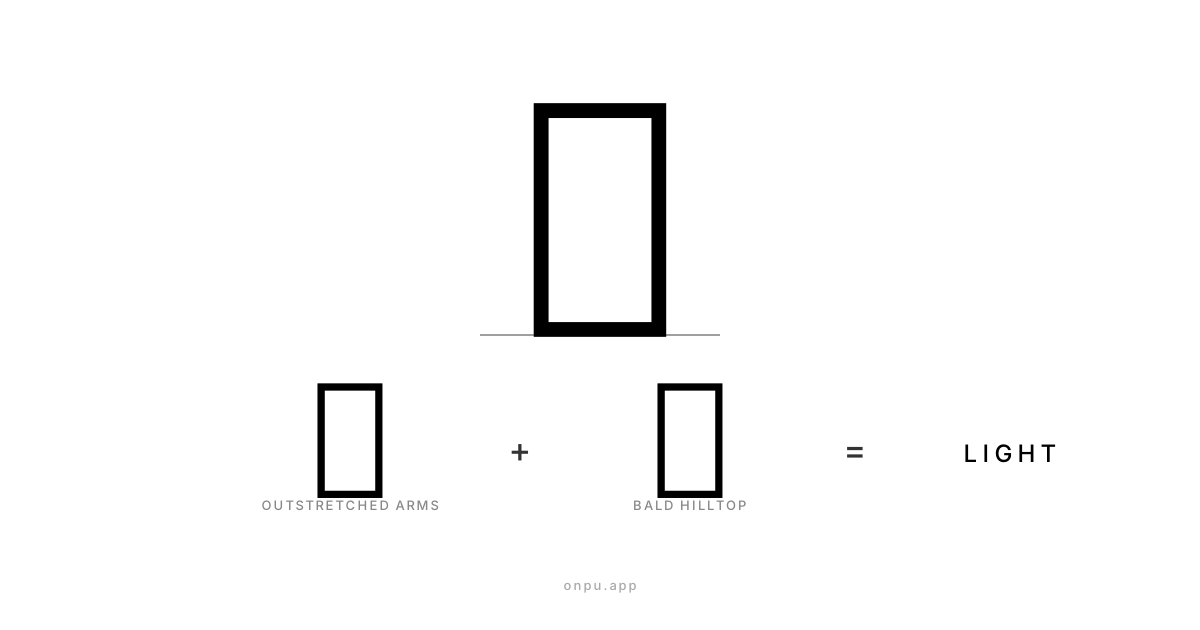
I tapped 光 in Onpu for the first time after hearing it in a song for maybe the hundredth time. The app splits it into two components.
The base is 兀, which means "bald hilltop." High, flat, exposed. The kind of elevated, windswept surface that shows up in classical Chinese poetry whenever someone needs to feel small against the landscape.
Above it sits ⺌, which Onpu's mnemonic calls "outstretched arms." The little spreading shape at the top of the character. In the context of 光, the memory device is: something with arms wide open, standing on a bare hilltop, radiating outward in every direction.
I am not going to claim that is strict historical etymology, because the actual origin of 光 is older and messier than any single mnemonic. But the image sticks, and sticking is what mnemonics are for. A figure elevated and exposed, arms spread, sending something out.
The same pattern appears across this series. 涙 (namida, tears) breaks into water going backwards. 夢 (yume, dream) hides an eye covered up in the evening. Every single time, the breakdown adds something the English translation loses on the way. 光 is no different.
突然の光の中: waking up inside it
Utada Hikaru's 光 opens in the middle of a verse, no setup:
突然の光の中、目が覚める
(totsuzen no hikari no naka, me ga sameru)
Suddenly in the middle of light, my eyes open
Not gradually. Not "I noticed the light." Suddenly, in it. The construction 光の中 (hikari no naka) means "inside light." You are placed inside the word before you have time to adjust. And then your eyes open. The awakening and the 光 happen at the same time, from the same place.
Then the chorus arrives:
君という光が私を見つける
(kimi to iu hikari ga watashi o mitsukeru)
You, as my light, find me
That construction is worth sitting with for a second.
君 (kimi) = you. 光 (hikari) = light. The particle という (to iu) between them means "called" or "that which is." So the line does not say "you are like light" or "you are my light." It says: you, the thing called light, finds me. The person and the kanji occupy the same grammatical slot. They are not compared. They are made equal.
In English, "you are my light" is a metaphor. In this line, there is no metaphor. The kanji and the pronoun are identical in the sentence's structure. What that means, exactly, I find myself sitting with differently depending on the day.
心 (kokoro) does something similar in Japanese music, one character holding more weight than English has room for, but with a different quality. 心 pulls inward. 光 reaches out.
光の方へ: toward where the light is
Kaneko Ayano's 光の方へ (Hikari no Hou e) is the kind of song where you queue it once on a slow afternoon and it stays there for three weeks. I knew it from the playlist before I knew anything about where it came from.
It was written as the theme for a film. The film's title is わたしは光をにぎっている.
Which means: I am holding the light.
The film is about holding it, and the song is about moving toward it. Same kanji. Two verbs. Two entirely different stances toward the same word.
光の方へ breaks apart like this: 光 (light) + の (of/possessive) + 方 (hou, direction, where something is) + へ (toward). Not just toward light as an abstraction, but toward the specific direction the light is coming from. 方 makes 光 into a location. A specific coordinate you can face and walk toward.
That one extra word is the difference between "I want light" and "I am moving toward where the light is." The song is a vector. 光 as a destination.
The pattern 光 keeps following
I started keeping a loose list of J-pop songs with 光 in the title or chorus. 光るなら (If It Shines) by Goose house, the Your Lie in April opening. ベルウッドの光 (The Light of Bellwood) by Yujiro Kudo. 光 itself. 光の方へ. わたしは光をにぎっている as a title. The list gets long surprisingly fast.
What kept catching me is that almost none of them use 光 in a strictly physical sense. Nobody is writing songs about the lamp being on or the sun being bright. When 光 shows up in a chorus, it is almost always a person, or a feeling, or a thing you are either trying to reach or trying to hold.
君という光が私を見つける is the most direct version: you equal 光, no metaphor, same sentence slot. But even 光るなら (if it shines) treats 光 as something uncertain. It might shine, it might not, and that conditionality is the entire emotional territory the song occupies. 光の方へ treats it as a direction to consciously turn yourself toward. わたしは光をにぎっている treats it as something delicate enough to hold in your hands.
The figure on the hilltop with arms open works for all of these. It is elevated. It is reaching. It is sending something outward that might reach whoever it is intended for, or might not.
If 光 is in any song you have been listening to lately, it is worth pausing there for a second. Paste the lyrics into Onpu and long-press the kanji. The breakdown might look different depending on your device, but the component image is in there. The figure on the hilltop.
Probably will not change how the song sounds. But 光 might land slightly differently after that. Not just as the sound you have heard a hundred times. As something with its arms wide open.
I would love to know which song you found it in.