Sora (空) Shows Up in Almost Every J-Pop Song You Love. The Kanji Means Sky and Empty at the Same Time.
空 appears in almost every J-pop song. It means sky. It also means empty. One kanji, two opposite feelings, and one Yorushika song uses both.
Sora (空) Shows Up in Almost Every J-Pop Song You Love. The Kanji Means Sky and Empty at the Same Time.
Somewhere in almost every Japanese song you love, 空 is sitting there.
Sometimes it reads as そら. Sky. Open and vast and above everything. Sometimes it reads as から. Empty. Hollow. The kind of absence that has weight. Occasionally it shows up in 空気, the air you breathe, the atmosphere you read in a room.
Three readings. One character.
I did not notice this for an embarrassingly long time. I was listening to Yorushika, looking up individual words, and kept running into the same kanji doing completely different things. Took me a while to figure out it was the same character every time.
This post will take you about 5 minutes to read and you'll know:
- What 空 is built from and why that matters
- The Yorushika song that uses 空 to mean sky and empty in the same verse
- How to spot it doing both jobs in any Japanese song you find
- Why this kanji keeps appearing everywhere
The kanji nobody looks at twice
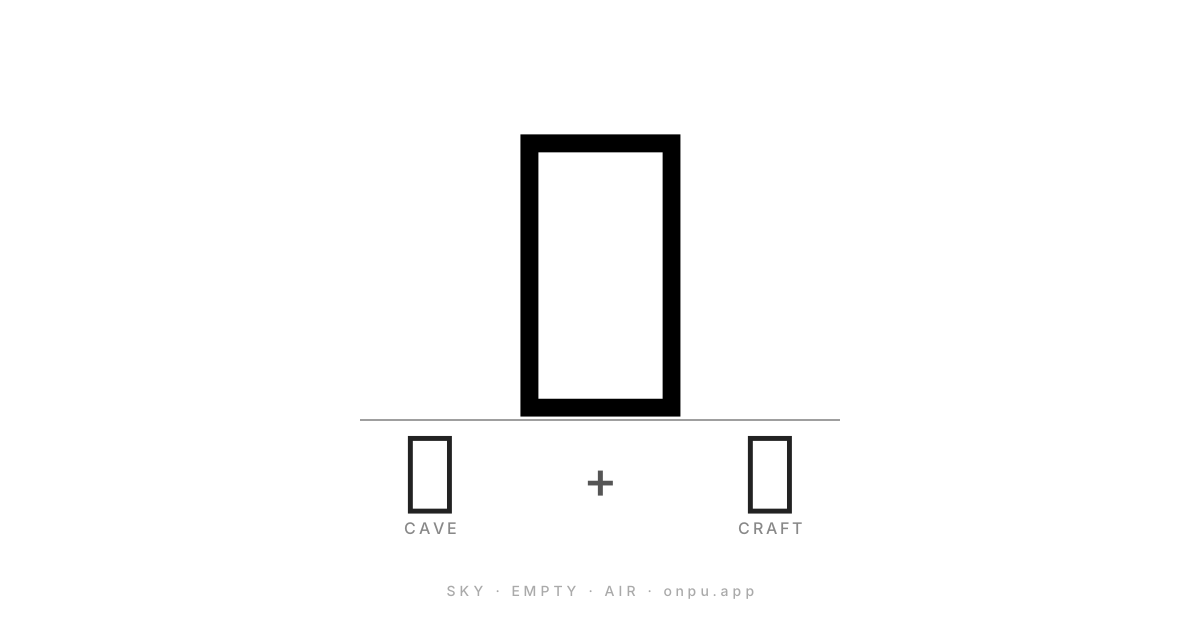
空 looks simple.
One of those characters you glance at and move on from before anything registers. I did it for months.
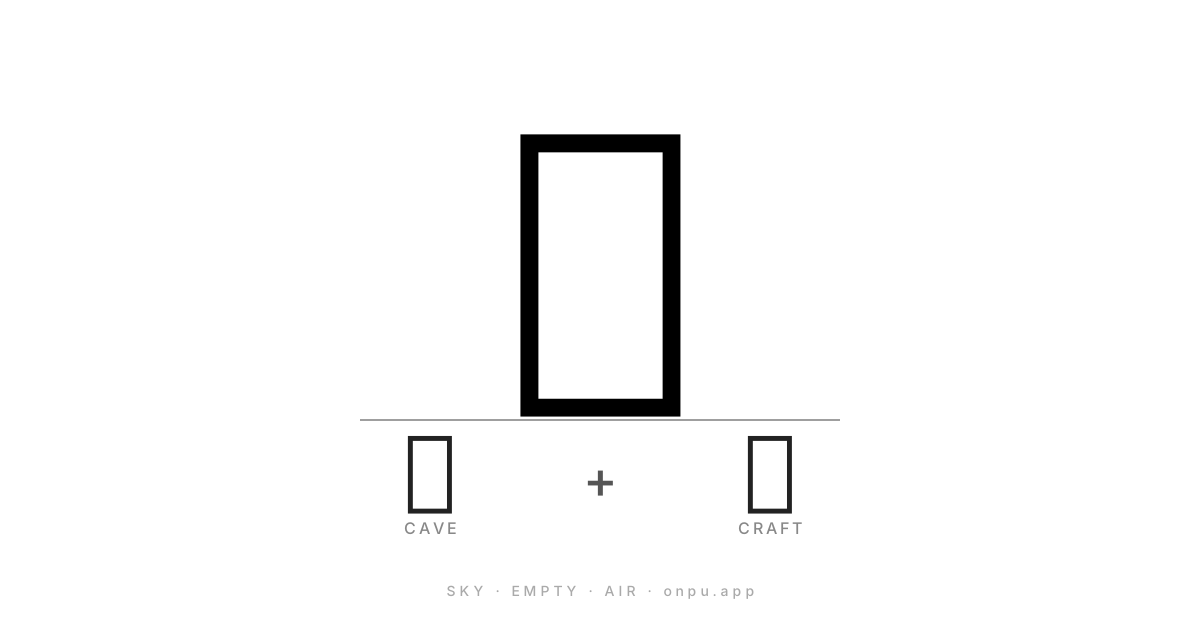
空 is built from 穴 and 工. 穴 means cave or aperture: a hollow opening, a gap in something solid. 工 means craft or construction, the act of deliberately shaping something. Put them together and you get a space carved out by work. A void that someone or something made. A hollowed-out emptiness that isn't accidental.
That's the concept underneath: not sky as something you look up at, not empty as a clinical absence, but something more like a deliberately made gap. A void that has a shape because work went into it.
Once you see it that way, it makes sense that the same character handles both meanings. Sky is the biggest hollow space there is. And emptiness, the kind songs write about, is the hollow space inside you. Different directions. Same shape.
The fact that Japanese uses one character for both is not an accident. It's the language encoding a connection that English quietly skips past.
空 as sky: 青空の下、君を待った
Yorushika's だから僕は音楽を辞めた opens with this:
青空の下、君を待った
Under the blue sky, I waited for you.
青空 is the compound for blue sky. 青 on its own means blue, or green, or young, depending on context. 空 is the sky. Put them together and you get 青空, aozora, the kind of sky that feels like it belongs to someone.
That line sits at the top of the song. Light, patient, the memory of waiting for a person in full daylight. The sky is where you look when you're young and hopeful and standing still.
Next time you see 青空 in a Japanese song, that double meaning of 青 is there too: blue, but also young. The sky of youth. It's a subtle thing and I could be overreading it. But the character carries both.
空 as empty: 胸が空っぽになるんだ
Later in the exact same song, in a completely different mood, n-buna writes:
いつか死んだらって思うだけで胸が空っぽになるんだ
Just thinking about dying someday makes my chest feel empty.
空っぽ. The 空 is the same kanji. But now it's から, empty, with a ぽ at the end for emphasis. And instead of the sky above you, it's the hollow inside you.
The same character that described the open space where someone waited now describes the open space where something used to be.
That hit me harder than any translation of this song ever did, honestly. You can read "empty chest" in English and understand it. But seeing that 空 in there, knowing it was also the sky a few lines ago, makes the emptiness feel more specific. Like the void went somewhere. Like it has a shape.
The song that puts both in the same place
心に穴が空いた.
A hole opened in the heart.
The 空 in that title is being used as a verb: 空く, to become open or empty. A hole became empty in the heart. 空いた is the past tense.
Inside the lyrics of the same song, you find this:
忘れたい脳裏を埋め切った青空に君を描き出すだけ
Just drawing you in the blue sky that fills the back of my mind I want to forget.
Again: 青空. Sky. And again: the same character showing up as absence in the very same song, in the very title.
I have no idea if n-buna planned that. There's no interview where I found him saying so. But whether it's intentional or just what happens when you write in a language where sky and hollow share a root, the effect is the same. The sky above and the hole inside are the same kind of space, pointing in opposite directions.
That's what 空 holds. Both things at once.
What to do with this
The next time you're reading through Japanese lyrics and you spot 空, slow down.
Is it そら? Is it から? Is it part of a compound like 青空 or 空気 or 空白? The reading will change depending on what's around it, but the kanji underneath is always the same hollowed shape. The same carved void.
I started using Onpu to paste Yorushika songs specifically because of this. The kanji breakdown for 空 appears with the reading overlaid on it, and you can see instantly which version you're dealing with. It makes the duality visible in a way that English translations never quite capture. If you have songs from this post on your playlist, try pasting だから僕は音楽を辞めた. Look for 青空 in the first verse and 空っぽ in the later one. They're both there.
I'd be curious what other 空 moments you've found. Some songs I haven't listened to carefully in years, and I keep realizing I missed the kanji doing something quiet in the background.
If 空 is the first time you've noticed a Japanese kanji pulling double duty, it won't be the last. The post about how 苦 does both bitter and suffering in Kenshi Yonezu's Lemon covers a similar moment, where one character carries two meanings that deepen each other. And if you want more of the vocabulary that shows up everywhere in J-pop, the deep dives on 夢 (yume) and 花 (hana) are worth reading side by side.