Hoshi (星) Shows Up in Almost Every J-Pop Song You Love. The Kanji Itself Is a Sun That Gives Life.
星 means star, but the kanji tells a deeper story: a sun that gives life. Once you know this, you'll hear it everywhere in J-pop, and understand why Japanese named Mars, Venus, and Jupiter after it too.
You already know the feeling. A J-pop song hits a certain moment, the melody opens up, and there's this one word hanging in the air. It sounds like something between longing and wonder. You don't know the word yet, but it lands.
That word is often 星.
It shows up in ballads, in city pop, in anime themes, in indie folk tracks. It shows up so often that once you start hearing it, you can't unhear it. And the reason isn't just that stars are romantic. It's that the Japanese concept of 星 carries something the English word "star" doesn't quite cover.
Here's what you'll notice after reading this:
- Why the kanji 星 is secretly a picture of something alive, not just something bright
- How Japanese uses 星 to name every planet in the solar system
- Why KIRINJI used 星 to mean Earth in one of their most celebrated songs
- The compound words that hide 星 in plain sight
The kanji itself
Before you can hear 星 in songs the way Japanese speakers hear it, you need to look at what the character is actually made of.
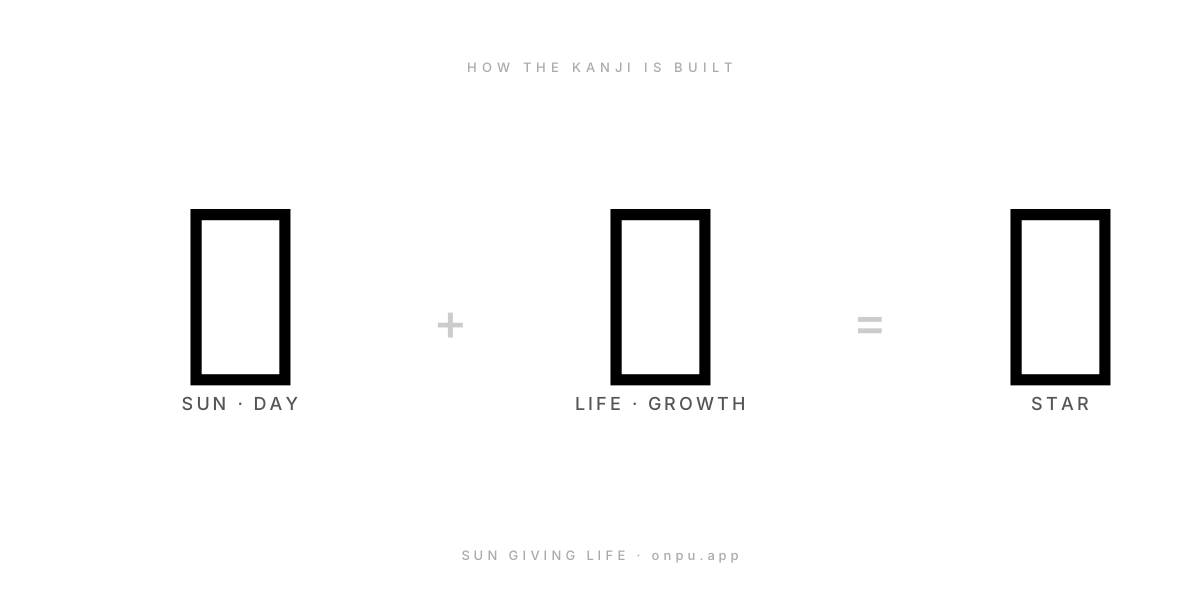
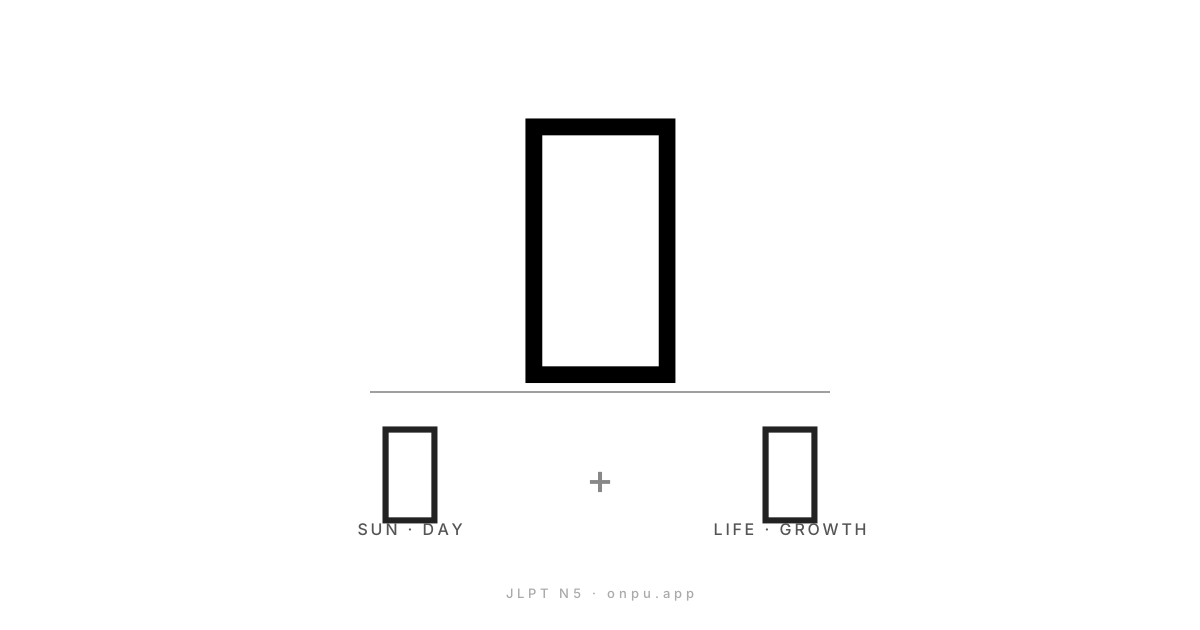
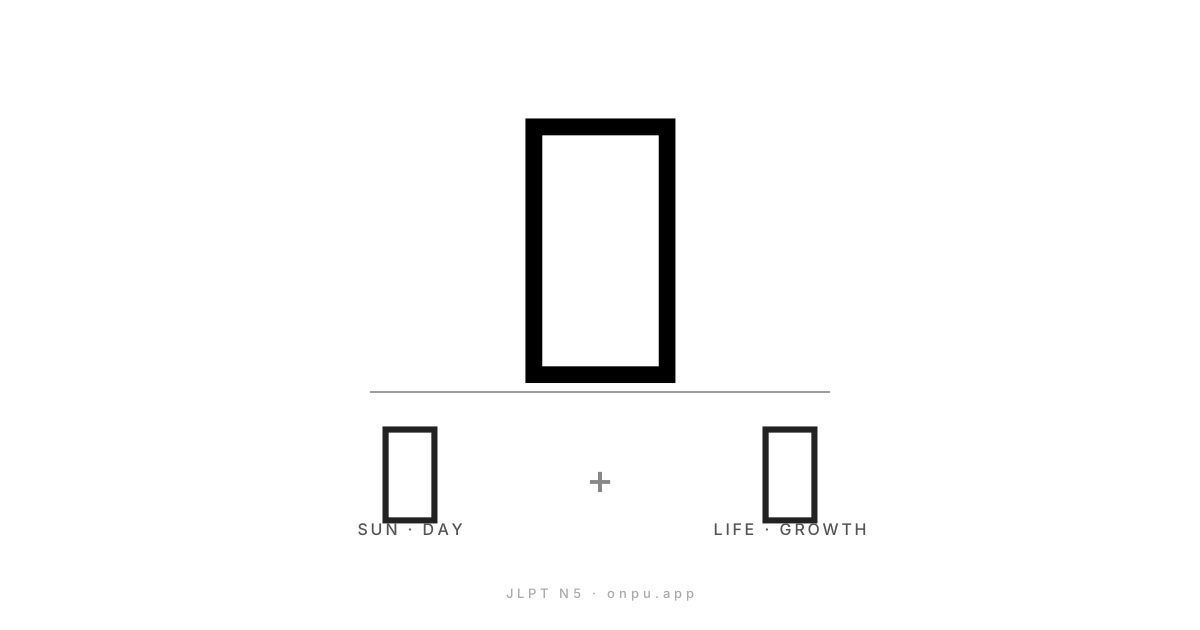
星 is built from two kanji you probably already know.
日 means sun, or day. You've seen it in 日本 (Japan), in 今日 (today), in every word that has something to do with time or light.
生 means life, birth, growth. It's in 先生 (teacher), in 学生 (student), in 生きる (to live).
Put them together: a sun that gives life. That's the image behind 星. Not a cold pinprick of light in the sky. Something that makes things grow.
The traditional mnemonic is exactly this: "Sun giving life, a star." Once you see it that way, the kanji stops looking like an arbitrary collection of strokes. It starts looking like an observation. Ancient Japanese scribes looked at a star and thought: that's the same thing as our sun, just impossibly far away. And they built that into the character.
Every planet is a 星
Here's where it gets interesting in a way that actually helps you hear the word in songs.
Japanese didn't invent new words for the planets when it needed them. It just combined 星 with a classical element.
| Japanese | Element | Planet |
|---|---|---|
| 火星 | fire (火) | Mars |
| 水星 | water (水) | Mercury |
| 木星 | wood (木) | Jupiter |
| 金星 | metal / gold (金) | Venus |
| 土星 | earth / soil (土) | Saturn |
Mars is the fire star. Venus is the gold star. Jupiter is the wood star.
This matters for J-pop because it means 星 doesn't just mean a distant point of light. It means "celestial body." It means "world." Anything in the sky that hangs there, glowing, orbiting, with its own gravity and its own mythology can be called 星. The word is bigger than the English translation suggests.
When 星 means Earth
KIRINJI's "Aliens" plays with this beautifully. The song is about two people who feel like outsiders, like they don't belong in the ordinary world around them. And the line that opens this up is:
この星のこの僻地で
"In this corner of this planet."
The word for planet here is 星. Not 地球 (Earth), the scientific word. 星. Which makes the whole lyric land differently. They're not on Earth specifically. They're on a star, this particular one, in some out-of-the-way corner of it. The choice of 星 over 地球 shrinks the planet down and zooms out at the same time. It makes Earth feel like just one small world among many.
If you haven't read the full breakdown of that song, the Aliens article goes deep on how KIRINJI uses cosmic language to talk about loneliness.
The compounds that hide in plain sight
Once you're listening for 星, you'll start catching it in contexts you didn't expect.
流れ星 (nagareboshi) is a shooting star. Literally "flowing star." 流れる means to flow, to stream, to run. A shooting star in Japanese is a star that flows across the sky. The image is completely different from the English "shooting," which implies velocity and force. Flowing is something else. Something that trails.
一番星 (ichibanboshi) is the first star of evening, usually Venus. 一番 means "number one" or "the most." It's the star that appears before any others when the sun goes down. In older Japanese folk songs, spotting 一番星 was a moment. Children would point at it. It meant the day was really over.
星空 (hoshizora) is simply "starry sky." 空 is sky. The compound is common enough that it barely registers as a compound anymore. But it's worth noticing: in English, "starry sky" is an adjective modifying a noun. In Japanese, the two concepts just fuse. The sky that belongs to stars.
Why songwriters keep reaching for it
The kanji gives you a clue. 星 sits somewhere between the personal and the cosmic. It's intimate enough to represent one person's longing gaze upward. It's large enough to represent an entire world, an entire life, an entire sense of being somewhere in a vast universe that doesn't particularly notice you're here.
That's the emotional register J-pop loves. Not grand declarations. Not simple prettiness. That specific ache of feeling small in a world you didn't choose, and finding it beautiful anyway.
泪 (namida, tears) and 花 (hana, flower) work similarly in J-pop, carrying more weight than their English translations suggest. 星 belongs in that company.
Try it yourself
Paste any J-pop song that uses 星 into Onpu. The kanji breakdown panel will show you 日 and 生 the moment you long-press the character. You'll see the components that have been in there all along.
Stars that give life. It was always in the word.