Toki (時) Shows Up in Almost Every J-Pop Song You Love. The Kanji Itself Is a Sun Watched from a Buddhist Temple.
The kanji for time in Japanese is a sun at a Buddhist temple. Here is what that image does inside every J-pop song about lost time.
Toki (時) Shows Up in Almost Every J-Pop Song You Love. The Kanji Itself Is a Sun Watched from a Buddhist Temple.
The kanji for "time" in Japanese was designed around monks.
Not clocks. Not calendars. Monks watching a sun move across a temple courtyard.
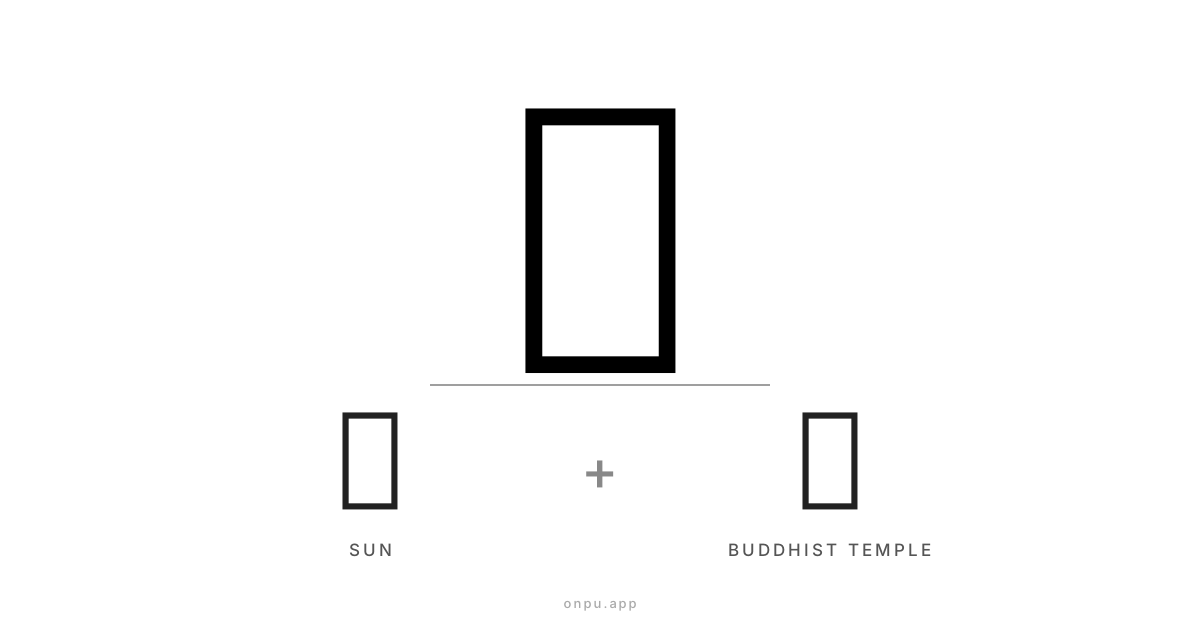
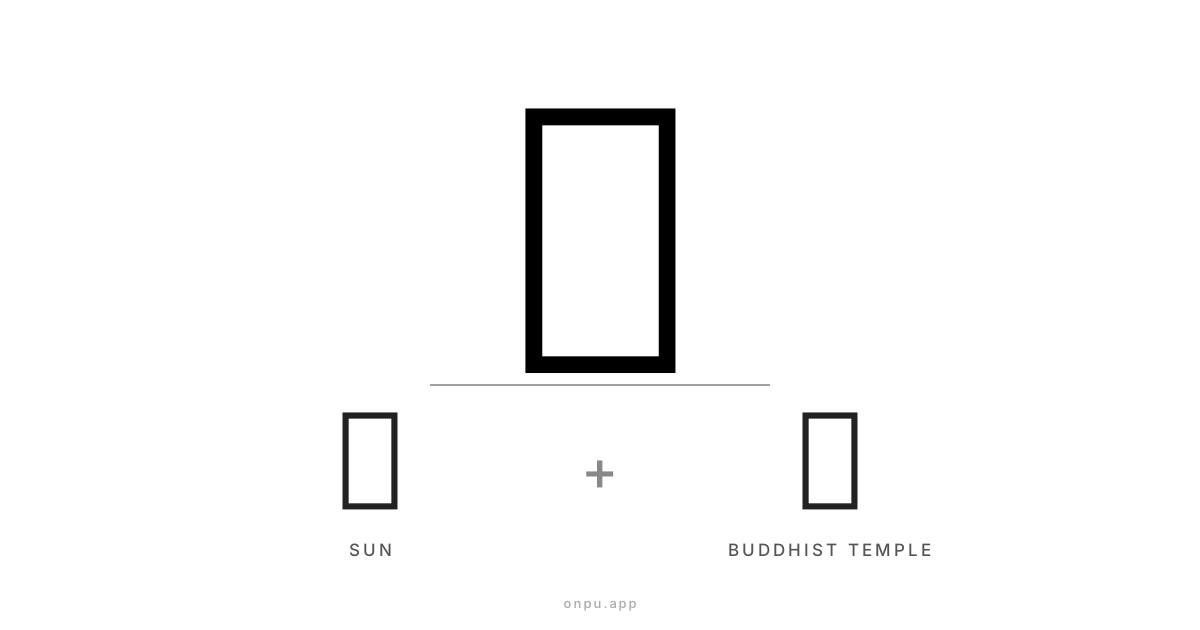
時 (toki) splits into two parts: 日, the sun, and 寺, a Buddhist temple. That's the whole image. A sun. A temple. Someone watching. Time is what happens between those two things.
And once I found that, I started hearing it differently in every song.
In this post, you'll learn:
- What 時 actually means, and why it doesn't map cleanly to the English word "time"
- Four Japanese compound words that split "time" into completely different feelings
- How MISIA uses 時 across her biggest hit to say something English lyrics almost never can
- Why 少年時代 is titled "Boyhood Days" but the word in the title means an era, not a day
5 min read
時 Is a Sun at a Buddhist Temple
The mnemonic from Onpu's kanji dictionary: "Sun (日) at the temple (寺): time."
I'd been treating 時 as just the word for time. Like I treat "time" in English: abstract, everywhere, not worth thinking about. Then I looked up the components.
日 is sun. Day. Light. 寺 is a Buddhist temple. And the temple itself breaks down further: 土 (earth) and 寸 (measurement). A measured piece of earth. A place built for careful observation.
So 時 is: the sun being measured from a temple.
That's not an abstraction. That's a specific scene built into the character from the start. Buddhist temples were the timekeeping institutions of ancient Japan, the places that held the schedule of the day. Monks would ring bells when the sun reached certain positions. The character for time carries that image directly, and it never let go of it.
Next time you hear a Japanese singer use 時, they're pulling on that whether they know it or not. A sun at a temple. Someone watching.
One Kanji, Four Kinds of Time
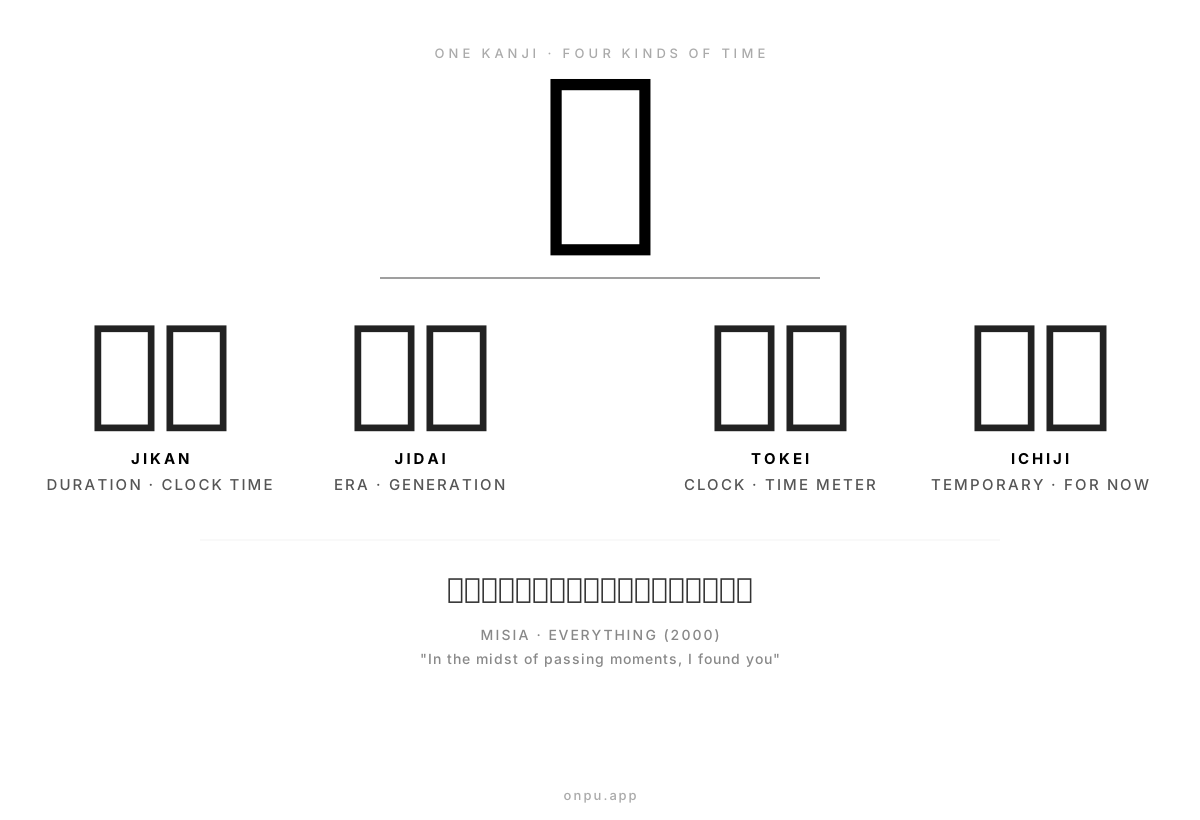
English handles time as one word with context. Japanese splits it into separate compound words for separate feelings. All of them use 時 as a foundation.
時間 (jikan): duration. The kind of time you can measure. "How much time do we have?" "I don't have enough time." This is clock time: countable, losable, running out.
時代 (jidai): an era. A generation. A whole chapter of life or history. Not "days." More like "the whole world during a period." 時代 is too large to fit inside a clock.
時計 (tokei): clock. Literally "time meter." It's 時 combined with 計 (to measure, to plan). The device that does what those monks used to do.
一時 (ichiji): temporary. Literally "one time," used in phrases like 一時的に (temporarily). The same character that can mean "an era" can also mean "just for now."
Four completely different feelings. One kanji doing the structural work in all of them.
If you want to hear that contrast in action, the NIGHT DANCER analysis gets into 時計の針, the clock's needle, as a recurring image throughout the song. The needle stops in every verse. That's 時計 as constraint. 時代 as liberation. Same 時, different compound, opposite feeling.
MISIA Uses 時 to Say Something English Lyrics Rarely Can
"Everything" is MISIA's biggest hit and one of the defining Japanese love ballads of the 2000s. The chorus is in English. But the verses are in Japanese, and 時 appears multiple times in ways that don't have clean equivalents.
The opening line:
すれ違う時の中であなたとめぐり逢えた
Rough translation: "In the midst of passing moments, I found you."
すれ違う means brushing past each other, two people moving in opposite directions and nearly missing. 時の中で is literally "inside the 時." Not inside a moment. Inside the quality of that moment. The kind that moves in opposite directions and almost doesn't connect.
There's no clean English phrase for that. "In passing" is close but loses the physical sense of narrowly missing. "In time" loses the near-miss. Japanese holds all of it in five characters.
Later in the same song:
いつものように やさしい時の中で
"In the usual, gentle moments."
Again: 時の中で. Inside the time. やさしい 時: gentle time. Not "a gentle moment," which in English is a noun phrase. This is time having a quality, the way weather has a quality. A whole texture that existed in that relationship.
I've listened to "Everything" probably fifty times at various points in my life. I understood the melody. I understood nothing about what she was actually saying until I stopped treating 時 as just the English word "time."
Why 少年時代 Is Named After an Era, Not a Childhood
Inoue Yousui's 少年時代 (1990) is one of the most covered, most studied Japanese pop songs ever. It made it into school music textbooks. The title alone is instantly recognizable.
少年時代. 少年 (shounen) is boy, youth, young person. 時代 (jidai) is era, generation, age: a whole chapter. Not "boyhood days" but more like "the whole world when I was a boy." 時代 implies something that had its own atmosphere, its own rules. Too big for a calendar.
The actual lyrics don't use 時 directly. They circle around it: 夏 (summer), 夢 (dream), 夜 (night), the vocabulary of nostalgia. But not 時 itself. The song keeps time at arm's length.
I think that's deliberate. The title stakes out this enormous claim: I had an era. An entire era. And then the lyrics never quite touch it. They describe the edges: the summer, the things surrounding it, the smell of the season. 時代 sits in the title like a stone the song is orbiting.
That kind of weight is built into the kanji. "Boyhood days" doesn't carry it.
This pattern, one kanji radiating outward through a whole vocabulary, is something the kokoro (心) post traces in detail. Six different emotion kanji all have 心 (heart) hiding inside them. Same structure, different domain.
Paste a Song and Search for 時
Once you start looking, 時 is everywhere. Not just in the obvious words. Inside 時計, 時代, 時間, and compound verbs like 随時 (at any time) or 時折 (from time to time). Inside song titles you've been reading for years without realizing the character.
I found it in the opening line of every other MISIA song I checked after "Everything." I found it in albums I'd been listening to on the train without reading a word.
If you're already listening to Japanese music, paste a few songs into Onpu and see where 時 turns up. The pattern shows fast. And once you know the image: sun at a temple, someone watching. It stops being a character you move past.
If you want to see how the same word operates differently across the series, the tsuki (月) post is worth reading next. Moon and month are the same kanji in Japanese. That's 時 and 月 doing overlapping work: time tracked by the sun, time tracked by the moon.
It starts being a kanji that was there the whole time, telling you something.