Tsuki (月) Shows Up in Almost Every J-Pop Song You Love. The Same Kanji Means Both Moon and Month.
月 means moon. It also means month. The same character does both jobs because Japanese measured time by the moon, and once you see it the J-pop chorus you've been listening to changes shape.
There is a J-pop chorus you have heard a hundred times. Maybe it was a phone commercial in the mid-2000s. Maybe it was the credits of an anime. The vocalist holds one syllable a beat longer than feels comfortable, the strings come in, and the word that lands on top of everything is tsuki.
That word is 月.
It is one of the first kanji a learner sees. It is also one of the most overloaded characters in the language. The same single shape carries both halves of a sentence like "I'll see you next month, when the moon is full." In Japanese, "moon" and "month" are written with the same character, and that is not a coincidence. It is the entire reason the kanji exists.
Here is what you'll find in the next few minutes:
- Why 月 means both moon and month, and what that says about how Japanese tracked time
- The Ayaka song that turned a crescent moon into the most famous CM ballad of 2006
- The kanji that secretly contain 月, including the one for "bright"
- The compound words you've been hearing without noticing
The kanji is a picture of a crescent
Most kanji are built from smaller pieces. 星 (star) is 日 (sun) plus 生 (life). 海 (sea) is 氵 (water) plus 每 (every). You can break them open and see the parts.
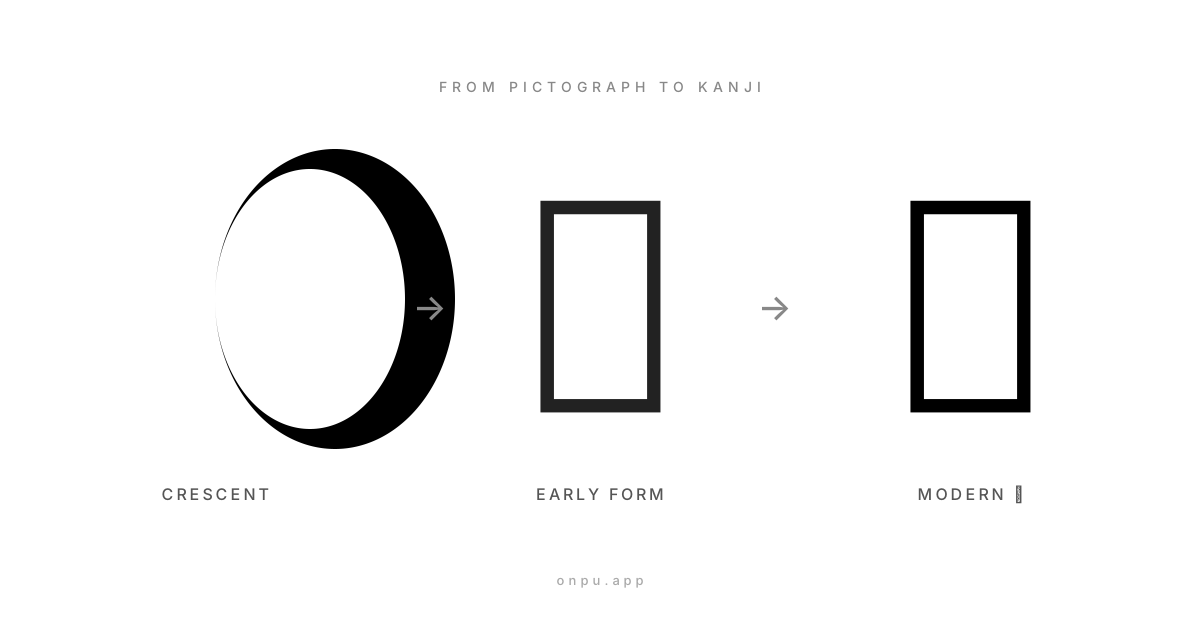
月 is different. It is one of a small handful of kanji that does not decompose, because the character is the picture itself: a stylized crescent with its horns pointing to the right and two short strokes inside for the dark surface markings of the lunar disk.
The Onpu kanji card for 月 lists exactly one component, and that component is 月 itself. Other kanji are built from it; it is not built from anything else. The character is old enough that nobody bothered to assemble it from parts. The moon was already a known shape, the way a child's drawing of a star is a known shape. They drew the moon, and that became the word.
The same kanji means month
Here is the part that quietly changes how you read Japanese once you notice it.
The reading tsuki gives you the moon in the sky. The reading getsu gives you the month on the calendar. They share a character because in pre-modern Japan they were the same thing: a month was one full lunar cycle, new moon to new moon, roughly thirty days. The cycle of the moon was the cycle of the calendar, and when classical Japanese needed a word for the unit of time we now call a month, it borrowed the word for the thing in the sky that drew the unit out.
It is hiding everywhere if you live in Japan. Monday is 月曜日 (the day of the moon), May is 五月 (the fifth moon), and "this month" is 今月, which translates back into English as something like "this moon." The calendar is still using the celestial body to do its bookkeeping.
When a Japanese pop song uses 月, the word carries the celestial body and the passage of time at the same instant. A song about waiting for the moon to come around again is also, quietly, a song about waiting for next month.
三日月: the three-day moon
The most famous J-pop song built around 月 is Ayaka's 2006 ballad 三日月 (mikazuki).
The title is built out of three kanji: 三 (three), 日 (day), 月 (moon). Literally, the three-day moon. That is the Japanese word for a crescent, and it is named that way because in the lunar calendar the thin crescent was visible from around the third day of the month. The crescent moon is the moon-of-day-three, locked into the calendar by name.
The chorus says:
君も見ているだろう この消えそうな三日月 つながっているからねって 愛してるからねって
"You must be watching too / this crescent moon that looks about to disappear / because we are connected, because I love you."
The song is about a long-distance relationship. Two people separated, looking up at the same sky from different cities. And the image she reaches for is not the full moon, which would be too easy. It is 三日月, the thin sliver that looks like it might wink out at any second. The fragility is the whole point. The thing connecting them is barely there, and it is barely there because it is on day three of the cycle.
You can read the lyric as straight romantic imagery. Or you can read it the way a Japanese listener does, where the crescent moon and the calendar date are the same word, and the song quietly admits that the relationship itself is on day three, fragile and new. Both readings live inside the same character.
When a J-pop title says "waning"
The crescent of 三日月 is a moon arriving. The EGO-WRAPPIN' song 下弦の月 (kagen no tsuki) names the opposite: the waning moon, the moon after full, on its way to disappearing. The title puts the song on a calendar before a single line is sung.
That is the move. Japanese songwriters reach for 月 because it lets them set a scene and a clock at the same time. The crescent is hopeful, the waning is bittersweet, the full moon is heavy. None of that has to be said. The kanji says it.
月 hiding inside other kanji
Once you start looking for 月, it shows up in places that have nothing to do with the moon at the surface and everything to do with it underneath.
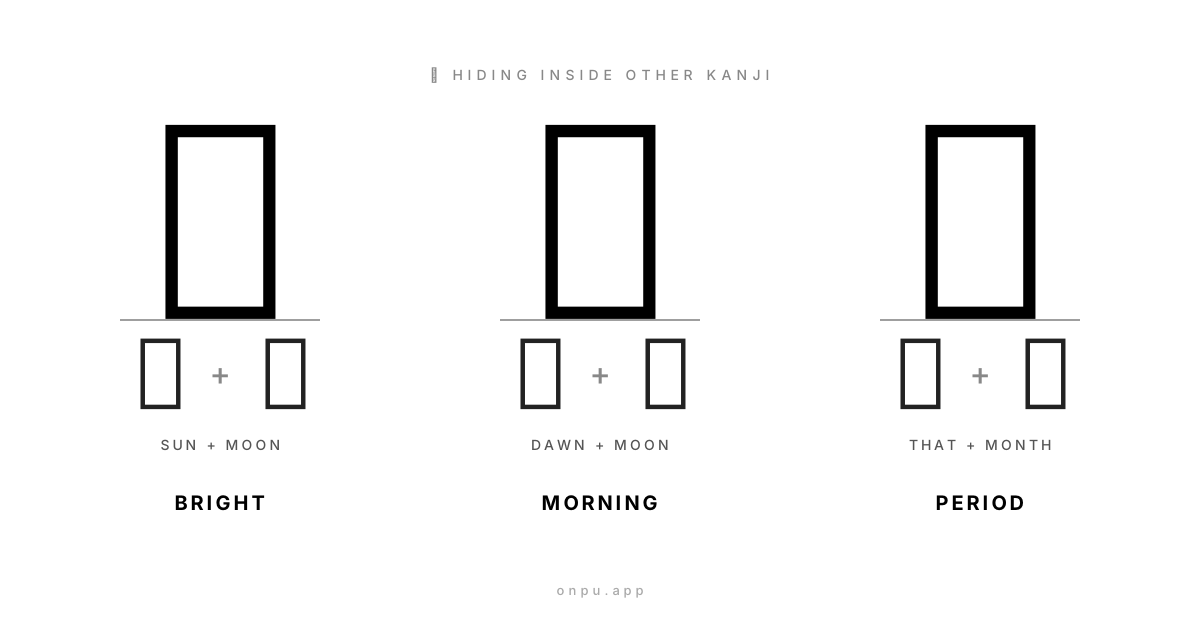
明 (mei, bright). 日 (sun) plus 月 (moon). When sun and moon share the sky, the result is brightness. This is the kanji in 明日 (ashita, tomorrow), 明け (ake, dawn), 明るい (akarui, cheerful). Japanese builds the idea of brightness out of both celestial bodies at once.
朝 (asa, morning). The components, per the Onpu kanji data, are 𠦝 (dawn) and 月. The moon at dawn is morning. The word is built around that strange in-between moment when the night sky has not quite given up but the day is already starting. Anyone who has watched the moon hang in a pale blue sky on the way to a 6am train knows this exactly.
期 (ki, period or term). 其 (that) plus 月. "That month." A unit of time. You see this kanji in 期間 (kikan, a period) and 学期 (gakki, a school term). The lunar calendar leaving a fingerprint on every word that means "stretch of time."
These are not stretches I am making up. The kanji-data file the Onpu app ships is built from the EDRDG component database, and these are the components it lists. The moon really is sitting inside the words for "bright," for "morning," for "period," and once you see it, you cannot unsee it.
The compounds you have been hearing all along
If you have listened to enough J-pop, you have already heard 月 in compounds without catching which kanji it was.
月光 (gekkou) is moonlight. The second character is 光, the same one in Hikari (光), the kanji for light. Moonlight is literally moon-light, but the compound feels heavier in Japanese because both characters are old and classical, and they lift the sentence into a more lyrical register the second they appear.
満月 (mangetsu) is the full moon. 満 means full, the same character in 満足 (mansoku, satisfaction). A moon at capacity.
月夜 (tsukiyo) is a moonlit night, just moon plus night. There is no English single word for this. You have to say "a night where the moon is out," and even then it does not do quite what the Japanese compound does, which is fuse the two ideas into one breath you can drop into a chorus without explaining.
Why the moon ends up in everything
The moon is reliable, shared, and in plain view. Two people in different cities see the same one. That is true in any language. What Japanese adds on top is that the moon and the month are the same word, so every time a songwriter reaches for tsuki, they are touching both the thing in the sky and the unit on the calendar at once.
It is the reason a title like 三日月 lands so hard. A date, a shape, and a metaphor for fragility, all at once, in three characters. There is no English equivalent that compresses anywhere near that hard. The kanji for sky, 空 and the kanji for star, 星 work the same way, carrying more than the English translation can. 月 belongs in that family.
Try it on a song you already love
Pick any J-pop track with 月 in the title or the chorus. There are dozens. Paste the lyrics into Onpu, tap the 月 character, and read what comes up.
You will see one component. Just itself. A crescent that has been a crescent for as long as Japanese has been written down. The line you have been humming might land a little differently from the next time on.